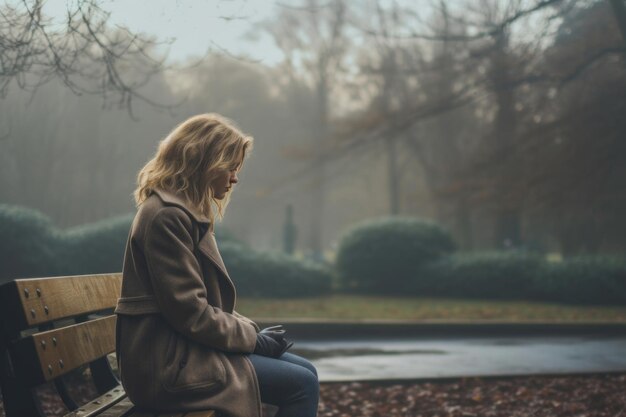
A woman resting on a bench embodies a moment of stillness that fosters contemplation and introspection. This image, imbued with layers of meaning, invites an exploration of solitude — a state often accorded with negative connotations in our fast-paced society. Yet, can solitude be redefined as a space for personal growth, reflection, and creativity? This tantalizing query prompts an examination of the nuanced relationship between solitude and self-discovery.
In today’s world, characterized by incessant connectivity and social engagements, the simple act of resting on a bench raises critical questions: What does it mean to embrace stillness? Why is it crucial to carve out time for oneself amidst life’s cacophony? By delving into these queries, one can unravel the multifaceted layers of solitude.
First and foremost, one must consider the essence of solitude beyond its superficial identification with loneliness. Solitude is not merely the absence of company; it can be an opportunity to engage in deep introspection. The woman on the bench can be seen as an archetype of modern existentialism. In her quietude, she may harness her internal dialogue, examining life choices, aspirations, and unvoiced regrets. This introspective journey could lead to revelations that transform her understanding of self and the world around her.
Moreover, the physicality of sitting on a bench symbolizes a pause in the relentless march of time. It encourages a collective understanding of place and moment. The bench, often situated in parks or public spaces, serves as a transient point of connection between the self and the external environment. Here, one can observe the interplay of nature, architecture, and society. A woman in solitude thus becomes a tableau of contemplation against the backdrop of life’s rhythm — children playing, adults rushing, nature unfolding. In this serene observation, one might discover a deeper appreciation for the mundane, prompting a reassessment of what truly matters.
Furthermore, this image reminds us of the psychological ramifications associated with solitude. Psychologically, the space of stillness facilitates self-awareness and emotional regulation. Research suggests that moments of solitude can enhance creativity and problem-solving abilities. When a person allows themselves the luxury of disengagement from the external world, cognitive processes shift, often leading to innovative thoughts. The woman on the bench, ensnared in her contemplative moment, potentially becomes a wellspring of creative insight. This underscores the paradox that, in solitude, one may find their most vibrant self.
Yet, solitude is not without its challenges. For many, the prospect of remaining alone with one’s thoughts can evoke discomfort. The modern individual is frequently conditioned to eschew silence, opting instead for distraction through technology or social interaction. This predisposition raises a valid concern: Is there a risk that we may become ill-equipped to handle solitude, thereby stifling our emotional and psychological development? The dialogue surrounding solitude often oscillates between glorification and apprehension, demanding a thoughtful consideration of both its advantages and disadvantages.
As we delve deeper into the phenomenon of solitude, a distinction must be made between chosen solitude and enforced isolation. The woman on the bench is exercising agency; she actively engages with her surroundings and her inner thoughts. This conscious choice enhances the quality of her solitude. Conversely, those who experience solitude as isolation may struggle with feelings of despair and helplessness. It invites a thoughtful examination of societal structures that lead to loneliness. How can communities foster environments that celebrate solitude as a component of well-being rather than a precursor to alienation?
Another aspect to consider is the societal stigma surrounding solitude. Often, individuals who are seen alone are interpreted through a lens of pity or concern. Why is there a tendency to view solitude as abnormal or undesirable? In many cultures, solitude is equated with loneliness, neglecting its potential as a space for rejuvenation. To combat this, it becomes imperative to cultivate a cultural narrative that elevates the value of personal reflection and solitude. This could involve educational initiatives that encourage individuals to embrace moments of stillness rather than shy away from them.
Through the lens of gender, the experience of solitude can also exhibit variances. Cultural expectations often place women in iterative roles of caregiving and relational nurturing, creating barriers to personal solitude. The woman resting on the bench symbolizes a subtle rebellion against these norms. By choosing to engage in solitude, she asserts her autonomy and the necessity of self-care. This reorientation towards solitude can catalyze broader societal shifts, encouraging women to claim their right to introspection without guilt or social repercussion.
In conclusion, a woman resting on a bench serves as a powerful embodiment of stillness and solitude, sparking vital reflections on selfhood in the contemporary world. Her moment of contemplation raises fundamental questions about the nature of solitude and its implications for personal growth and community dynamics. As we navigate an increasingly frenetic pace of life, perhaps the challenge lies in re-envisioning solitude as a space of empowerment rather than isolation. Exploring this distinction may not only enrich personal experiences but also foster a more compassionate societal ethos that appreciates and honors the profound gift of solitude.