Short Answer
At its zenith, the Khmer Empire, with its magnificent center at Angkor, represented one of the most remarkable civilizations in Southeast Asia. Emerging from modest beginnings in the early 9th century, this empire underwent an extraordinary transformation that saw it dominate the region for over six centuries. But what remains of this glorious civilization, often referred to as the ‘lost empire,’ invites us to ponder: how do we reconcile the splendor of Angkor with its eventual decline? This inquiry opens a wider window into the complexities of cultural relativism.
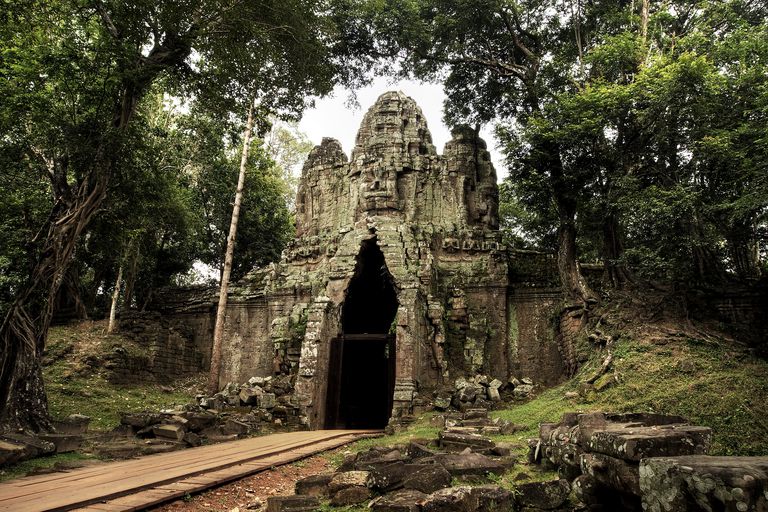
The Khmer Empire flourished in a climate marked by flourishing agriculture, extensive trade networks, and intermingling cultural influences. The unique geographical characteristics of the region, particularly the Tonle Sap Lake and the vast river systems, enabled a sophisticated irrigation system that propelled agricultural productivity. The Khmer people, during this time, exhibited remarkable ingenuity, engineering, and architectural prowess, culminating in the creation of awe-inspiring temples like Angkor Wat, which blended spiritual symbolism with engineering excellence. Designed in the first half of the 12th century, Angkor Wat has become a symbol of Cambodia; however, it also epitomizes the cultural essence of the Khmer civilization.
This grand structure served as both a temple dedicated to the Hindu god Vishnu and a mausoleum for the Khmer king. Such duality is a testament to the intricate interplay between spirituality and governance in the Khmer worldview. Through the lens of cultural relativism, one might explore the question: how are we to evaluate the values of this civilization by the standards of our own time? Such evaluations can be misleading. The grandeur of Angkor represents not merely artistic achievement but is reflective of a society that embedded its values and beliefs into the very fabric of its structures.
Beyond architecture, the Khmer Empire made substantial inroads into the domains of art, literature, and religion. Temples served as repositories of exquisite carvings and bas-reliefs, depicting divine myths, daily life, and historical events. The narratives immortalized in these artworks are not merely decorative but are laden with meanings that convey the beliefs, aspirations, and struggles of a civilization deeply entrenched in its cultural milieu. The reverence towards deities and ancestors signified not just a spiritual connection but also an intrinsic understanding of one’s place within the cosmic order, compelling us to reconsider our modern disconnections from similar practices.
The decline of the Khmer Empire from the 14th century onwards, attributed to a medley of sociopolitical strife, climate factors, and external invasions, challenges historians. It raises an intriguing question: how can a civilization so seemingly robust crumble? The dynamics encapsulating this decline remind us that no empire is invulnerable, no matter how grand its achievements. Underlying these socio-political factors were cultural shifts that might have eroded the foundation of traditional values that had sustained the empire for generations. The interplay of internal discord and external pressures signifies how the Khmer civilization was both a product of its time and an agent of change within itself.
As we examine Angkor and the Khmer Empire through the prism of cultural relativism, it becomes crucial to understand the socio-cultural practices that defined its legacy. The reverence for nature, exemplified by the mindfulness displayed in harvesting the seasonal floods for agriculture, is a salient aspect of their worldview. In a contemporary context where environmental concerns are at the forefront, the Khmer approach inspires a reconsideration of our relations with nature. Their practices underline a harmonious coexistence with the environment that often eludes modern societies, inviting a potential reconnection with the Earth.
The aesthetic principles governing Khmer art, characterized by an adherence to religious themes and metaphysical symbolism, prompt scrutiny of how aesthetics evolve under cultural imperatives. Today’s globalized society often prioritizes individual expression over collective representation. The Khmer Empire, conversely, focused its artistic endeavors on communal narratives and shared histories, which offers a poignant counterpoint to contemporary notions of art as individualistic. Therein lies a challenge: how do we negotiate the tension between personal identity and collective heritage in our own creative expressions? This contemplation enables a richer understanding of the absence and presence of cultural individuality in a society that thrived on unity.
Despite its decline, the Khmer legacy endures, resonating through modern Cambodian culture and its societal frameworks. The collapse of the Khmer Empire serves as a stark reminder of the impermanence of human accomplishment. However, the persistence of its cultural practices, rituals, and values continues to enrich the contemporary socio-cultural landscape, reminding us of the interwoven nature of history and identity.
Ultimately, the exploration of Angkor and the Khmer Civilization enriches our understanding of cultural relativism. By observing the complexities of this empire’s rise and fall, we acknowledge that cultural understanding requires us to suspend our own prejudices and biases. The grandeur of Angkor is not merely a distant relic but remains a vibrant thread in the tapestry of human experience—one that urges us to look beyond the superficiality of cultural achievements and engage with the intricate narratives that shape societies. In doing so, we forge connections that bridge past and present, enriching our collective understanding of what it means to be human in a diverse world.
FAQ
What was the main purpose of Angkor Wat?
Angkor Wat was built as a Hindu temple dedicated to Vishnu and served also as a mausoleum for the Khmer king, reflecting the interconnection of spirituality and governance.
How did the Khmer Empire sustain its economy?
Through advanced irrigation systems, flourishing agriculture, and extensive trade networks supported by the region's river systems and Tonle Sap Lake.
What role did art and literature play in the Khmer Empire?
They were essential in conveying religious myths, daily life, and historical narratives through temple carvings and bas-reliefs, embedding cultural values within their artistic expressions.
Why is understanding cultural relativism important when studying the Khmer Empire?
It helps avoid imposing modern biases and allows a deeper appreciation of the empire's unique values and societal structures within its historical context.
Leave a Reply