Short Answer
In the discourse surrounding race and ethnicity, the terminology employed often underscores the complexities and nuances inherent in the societal constructs we inhabit. A salient question that arises is whether the terms “Caucasian” and “White” are synonymous. While they are frequently used interchangeably within colloquial settings, a closer examination reveals significant distinctions that merit discussion, particularly through the lens of linguistic and social insights grounded in cultural relativism.
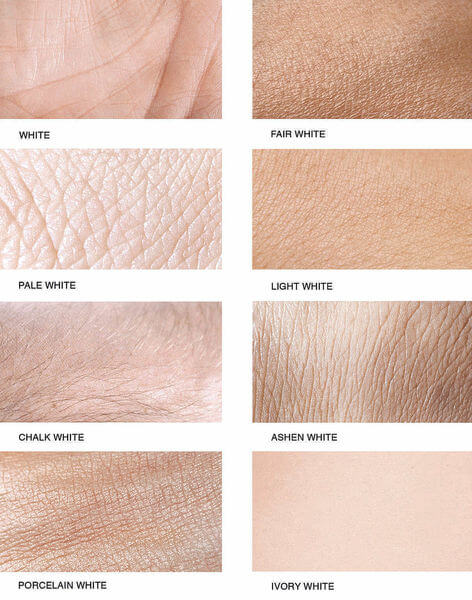
The term “Caucasian” originally emerged in the late 18th century when German philosopher Johann Friedrich Blumenbach formulated a classification system for humans based on cranial measurements and physical characteristics, which he believed demarcated various races. He coined “Caucasian” in reference to the Caucasus Mountains, positing this region as the origin of the most aesthetically pleasing specimens of humanity. Conversely, the term “White” is colloquially employed to describe individuals with lighter skin tones, and is often loaded with contemporary sociopolitical connotations.
The implications of these terms extend far beyond mere adjectives aimed at physical descriptors; they encapsulate historical contexts woven into the fabric of racial identity. The classification of people into racial groups such as “Caucasian” and “White” reflects historical narratives steeped in colonialism and Eurocentrism. Such classifications inadvertently propagate a Eurocentric worldview, marginalizing alternative identities and complicating the notion of race itself.
From a linguistic perspective, both terms possess distinct etymologies and cultural legacies. “White” as an identifier is replete with cultural elements, particularly within the context of U.S. history where it is often connected to notions of privilege and systemic power dynamics. It reflects not just a race but a socio-economic construct that has implications in various aspects of life, including education, employment, and law enforcement. The caveat, however, rests in the generalization that accompanies such a broad term, as it inadequately acknowledges the heterogeneity that exists within this demographic group.
Conversely, “Caucasian” carries with it an academic weight, bearing ties to a particular lineage and genetic lineage that has been contested by modern genetic research. The very act of categorizing people as “Caucasian” can reiterate outdated understandings of race that are increasingly contradicted by genetic science. Modern genetic studies illuminate the fact that humanity is more genetically homogeneous than surface characteristics would suggest, thereby challenging the efficacy of such broad classifications.
Central to understanding the distinctions between these terms is the concept of cultural relativism, which posits that one must understand another culture on its own terms without preconceived judgments. In this light, the labels we apply—be it “Caucasian” or “White”—should be examined critically. Cultural relativism invites an exploration of how these terms resonate differently within various contexts, ranging from historical legacies to contemporary identities. For instance, the lived experiences of individuals labeled as “Caucasian” can vary drastically across different countries and cultures, influenced by local histories of colonialism, migration, and socio-political dynamics.
Moreover, the understanding of both terms is continuously evolving. In recent discourse, the application of “Caucasian” has been increasingly scrutinized as it not only reflects an outdated paradigm but often perpetuates divisions that run counter to modern societal progressivism. The potential conflation of “Caucasian” and “White” undermines efforts to foster a more nuanced understanding of race and ethnicity that recognizes the complex tapestry of human identity.
In an age marked by global interconnectivity and an increasing awareness of social justice movements, the need for precise terminology becomes paramount. The distinction between “Caucasian” and “White” is illustrative of the broader dialogue about race and identity. As society seeks to dismantle systemic biases and encourage inclusivity, reevaluating such classifications may serve as a catalyst for fostering increased dialogue about race, identity, and belonging.
From a sociological standpoint, understanding the differences between the terms encompasses notions of intersectionality—how overlapping social identities impact experiences of oppression and privilege. The divergent experiences within the label “White” are especially noteworthy; it spans various ethnicities, all of which may experience privilege differently based on factors such as socioeconomic status, gender, and geographic location. Thus, the label may include individuals who are economically privileged while also encompassing those who are socioeconomically disadvantaged.
The implications of viewing “Caucasian” and “White” as interchangeable manifest in real-world scenarios, dictating how individuals relate to one another and how policies are constructed. When statistics rush to label the demographics as “Caucasian,” it can obscure meaningful racial divides and complexities, making it essential for scholars, policymakers, and communities to engage in more robust discourse that acknowledges the multitude of identities present in society today.
In conclusion, the inquiry into whether “Caucasian” and “White” signify the same concept is emblematic of a larger discussion about the nature of race and identity. The terms intersect linguistically and socially, yet the implications of conflating them could perpetuate misunderstandings and hinder inclusive discourse. By embracing a critical lens rooted in cultural relativism, society can stimulate a more comprehensive understanding of race that transcends simplistic categorizations. This intellectual engagement encourages curiosity—a vital component of cultural evolution and an essential precursor to fostering empathy and unity among diverse groups. Thus, exploring the distinctions between these terms not only elucidates the complexity of racial identity but also promises resilience and progress towards a more equitable society.
FAQ
Are the terms Caucasian and White interchangeable?
While often used interchangeably, Caucasian and White have distinct historical, linguistic, and social meanings. Caucasian refers to a historical racial classification linked to the Caucasus region, whereas White is a broader sociopolitical term relating to lighter-skinned populations and associated privileges.
What is the origin of the term Caucasian?
The term Caucasian was coined in the late 18th century by Johann Friedrich Blumenbach, who classified humans based on physical traits and named the group after the Caucasus Mountains, considered by him the origin of the 'most beautiful' humans.
Why is the term Caucasian considered outdated in modern genetics?
Modern genetic research shows human genetic diversity is much more complex and homogeneous than 18th-century racial classifications suggest, making terms like Caucasian scientifically inaccurate and socially problematic.
How do sociological perspectives view the terms Caucasian and White?
Sociologically, White is seen as a socio-economic construct linked to privilege and systemic power, whereas Caucasian is an academic term with contested genetic relevance. Both labels involve complex identity intersections influenced by culture, history, and social status.



Leave a Reply