Short Answer
The prospect of lions roving freely across the landscapes of ancient Greece stimulates deep curiosity, evoking a realm where myth and reality intertwine. This inquiry serves to unravel the enigmatic threads of cultural narratives, juxtaposed against tangible paleontological evidence. Ultimately, it questions the very fabric of our understanding of historical wildlife and its representation within ancient societies.
The presence of lions in Greece captures the imagination of both historians and naturalists. While contemporary populations of lions are primarily confined to Africa and a few portions of Asia, the historical context reveals a more varied distribution. To assess this phenomenon, we must examine literary references, artistic depictions, and fossil records. Through this multifaceted approach, we embark on an expedition into the psyche of ancient Greeks, contemplating how cultural relativism shapes our interpretation of their environment.
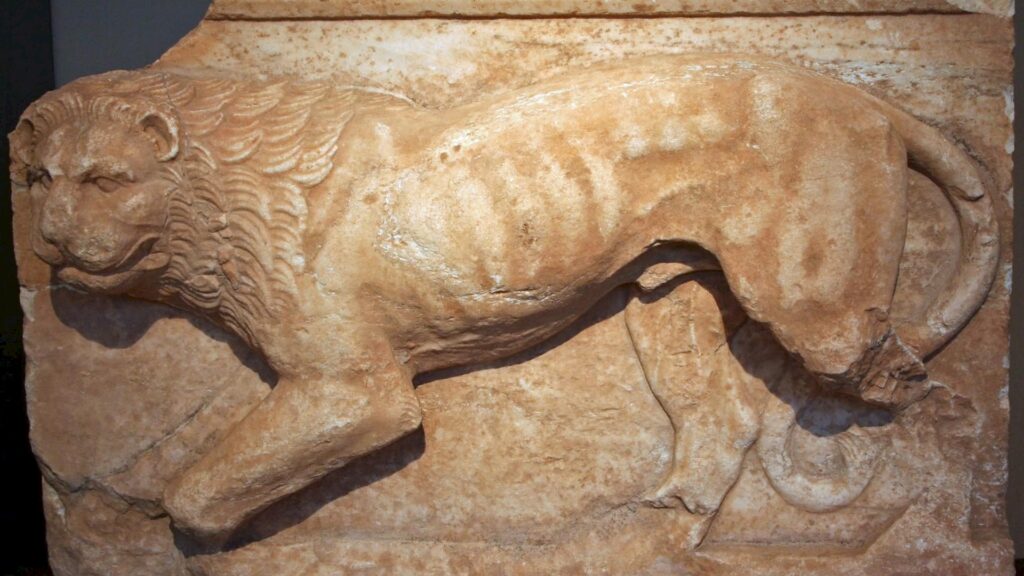
Deeply entrenched in both myths and natural history, the lion holds a prominent position in Greek mythology. From the Nemean Lion, famously defeated by Heracles as one of his labors, to artistic renditions seen in vase painting and sculpture, lions were imbued with symbolic weight. The Nemean Lion itself serves as both a narrative device and a representation of fearsome strength and resilience. This myth not only reflects the harsh realities of human life but also indicates an awareness of formidable beasts that may have once prowled the Greek territories, further complicating the discourse on factual existence.
Transitioning from myth to material artifacts, the attention must turn to archaeological excavations that have unearthed lion imagery throughout various Greco-Roman sites. The use of lion motifs in Ionian art exemplifies the aesthetic integration of these noble creatures within ancient symbolism. However, the interpretive challenge arises: do these representations reflect a genuine existence of lions in the region or are they mere artistic liberties capturing the ferocity of an imagined beast?
Delving into the paleontological record, we observe evidence supporting the existence of large felids in prehistoric Europe. Fossil remains, including those of the European cave lion (*Panthera spelaea*), reveal that lions inhabited parts of Europe long before the rise of classical Greek civilization. These remains, found across various Mediterranean locales, hint at a complex relationship between humans and these apex predators. The last European cave lions died out approximately 14,000 years ago, forming a temporal gap that could explain the lion’s mythical status in ancient Greek culture—it remained a potent symbol of power even if the actual animal had long vanished from its historical habitat.
Furthermore, examining the texts of classical authors sheds light on the evolution of the lion narrative. Notably, Aristotle’s writings reference a distinctive ‘lion’ associated with the Nemean region, suggesting a localized familiarity with the concept of lions within the ecological landscape. Yet, the very notion of lions in ancient Greece raises questions about the dynamics of cultural perception. What might be interpreted as a literal species reference may transform under the lens of cultural relativism, showcasing that narratives reflect societal values, fears, and aspirations rather than mere biological fact.
Importantly, the absence of living lions in Greece during the classical period challenges modern interpretations of ecological and cultural coexistence. The transformation of lion imagery from potentially living entities to mythic beasts encapsulates a broader narrative strategy: one that positions humans at the center of nature’s complexities. This anthropocentrism parallels contemporary issues surrounding conservation and species extinction, providing a poignant reminder of our timeless fascination with fauna. Could the Greeks, faced with the cognitive dissonance of a lion’s mythos intertwined with its absence, have created representations that fulfilled cultural needs rather than strictly depicting verifiable reality?
The parallels become evident as we dissect the representations of lions concerning other formidable creatures of ancient lore. The connection between dragons or griffins seen in various cultures highlights how societies forged narratives that often transcended empirical evidence. In this light, lions assume a dual role, serving not solely as a physical entity but as an allegorical cornerstone that reflects a collective ethos regarding nature and humanity’s place within it.
The nexus of mythology, paleontology, and cultural interpretation leads to a broader inquiry concerning lions in ancient Greece. Were they figments of imagination or real threats that haunted ancient tales? The answer likely lies in a dialectical oscillation between tangible evidence and cultural narrative. In viewing lions through the lens of cultural relativism, we are compelled to understand that meaning transcends mere existence; it situates itself within the pulsating heart of societal values.
In conclusion, the intersection of myth and evidence constructs a fascinating narrative concerning the presence of lions in ancient Greece. While paleontological records indicate lions once roamed Europe, their ultimate disappearance may have paved the way for mythic fabrications that absorbed cultural significance. The legacy of the lion in Greek antiquity positions itself as both a historical curiosity and a reflective surface for human existential themes. The endeavor to untangle these threads reveals not only the imaginative vigor of ancient cultures but also offers timeless lessons on the interplay between nature and narrative in shaping human experiences.
FAQ
Did lions actually live in ancient Greece?
While lions once inhabited parts of prehistoric Europe, including areas near Greece, there is no evidence that lions coexisted with classical ancient Greek civilization. The lion primarily exists in Greek culture through mythology and symbolism.
What is the significance of the Nemean Lion in Greek mythology?
The Nemean Lion is a mythical beast in Greek mythology, famously defeated by Heracles as one of his twelve labors. It symbolizes strength and invincibility and reflects cultural values rather than a literal historical presence.
Is there paleontological evidence for lions in the Mediterranean region?
Yes, fossil records of the European cave lion (Panthera spelaea) have been found in Mediterranean and European regions, indicating lions existed long before the rise of classical Greece.
How do lion motifs in Greek art relate to actual lions?
Lion imagery in Greek art often serves symbolic or mythological roles rather than reflecting the presence of real lions in the region during classical times.




Leave a Reply