Short Answer
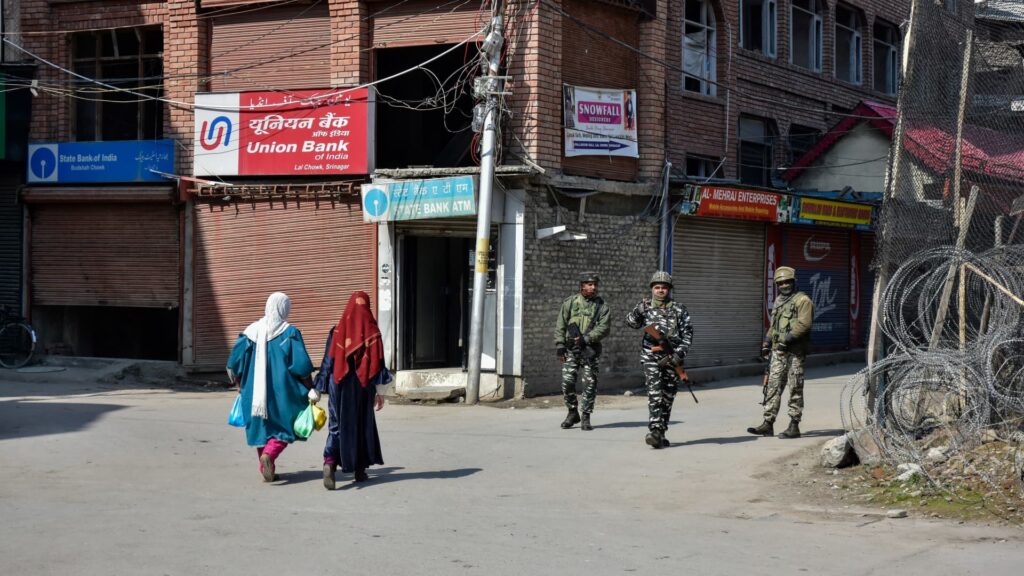
The border between India and Pakistan remains one of the most contentious geopolitical boundaries in modern history. Rooted in a complex tapestry of historical events, ethnic identities, and religious affiliations, this border not only delineates geographical territories but also embodies a profound narrative of conflict and cooperation. Understanding this multifaceted relationship through the lens of cultural relativism offers unique insights into the identities forged on both sides of the border.
The genesis of the India-Pakistan border can be traced back to the British colonial rule over the Indian subcontinent, which instigated significant sociopolitical changes among the diverse communities inhabiting the region. The British employed a ‘divide and rule’ strategy, exacerbating communal tensions between Hindus, Muslims, and Sikhs. The culmination of these tensions was palpable during the partition of British India in 1947, a cataclysmic event that led to the creation of two sovereign states: India and Pakistan.
The partition was characterized by large-scale violence, mass migrations, and horrific communal riots that resulted in the loss of millions of lives. The abrupt division left a legacy of bitterness and mistrust, fundamentally altering the course of historical interactions between the two nations. Cultural relativism enables us to recognize that the narratives formed during this period must be understood in the context of the prevailing social dynamics and collective memories of grief and survival that continue to shape national identities today.
Following partition, the newly demarcated border became a flashpoint for ongoing conflicts. The most notable of these conflicts occurred in Kashmir, a region both countries claim but do not universally control. This territorial dispute epitomizes the broader struggle over identity, national sovereignty, and cultural belonging. Each nation views Kashmir not merely as a piece of land but as a representation of its cultural ethos and a testament to historical grievances.
From 1947 onward, several wars—1947, 1965, and 1971—consumed both countries, further entrenching a cycle of hostility and militarization along the border. The narratives constructed around these wars are imbued with national pride yet serve as a poignant reminder of the cyclical nature of conflict fueled by historical grievances. Cultural relativism allows for an appreciation of these narratives, elucidating the deeply felt emotions that bind communities to their histories, however painful those histories may be.
Despite the tumultuous history, periods of thaw and cooperation have punctuated the India-Pakistan relationship. Notably, diplomatic efforts such as the Lahore Declaration of 1999 and various backchannel negotiations have underscored attempts to reduce hostilities and foster a mutually beneficial relationship. These moments of rapprochement reveal the potential for understanding and cooperation. They reflect a yearning for peace that transcends the animosities rooted in historical contexts.
Cultural exchanges have also played a significant role in bridging divides. The infiltration of music, cinema, and art across the border illustrates a shared cultural heritage. For example, the popularity of Bollywood films in Pakistan and the appreciation of Pakistani music in India signify cultural ties that persist despite political tensions. Such exchanges highlight the shared ethos and create spaces for collaboration that challenge the nationalistic narratives prevalent in political discourse.
Additionally, grassroots movements and organizations have emerged on both sides of the border advocating for peace and understanding. These initiatives often emphasize shared humanity over divisive identities, promoting empathy and dialogue as crucial elements in the quest for lasting peace. The burgeoning of social media has further amplified these voices, creating virtual communities that transcend geographical boundaries and foster communication between individuals who might otherwise never connect.
Nonetheless, the specter of nationalism continues to loom large over India-Pakistan relations. Extremist ideologies, driven by political agendas, often amplify historical grievances, fueling cycles of violence and retribution. These nationalist narratives are oftentimes presented as the dominant discourse, overshadowing alternative perspectives that promote coexistence and mutual respect.
In terms of humanitarian crises, the border remains a site of significant human suffering. Military confrontations, coupled with stringent border controls, have disrupted countless lives. Families have been torn apart, and individuals seeking medical care or education have been denied passage across an arbitrary line that now stands as a symbol of division rather than unity. Cultural relativism helps frame these narratives not purely as instances of national conflict but as human stories encapsulating resilience, loss, and the quest for dignity.
In conclusion, the border between India and Pakistan is not merely a geographical demarcation; it is a complex interplay of history, culture, and identity. Acknowledging the significance of this relationship through a cultural relativist perspective encourages recognition of the human experiences that transcend borders. Lessons from the past reveal that conflict and cooperation are not mutually exclusive, and the ongoing challenges present opportunities for introspection and understanding. Thus, the stories that emanate from this border continue to evolve, underscoring a shared history that, if embraced collectively, holds the potential to pave a viable path toward harmonious coexistence.
FAQ
What is the historical significance of the India-Pakistan border?
The India-Pakistan border was established during the 1947 partition of British India, marking the creation of two sovereign nations. It remains historically significant due to the mass migrations, violence, and enduring geopolitical conflicts associated with it.
Why is Kashmir a major point of conflict between India and Pakistan?
Kashmir is disputed territory claimed by both India and Pakistan, symbolizing broader struggles over national sovereignty, identity, and cultural belonging, which has led to several wars and ongoing tensions.
Have there been any efforts to improve relations between India and Pakistan?
Yes, diplomatic efforts like the Lahore Declaration of 1999 and various backchannel negotiations, along with cultural exchanges and grassroots peace movements, have aimed to reduce hostilities and foster cooperation.
How does cultural relativism help in understanding the India-Pakistan border situation?
Cultural relativism allows for appreciating the complex narratives and identities shaped by historical grievances, highlighting human experiences beyond political conflict and fostering empathy for both sides.



Leave a Reply