Short Answer
The Chauvet-Pont-d’Arc Cave, concealed within the limestone cliffs of southern France, is revered for containing some of the earliest known examples of human artistic expression. Discovered in 1994, this subterranean marvel harbors remarkable paintings that date back approximately 36,000 years, making them invaluable in understanding early human culture and cognition. Within the context of cultural relativism, the cave paintings provide deep insights into the socio-cultural milieu of prehistoric peoples.
Understanding art necessitates contextualizing it within the framework of its creators’ worldview. Cultural relativism posits that a person’s beliefs and values must be understood based on their own cultural context. Thus, the Chauvet cave paintings are not merely aesthetic endeavors; they are imbued with cultural significance reflective of the societies that produced them. These illustrations depict not only a material reality but also a cosmological perspective held by these early humans.
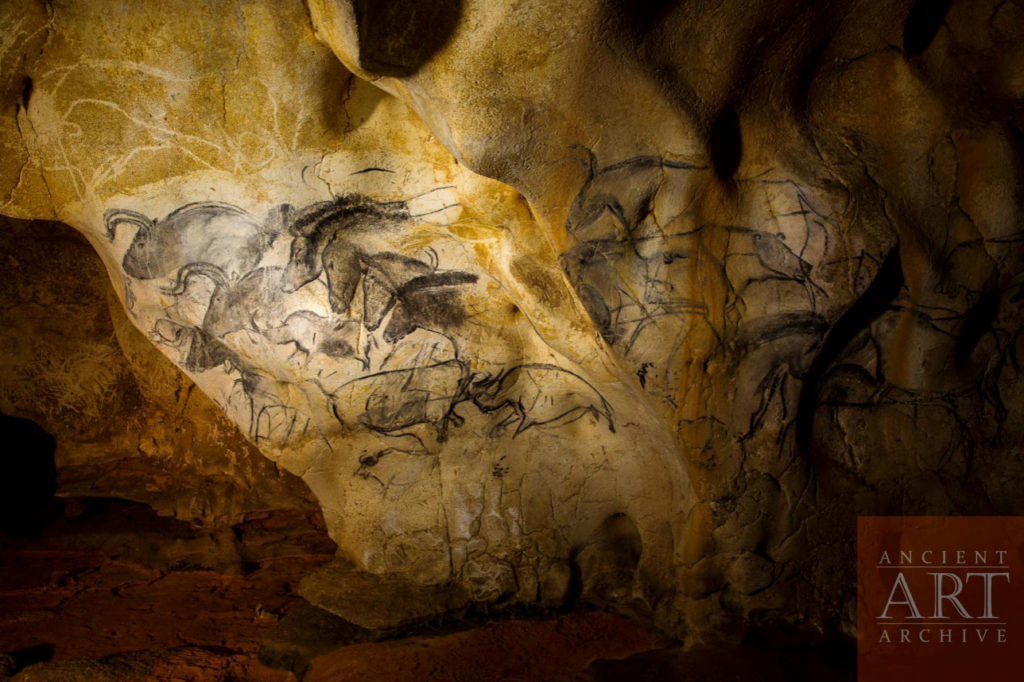
The artworks present an assemblage of fauna, including horses, bison, and large predators, intricately rendered in charcoal and ochre. They exhibit a sophisticated understanding of animal movement, anatomy, and behavior, suggesting a rich relationship between humans and their environment. This connection casts light on the role that these animals likely played in the daily lives and spiritual beliefs of their creators.
A notable observation concerning the cave’s figures is their dynamic representation. The artists employed techniques that suggest movement, encapsulating the vibrant life of these creatures within the still confines of rock. Such depiction indicates a level of cognitive sophistication; it suggests that these early artists perceived and represented the interrelation between animals, humans, and the surrounding landscape.
Interpreting these cave paintings reveals underlying themes of survival and spiritual belief systems. In many indigenous cultures, animals are often viewed as totems or spiritual guides. The act of drawing them on cave walls might signify reverence or a desire to form a connection with them, perhaps even a plea for successful hunts—a central component of survival. This notion, when examined through the lens of cultural relativism, challenges the observer to avoid imposing modern interpretations upon ancient human behavior.
The positioning of the paintings within the cave itself further amplifies their significance. Many artworks are located deep within the cave’s passages, accessible only through intricate pathways. This strategic placement suggests that the site was not merely a space for artistic expression but a site of ritualistic importance. The effort required to reach these artworks implies that they held profound meaning for the community—potentially serving as a ceremonial space where the spiritual and material worlds intersected.
The intricate craftsmanship displayed in these paintings propels our understanding of prehistoric artistic methodologies. The careful execution—blending of materials, application techniques, and spatial composition—implies a level of sophistication not typically attributed to Paleolithic societies. The sheer existence of such artistry prompts discussions surrounding the cognitive capabilities of early humans, inviting us to rethink the evolutionary timeline of creative expression.
Moreover, an examination of the cave paintings reveals a collective identity among the communities that created these works. This shared artistry reflects a dedication to communal storytelling and an oral tradition that binds individuals within a culture. Stories narrated through art serve not only to preserve history but also to impart moral lessons, emphasizing the importance of cooperation in survival. Here, cultural relativism emphasizes understanding these narratives as they resonate within their specific cultural contexts rather than through contemporary lenses.
The enduring appeal of the Chauvet-Pont-d’Arc cave paintings can also be attributed to their enigmatic nature. They present an opportunity to marvel at human creativity from a time long before written history. The questions they evoke are myriad: What motivated these early artists? What beliefs or practices influenced their work? Each inquiry invites individuals to bridge temporal divides, facilitating a dialogue with the past that transcends simplistic interpretation.
Celebrating the timelessness of these paintings, one must also acknowledge the ethical concerns surrounding their preservation and public appreciation. The cave’s discovery has led to heightened tourism, raising questions about the impact of modernity on ancient sites. The balance between preserving cultural heritage and fostering public engagement with such artifacts poses an ongoing conundrum that merits serious consideration.
Furthermore, the Chauvet Cave serves as a reminder of the importance of protecting cultural heritage globally. As we continue to uncover the vestiges of ancient civilizations, it is imperative to respect and honor the ethos of all cultures, current and past. Each artifact provides a window into humanity’s collective journey, emphasizing the necessity of viewing these contributions through the lens of cultural relativism, which advocates for understanding rather than condemnation.
The fascination surrounding the Chauvet cave paintings extends beyond their age or artistry; it is rooted in their ability to connect contemporary individuals with ancestral beings who inhabited a vastly different world. The images not only reflect the realities of survival but also, perhaps paradoxically, embody the persistence of human creativity and the desire to communicate across millennia.
In conclusion, the Chauvet-Pont-d’Arc Cave paintings encapsulate a wealth of knowledge, providing insight into the life, environment, and beliefs of their creators. Analyzing these works through the lens of cultural relativism enables a deeper appreciation of the complexities surrounding early human art. As a testament to the enduring spirit of creativity, these ancient images continue to inspire, challenge, and intrigue the modern observer, perpetuating an essential dialogue about the foundations of human existence and artistic expression.
FAQ
What is the Chauvet-Pont-d’Arc Cave?
It is a cave in southern France containing some of the earliest known human cave paintings, dating back about 36,000 years.
Why are the Chauvet cave paintings important?
They provide valuable insight into the artistic, cognitive, and cultural development of early humans.
What animals are depicted in the cave paintings?
The paintings show animals such as horses, bison, and large predators, highlighting prehistoric fauna.
How do the cave paintings relate to cultural relativism?
They demonstrate the importance of interpreting ancient art within its original cultural context rather than through modern perspectives.
What challenges are associated with the Chauvet cave site?
Preservation concerns due to increased tourism and balancing cultural heritage protection with public access.





Leave a Reply