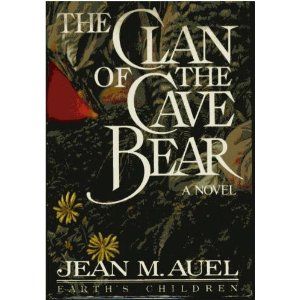
The figure of Ayla in “The Clan of the Cave Bear” stands as a pivotal emblem within the realm of prehistoric fiction, embodying the complexities of cultural relativism. As a character, Ayla transcends mere storytelling; she is an anthropological construct that seeks to bridge the chasm between disparate cultures, inhabiting a space where the fluidity of identity and the nature of belonging are interrogated. Through her journey, one sees a nuanced exploration of what it means to be an outsider and how such marginality can serve as a crucible for personal and communal transformation.
In a narrative set against the stark and unforgiving backdrop of the Pleistocene epoch, Ayla’s existence within a clan grounded in Neanderthal culture exposes the intersections between Homo sapiens and Homo neanderthalensis. This clash of civilizations cultivates a fertile ground of conflict and introspection. Not merely a physical representation of survival, Ayla serves as an intellectual metaphor for the broader human experience. Her tenacity reflects the existential struggle inherent in navigating a world rife with alien norms and expectations, epitomizing the broader human experience of adaptation and resilience.
The Clan of the Cave Bear presents a meticulously crafted tapestry of prehistoric life, which is rendered vividly through rich descriptions of the landscape, the flora and fauna, and the daily rituals of survival. Yet, it is Ayla’s evolution from an orphaned child to a formidable figure of agency that captivates the reader’s imagination. Born to a different kind of people, her unconventional prowess in using tools and her innate understanding of nature are seen as anomalies by the clan that ultimately adopts her. This divergence from the accepted norms of the clan not only situates her in a liminal space but also engenders a dichotomy that challenges the hegemony of cultural practices.
Cultural relativism posits that one must understand an individual’s beliefs and actions within the context of their culture. Ayla, however, defies simplistic categorizations. Although she initially interfaces with a Neanderthal clan steeped in tradition, her very existence calls into question their practices and worldview. Through her eyes, the reader is invited to confront the rigid structures of societal norms. As she wrestles with exclusion and acceptance, the narrative ultimately suggests that humanity thrives not merely on conformity to established customs but on the capacity for empathy, adaptability, and innovation.
Ayla’s relationships within the clan further elucidate the overarching themes of the narrative. The patriarchal figures, particularly Creb, the clan shaman, exhibit a mix of paternalistic affection and visceral mistrust towards her. In her interactions with these characters, one can observe the oscillation between admiration and fear—a microcosmic representation of how innovation can elicit both awe and resistance. Yet, these relationships do not merely serve as a reflection of Ayla’s struggles; they mirror the inherent tensions between tradition and progressational thought. Ayla embodies the potential for transformation that exists within societies, wherein ideas can clash yet coexist, ultimately leading to growth or decline.
Moreover, Ayla’s innovative practices and approaches to problem-solving redefine her role within the clan. Her aptitude in harnessing fire, creating tools, and her nuanced understanding of animal behaviors positions her not just as a passive recipient of cultural knowledge but as an active participant in its evolution. The innovation she embodies manifests as a burgeoning realism—a stark contrast to the often-static portrayal of prehistoric societies. Such representations compel the audience to acknowledge the potential for change and progress, even in the most seemingly primitive contexts.
In contemplating the themes presented in “The Clan of the Cave Bear,” one must also consider the implications of gender and the portrayal of feminine strength alongside vulnerability. Ayla’s journey unfolds as she grapples with the inherent sexism of her societal structure. Her capability is neither diminished nor defined solely by her gender; rather, it is embodied in her capacity to transcend the limitations imposed upon her by the cultural milieu. This nuanced depiction challenges traditional gender norms, suggesting that strength can be found in adaptability and tenacity rather than in semblances of brute force.
Moreover, the application of cultural relativism in Ayla’s narrative creates an invitation to reexamine contemporary cultural constructs through a historical lens. As readers engage with Ayla’s experiences, they are encouraged to reflect upon their own societal norms, questioning the parameters of acceptance and belonging. This intertextuality stimulates discourse concerning the nature of humanity’s shared journey, recognizing that the threads of cultural identity are equally formative, beneficial, and at times, fraught with tension.
In conclusion, Ayla, as a heroine who carves her niche within “The Clan of the Cave Bear,” exemplifies the critical intersections of culture, identity, and innovation. Through her multifaceted experiences, the narrative emphasizes that the journey of self-discovery is irrevocably interwoven with the broader human narrative—a testament to resilience in the face of adversity and a reflection on the shifting sands of cultural relativism. Thus, the novel not only charts Ayla’s evolution but also posits humanity’s survival as an ever-evolving tapestry of cooperation, innovation, and the courage to transcend the dichotomies of culture.