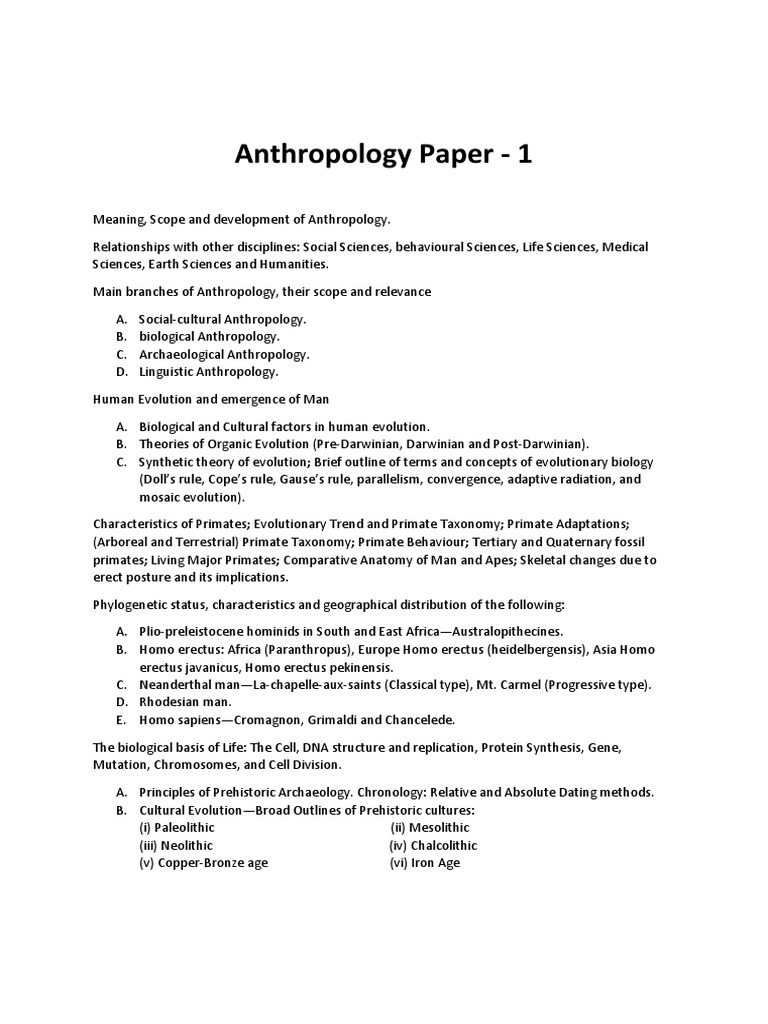
Anthropology, a multifaceted discipline dedicated to the study of humanity, encapsulates an extensive array of perspectives that strive to define what it means to be human. As an umbrella term that embraces various subfields—cultural anthropology, physical anthropology, archaeological anthropology, and linguistic anthropology—it offers a unique lens through which we can examine diverse human experiences across different contexts. The notion of cultural relativism, a cornerstone of anthropological thought, encourages researchers and readers alike to suspend their preconceived judgments and appreciate the multiplicity of cultural norms and values. This article collates definitions of anthropology from various authors, elucidating the rich tapestry of thought that characterizes this discipline.
One of the foundational definitions is presented by Edward B. Tylor, an eminent figure often regarded as the father of cultural anthropology. Tylor famously stated that “anthropology is that part of the science of humanity which deals with the origins, physical and mental development, and social customs of mankind.” His perspective highlights the evolutionary trajectory of human societies as they adapt to changing environments and circumstances. Tylor’s emphasis on social customs sets the stage for an exploration of the intricate ways in which culture shapes the human experience.
Another prolific voice in the realm of anthropology, Franz Boas, reshapes our understanding by asserting that “anthropology is the science of human beings.” Disavowing the universality of cultural norms, Boas posits that society can only be fully understood within its own context. His notion of cultural relativism—arguably one of the most powerful doctrines of modern anthropology—affirms that no culture is superior or inferior to another. Through Boas’ lens, one comes to appreciate the significance of cultural context in shaping human behavior, thus promoting curiosity about the diverse ways of life that flourish across the globe.
Marvin Harris, a notable figure in cultural anthropology, offers a materially-focused perspective, defining anthropology as “a comparative and holistic study of humanity’s bio-cultural diversity.” This definition underscores the intricate interplay between biology and culture, prompting anthropologists to explore how environmental and historical contexts influence human behavior and cultural practices. Harris’ emphasis on the bio-cultural model invites a deeper inquiry into the adaptive mechanisms that societies employ in response to their surroundings. As such, readers are encouraged to reconsider their assumptions about culture as merely a product of human creativity, recognizing the fundamental links to ecological and biological factors.
Similarly, Victor Turner, in his exploration of rituals and symbols, contributes to our understanding of anthropology by describing it as “the study of cultural symbols and their social meanings.” Through Turner’s perspective, one realizes that culture is not a static construct, but rather a dynamic, ever-evolving tapestry woven from the threads of human interaction. His emphasis on symbols illuminates the nuanced ways in which individuals and communities navigate their existence. This approach fosters curiosity about the rituals and symbols ubiquitous in various cultures, instilling a desire to delve deeper into the mysteries of human coexistence.
Diving into the intricacies of language, linguistic anthropologist Edward Sapir posited that “language is a cultural artifact and that it shapes human thought and social life.” This innovative perspective posits that language is not merely a communication tool but also an influential component that molds our realities and perceptions. By examining language through this lens, anthropologists are compelled to explore how linguistic structures influence human cognition and socio-cultural dynamics. Such insights challenge conventional understandings and pique interest in the ways that language interweaves with identity and cultural expression.
Contemporary anthropologist Clifford Geertz, known for his interpretative approach, offers a definition that centers on understanding culture as “a system of inherited conceptions expressed in symbolic forms.” Geertz emphasizes the importance of interpreting these symbols to grasp the underlying meanings within a culture. His insistence on the ethnographic method—an immersive approach that seeks to understand the participant’s point of view—encourages researchers to engage empathetically with the cultures they study. This methodological perspective resonates with cultural relativism, as it urges anthropologists to approach cultures without preconceived biases, fostering a sense of wonder about the myriad ways humans articulate their lives.
The pioneering work of Margaret Mead serves as a pivotal reference point defining anthropology through a lens of gender and culture. Mead stated, “Anthropology is the study of the ways of life of the human group.” Her work illuminated the powerful role that gender plays in shaping cultural norms and practices. By examining diverse cultural expressions of gender roles, Mead’s contributions invite an exploration of the complexities of identity and societal expectations. This focus on gender encourages a critical examination of how cultural narratives propagate and transform, inspiring readers to appreciate the fluidity of human experience.
In juxtaposition with these historical definitions, the contemporary approach to anthropology underscores a vital shift towards recognizing the impact of globalization and transnationalism on cultural identities. This awareness invites anthropologists to explore how cultures are interwoven, reshaped, and transformed through the permeation of ideas, peoples, and institutions across borders. Such exploration opens up an arena of inquiry that challenges essentialist notions of culture, urging scholars to consider the fluidity and connectivity of human experiences in an increasingly interdependent world.
In summary, anthropology encompasses a mosaic of definitions shaped by various scholars who contribute to an evolving understanding of humanity. Each definition reveals a unique perspective that fosters an appreciation for cultural relativism, emphasizing the importance of context in interpreting human behavior and social customs. Such diverse perspectives stimulate curiosity about the myriad ways in which people navigate their lives and articulate their identities. With each scholarly contribution, anthropology continues to promise a shift in perspective, inviting individuals to embrace the rich variability of human culture and relationships.