Short Answer
Introduction to Lost cities of the ancient world
The concept of the ‘lost city’ transcends mere geography; it is a profound meditation on the fragility of human ambition. Throughout history, vast urban centers—hubs of trade, spirituality, and political power—have vanished, obscured by the relentless encroachment of jungles, the shifting sands of deserts, or the sudden violence of tectonic shifts. These cities, once the beating hearts of their respective empires, now exist as silent witnesses to the cycles of ascent and collapse.
To study these lost cities is not merely to conduct an exercise in archaeology, but to engage in a forensic analysis of civilization itself. Whether it is the sophisticated hydraulic engineering of the Indus Valley or the astronomical precision of the Maya, these sites provide an empirical record of how humans organized their societies, interacted with their environment, and attempted to achieve immortality through stone and gold.
Historical Context and Timeline
The disappearance of ancient cities rarely happens in a vacuum. It is typically the result of a confluence of ecological stressors, systemic political failures, and external pressures. The timeline of these cities spans several millennia, often mirroring the rise and fall of the great regional powers.
Key Periods and Events
The Bronze Age Collapse (c. 1200 BCE): A pivotal era where several Mediterranean civilizations, including the Mycenaean Greeks and the Hittites, suffered sudden urban decline. The ‘Sea Peoples’ are often cited as a catalyst, but environmental degradation and systemic fragility likely played a larger role.
The Classic Maya Collapse (c. 800–1000 CE): The abandonment of great cities like Tikal and Copán in the southern lowlands. This period is characterized by a transition from divine kingship to fragmented chiefdoms, likely triggered by prolonged droughts and endemic warfare.
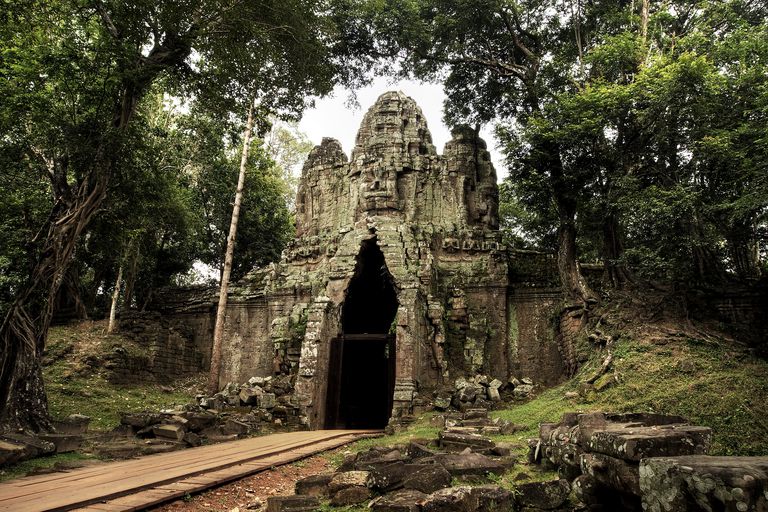
The Khmer Empire’s Decline (c. 14th–15th Century CE): The gradual abandonment of Angkor, the largest pre-industrial city in the world, as the complex irrigation systems failed and the geopolitical center of gravity shifted toward the coast.
Society and Culture
The social fabrics of lost cities were often intricately woven around the concepts of theocracy and hierarchy. In many of these urban centers, there was no distinction between the state and the religion; the city was a cosmic map, and the ruler was the conduit between the earthly and divine realms.
- The Priest-Kings: At the apex of the social pyramid, these individuals managed both the spiritual calendar and the distribution of resources (grain, water, and land).
- The Artisan Class: Highly skilled laborers who specialized in lapidary work, monumental masonry, and textile production, often living in specialized quarters near the city center.
- The Agrarian Peasantry: The engine of the city, residing in the periphery and providing the labor necessary for the construction of ziggurats, pyramids, and canals.
- Ritualistic Traditions: Common threads across lost cities include the performance of bloodletting or animal sacrifice to appease nature deities and the construction of massive ceremonial plazas for public spectacle.
Achievements and Contributions
The brilliance of lost cities is most evident in their physical remains, which reveal an understanding of mathematics, physics, and urban planning that often rivals modern standards.
| Innovation | Civilization/City | Description & Significance |
|---|---|---|
| Grid Urbanism | Mohenjo-daro (Indus) | Precise north-south and east-west street alignments with sophisticated drainage systems. |
| Corbelled Arching | Maya Cities (Tikal) | Advanced stone roofing techniques allowing for tall, narrow interior rooms in pyramids. |
| Hydraulic Engineering | Angkor (Khmer) | Massive reservoirs (Barays) and canals that allowed for multi-crop rice farming per year. |
| Acoustic Architecture | Chavín de Huántar | Tunnels designed to manipulate sound, creating a surreal sensory experience for pilgrims. |
Legacy and Influence
The rediscovery of these cities in the 19th and 20th centuries fundamentally altered our understanding of human history. They challenged the Eurocentric notion that civilization was a linear progression from the Near East to Europe, proving that complex societies emerged independently across the globe.
“The ruins of the ancient world are not merely piles of stone; they are the skeletal remains of dreams. They remind us that no empire, regardless of its technological prowess or cultural dominance, is immune to the entropy of time.”
— Dr. Alistair Thorne, Historian of Urban Decay
Today, these sites serve as critical case studies for modern urban planners. The failure of the Maya water systems, for example, serves as a cautionary tale regarding the dangers of over-extending a city’s carrying capacity in the face of climate change.
Conclusion
Lost cities are more than archaeological curiosities; they are mirrors reflecting our own vulnerabilities. From the ghost cities of the Steppes to the submerged ruins of the Mediterranean, these sites illustrate the precarious balance between human ingenuity and environmental stability. As we uncover more of these vanished worlds through LiDAR and satellite imagery, we do not just find gold or pottery—we find the story of our ancestors’ struggle to build something lasting in an impermanent world.
FAQ
Why are so many ancient cities 'lost'?
Most were not 'lost' in a literal sense but were abandoned due to war, famine, or climate change. Over centuries, nature reclaimed the stone structures, hiding them under soil or vegetation until modern archaeology rediscovered them.
What is the most significant discovery in lost city research recently?
The use of LiDAR technology has been revolutionary, revealing thousands of previously unknown structures in the Maya lowlands, proving that these cities were far larger and more populated than previously thought.
Do all lost cities collapse due to war?
No. While warfare is a factor, many cities suffered from 'systemic collapse,' where a combination of drought, soil exhaustion, and overpopulation made the urban center unsustainable.
Leave a Reply