Short Answer
Introduction
Archaeology is often romanticized through the lens of cinematic adventure, yet the reality of the discipline is a rigorous blend of science, anthropology, and meticulous documentation. For a beginner, the vastness of the field—spanning from the Paleolithic era to industrial archaeology—can be overwhelming. Entering this world requires a balance of theoretical understanding and narrative engagement. The right literature can transform a casual interest into a structured understanding of how material remains are used to reconstruct human behavior, social structures, and environmental adaptations.
This curated list focuses on accessibility without sacrificing academic integrity. It includes foundational textbooks that explain the ‘how’ of excavation, as well as narrative non-fiction that illustrates the ‘why’ behind specific discoveries. Whether you are a student preparing for a degree or a lifelong learner interested in the tangible remnants of antiquity, these works provide the essential scaffolding needed to comprehend the complexities of the archaeological record.
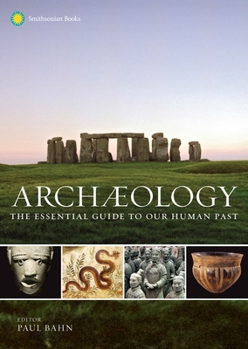
1. Archaeology: Theories and Practices by Colin M. Renfrew and Paul Bahn
Widely regarded as the gold standard for introductory archaeology, this text serves as a comprehensive bridge between a general interest and academic study. Renfrew and Bahn avoid the trap of presenting archaeology as a series of static discoveries, instead framing it as a dynamic process of hypothesis and testing. The book meticulously details the various methods used in the field, from stratigraphic analysis to the application of remote sensing and GIS technology.
The strength of this volume lies in its emphasis on theory. It explains how the discipline has evolved from simple ‘culture-history’—which focused on cataloging artifacts—to processual and post-processual archaeology, which seek to explain the social and economic reasons behind cultural change. For the beginner, this provides a critical framework for understanding that an artifact is not just an object, but a piece of data within a larger systemic context.
2. The First Ten Thousand Years by C. Owen Moore
While many beginners are drawn to the pyramids or the Roman Empire, a significant portion of human history occurred before the invention of writing. Moore’s work focuses on the Neolithic Revolution—the transition from nomadic hunting and gathering to settled agriculture. This period is fundamental to understanding every subsequent human development, including the rise of cities and social hierarchies.
The text is praised for its ability to synthesize complex archaeological data into a readable format. It examines the domestication of plants and animals and the emergence of early architecture, providing a chronological map of how humans fundamentally altered their relationship with the environment. By starting with the dawn of civilization, beginners gain a necessary perspective on the long-term trajectory of human evolution.
3. The Archaeology of Egypt by various authors (Oxford University Press / Specialized Introductions)
Egyptology is frequently the primary entry point for people interested in archaeology. Rather than focusing on occultism or conjecture, a scholarly introduction to Egyptian archaeology focuses on the material culture: pottery, tool types, and the evolution of burial practices. These texts explain the significance of the Old, Middle, and New Kingdoms through the lens of architectural evolution and epigraphy.
Beginners learn that the ‘glamour’ of the gold masks is only a fraction of the story. The real archaeology lies in the settlement patterns of the Nile Valley, the administration of grain stores, and the social stratification evident in non-royal cemeteries. Understanding Egypt through a professional archaeological lens allows the reader to differentiate between historical fact and popular mythology.
4. Sapiens: A Brief History of Humankind by Yuval Noah Harari
Although more focused on anthropology and big-history than the technicalities of digging, Sapiens is an essential companion for any archaeology beginner. Harari provides the conceptual ‘big picture’ that gives archaeological finds meaning. He explores the cognitive revolution, the agricultural revolution, and the unification of humankind, providing the theoretical context in which archaeological evidence exists.
For a novice, this book helps bridge the gap between a single pottery shard and the global movement of people. It encourages the reader to think about archaeology not as the study of dead things, but as the study of the living systems that created those things. While some of his sweeping generalizations are debated by specialists, the book remains a powerful tool for stimulating the curiosity required for deeper study.
5. The Story of Archaeology by various historical compilations
To understand where archaeology is going, one must understand where it began. Books that chronicle the history of the discipline—from the early ‘treasure hunters’ of the 19th century to the scientific rigor of the 21st—are invaluable. These works highlight the shift from antiquarianism (the collection of curiosities) to archaeology (the scientific study of human history).
Reading about the failures and ethical lapses of early excavators provides a necessary lesson in archaeological ethics. Beginners learn about the importance of provenance (the exact origin of an object) and the modern movement toward repatriation and the protection of cultural heritage. This historical perspective transforms the reader’s view of the archaeologist from a looter to a steward of human memory.
6. Mediterranean Archaeology by G. Keith Hopkins
For those interested in the classical world, a focused look at the Mediterranean basin is essential. This region offers some of the densest archaeological records in the world, from the Minoans and Mycenaeans to the Phoenicians and Romans. A focused text on this area teaches beginners how different cultures influenced one another through trade and conquest.
The study of the Mediterranean is particularly useful for learning about ‘comparative archaeology.’ By comparing the ruins of a Greek polis with a Roman castrum, students can see how different political ideologies manifest in physical urban planning. It serves as an excellent exercise in reading landscapes and understanding how geography dictates the success or failure of empires.
7. Introduction to Archaeology by authors such as Brian Fagan
For those seeking a more textbook-style approach, Brian Fagan’s introductory works are highly recommended. Fagan focuses on the ‘science’ of the process. He breaks down the methodology into digestible phases: surveying, excavating, analyzing, and publishing. This is where a beginner learns about the ‘law of superposition’—the idea that older layers of soil are generally deeper than newer ones.
These texts also introduce the reader to the various tools of the trade, from the simple trowel and brush to high-tech LiDAR (Light Detection and Ranging) and carbon-14 dating. By understanding the limitations and strengths of different dating methods, a beginner can begin to critically evaluate the claims made in historical documentaries or news articles.
Conclusion
Archaeology is a discipline of patience and precision. While the allure of the ‘big find’ is strong, the true value of the field lies in the synthesis of data to understand the human condition. By progressing from broad narratives like Sapiens to the technical rigor of Renfrew and Bahn, a beginner can build a solid foundation of knowledge. These books collectively offer a roadmap from the prehistoric wilderness to the complex urban centers of antiquity, ensuring that the reader views the past not as a collection of ruins, but as a continuous and evolving human story.
FAQ
Do I need a degree to start reading archaeology books?
No, many introductory books are written for a general audience and require no prior academic background, though they introduce academic concepts gradually.
What is the difference between archaeology and paleontology?
Archaeology focuses on human history and prehistory through material remains, while paleontology focuses on the fossil record of all life, including dinosaurs and early hominids before they became 'human'.
Which book is best if I only want to learn the basics of how to dig?
A textbook like Brian Fagan's 'Introduction to Archaeology' is best, as it focuses heavily on the practical methodology of field excavation.
Leave a Reply