Africa, a continent teeming with biodiversity, is home to a vast array of unique fauna. Among these myriad species, animals that commence with the letter ‘N’ provide a fascinating insight into the ecological tapestry of the region. This article will explore various representatives of the animal kingdom, discussing their characteristics, habitats, and significance within their ecosystems.
Beginning our exploration, we encounter the Nightjar. This elusive bird, often hidden among foliage during the day, exhibits remarkable camouflage. Commonly found in diverse habitats ranging from woodlands to savannas, Nightjars are primarily nocturnal, making their haunting calls during twilight hours. Their diet consists mainly of insects, which they diligently hunt in low light conditions. The various species of Nightjars found in Africa, such as the Fiery-necked Nightjar and the Cape Nightjar, exhibit a captivating array of vocalizations and plumage variations.
Transitioning from avian species, we arrive at the Nubian Goat. Though primarily domesticated, these goats are integral to the agricultural fabric of many African communities. Recognized for their versatility and resilience, Nubian Goats are prized for both their milk and meat. Their distinctive long ears and varied coat colors distinguish them from other livestock breeds. Particularly in arid regions, where their adaptive abilities are put to the test, Nubian Goats represent a sustainable source of nourishment for rural populations.
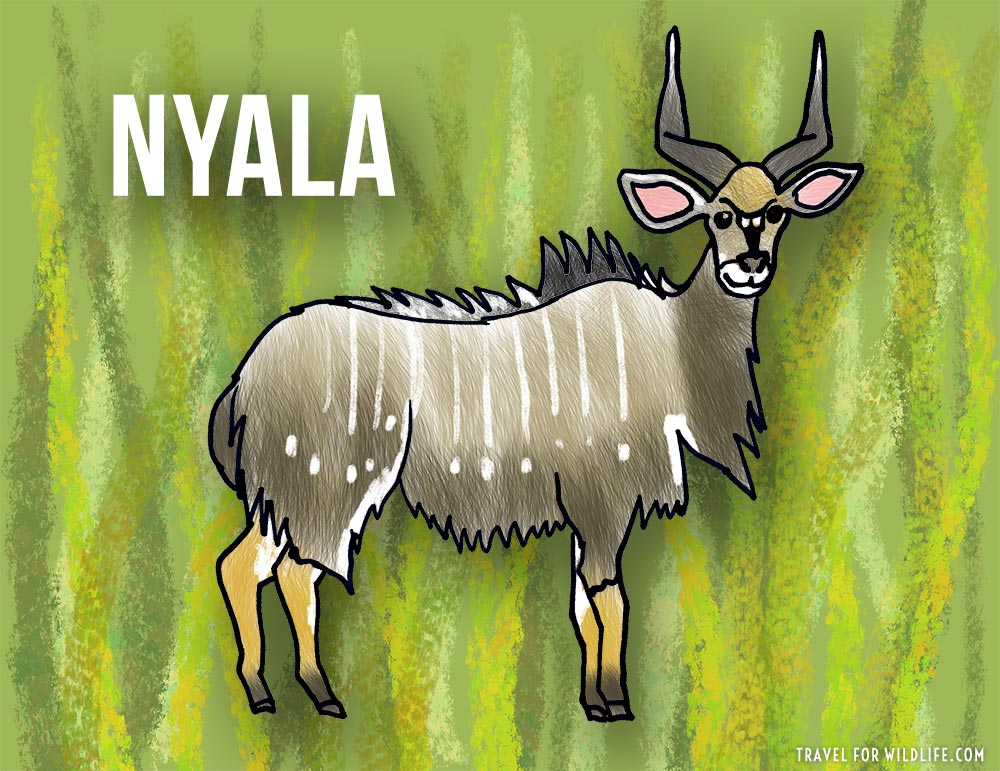
Shifting gears to the realms of wildlife, we encounter the Nyala. This graceful antelope, endemic to southern Africa, is renowned for its sexual dimorphism. Males, with their striking spiral horns and deep brown coats adorned with white stripes, are a sight to behold. In contrast, females exhibit a lighter, more muted coloration, facilitating better concealment from predators. Nyala are typically found in dense bushveld and woodland areas, where they forage on leaves, fruit, and shrubs. Their sociability varies, as males tend to be solitary or form small groups, while females and their offspring often gather in larger herds.
Another noteworthy species is the Nile Crocodile, which inhabits freshwater systems across Africa and is one of the largest reptiles on the continent. Characterized by a powerful jaw and formidable size, this predator plays an essential role in the aquatic ecosystem. Their ambush hunting strategy is both ingenious and effective, relying on stealth and patience. Nile Crocodiles are also crucial in maintaining the balance of aquatic life, as they help regulate populations of fish and other small animals.
Continuing our journey, the Nicator presents an intriguing example of African avifauna. This enigmatic bird is characterized by its melodic calls and distinctive appearance. Inhabitants of dense underbrush in forested areas, Nickys (as they are commonly known) are often heard before they are seen. Their diet primarily consists of insects and fruits, which they eagerly forage from foliage. The presence of Nicators indicates a healthy ecosystem, as they can serve as indicators of environmental change.
We cannot overlook the significance of the Nile Monitor, a large lizard species that boasts a thriving presence along riverbanks and wetlands. This formidable reptile exhibits a unique adaptation strategy, utilizing both aquatic and terrestrial habitats to thrive. Nile Monitors are opportunistic carnivores, feeding on a diet that includes fish, amphibians, and even carrion. Their powerful physique and keen sense of smell equip them for survival in often competitive environments. The Nile Monitor’s role in the food web is multifaceted, contributing to the regulation of prey populations and serving as prey for larger animals.
Furthermore, we must highlight the Numbray (commonly referred to as the striped mouse). This diminutive rodent is found in various habitats, including savannas and grasslands. Its remarkable ability to reproduce prolifically makes it a vital component of the ecosystem, often being a food source for larger predators, thereby imparting a dynamic balance to its habitat. The striped mouse’s foraging behavior and communal nesting habits provide valuable insights into social structures within rodent populations.
As we summarize the diverse wildlife featured in this article, it becomes evident that animals beginning with the letter ‘N’ exhibit a wide range of adaptations and ecological roles. From predators such as the Nile Crocodile and the Nightjar’s stealthy foraging techniques to the social structures of Nubian Goats and Nyala, these species underscore the complexity of African ecosystems. Each animal plays a critical part in maintaining ecological balance, contributing to the rich tapestry of life on the continent.
In conclusion, Africa’s fauna starting with ‘N’ serves as a reminder of nature’s intricacies, showcasing the interplay between adaptation, survival, and the environment. Their stories, woven together, encapsulate the essence of African wildlife and highlight the importance of preserving these remarkable species for future generations. As we continue to explore and learn, each creature offers unique narratives that enrich our understanding of biodiversity and the interconnectedness of life.