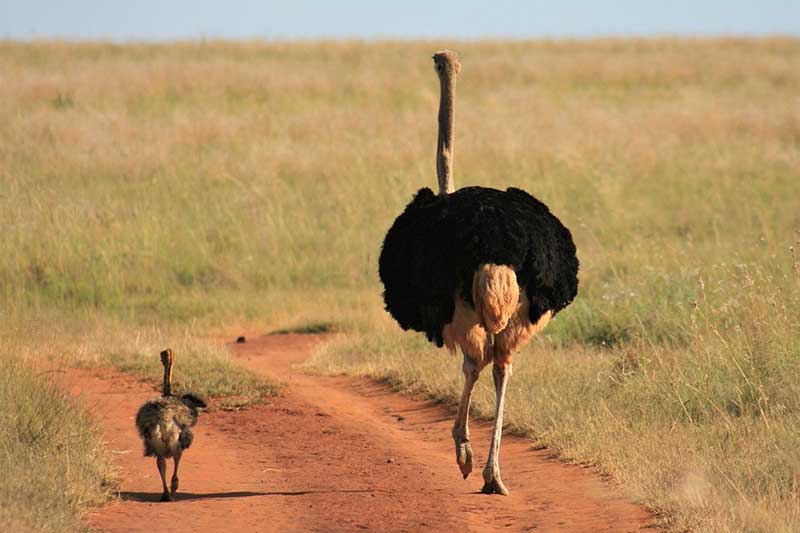
Animals that stand on two legs present an intriguing tableau in the tapestry of nature. Within the realm of zoology, such creatures challenge established paradigms, stirring both curiosity and inquiry among observers. This exploration delves into the phenomenon of bipedalism in the animal kingdom, analyzing diverse species that exhibit this distinct characteristic through the prism of cultural relativism.
Many species, from avians to mammals, navigate their environments on two limbs. This adaptation often serves crucial functions, including foraging, locomotion, and social interaction. Notable examples encompass the emu, kangaroos, and even some lesser-known but equally fascinating creatures such as the cassowary. Each of these animals underscores unique evolutionary trajectories towards bipedalism, meriting a deeper examination.
Starting with birds, the avian class provides some of the most emblematic representatives of this upright mode of movement. The emu (Dromaius novaehollandiae) exemplifies this phenomenon through its robust, elongated legs and remarkably sturdy gait. Native to Australia, emus use their bipedalism not only for travel across expansive terrains, but also in mating displays, where their dance-like movements signify health and vitality to potential mates. In the same ecological niche, the cassowary (Casuarius spp.) stands out, bearing a striking appearance with its vibrant blue skin and helmet-like casque. Cultural perspectives often imbue this bird with mythological significance, such as representing the spirits of the forest among indigenous Australian communities. Here lies an essential intersection of biology and culture, nudging us to reconsider how societies construct meanings around these two-legged beings.
The kinship of mammals to bipedalism deserves a parallel examination. The kangaroo (Macropus spp.) represents a quintessential example of marsupial bipedalism. Its powerful hind limbs not only facilitate swift movement but also enable remarkable agility in traversing the arid landscapes of Australia. The kangaroo’s mode of locomotion bears cultural relevance, symbolizing both freedom and the quintessential Australian identity. This perception fosters a sense of national pride among Australians, converging natural history with collective identity, thus establishing a cultural narrative that reverberates within societal frameworks.
Diving deeper into the domain of primates offers further insight. Species such as the chimpanzee (Pan troglodytes) and bonobo (Pan paniscus) exhibit variations of bipedalism, primarily adapted for specific contexts. While their predominant form of locomotion involves quadrupedalism, these primates routinely engage in upright walking, especially when navigating through dense foliage or displaying social hierarchies. The cultural relativist perspective highlights the importance of understanding these behaviors beyond mere biological function. It invites reflection on human perceptions of ‘naturalness’ and ‘normalcy’, challenging anthropocentric views that often idealize human-like bipedalism as the pinnacle of evolutionary achievement.
Notably, the presence of bipedalism in non-traditional contexts, such as in some species of reptiles and insects, compels further scrutiny. The ability of certain lizards to run on their hind legs when threatened, for instance, serves as an evolutionary response to predation. Here, bipedalism manifests as a survival strategy rather than a social or communicative one. This demonstrates malleability in animal adaptations and signals a propensity for cultural and environmental influences to reshape behavior, leading us to question the universality of biological traits across species.
The interactions of these upright animals with human cultures can reveal much about societal values, myths, and environmental interactions. For example, birds often serve as metaphorical and literal symbols in various cultures, representing freedom and transcendence. The adaptability of species such as parrots has allowed them to integrate into urban environments, where they are often anthropomorphized in local folklore. Their vocal capabilities and mimicry have enabled deeper human-animal interactions, further redefining bipedal avians’ roles in cultural narratives.
Meanwhile, the kangaroo’s visual representation has been co-opted in marketing and imagery, reflecting profoundly on national identity. Its dynamic representation in Australian folklore signifies resilience and adaptability in an unforgiving landscape. This intersection reinforces the biocultural model, wherein both ecological and sociocultural factors coalesce, influencing the meanings attributed to such creatures within a broader anthropological context.
In summary, the phenomenon of bipedalism in the animal kingdom evokes significant reflections on evolutionary biology and cultural relativism. Exploring this subject reveals not just the mechanical aspects of movement but also the profound implications such traits have on cultural narratives and identities. As we consider the various animals that stand on two legs, we uncover distinct pathways of interaction, shedding light on the interplay between nature and culture. These upright oddities compel us to reconsider our categorizations and assumptions, urging a more nuanced understanding of both the animal kingdom and our place within it.
Through this examination, one finds not just a compilation of species but a complex web of interrelations that redefine our perspectives on life in its myriad forms, prompting an ongoing dialogue regarding the intricate tapestry that embodies the natural world.