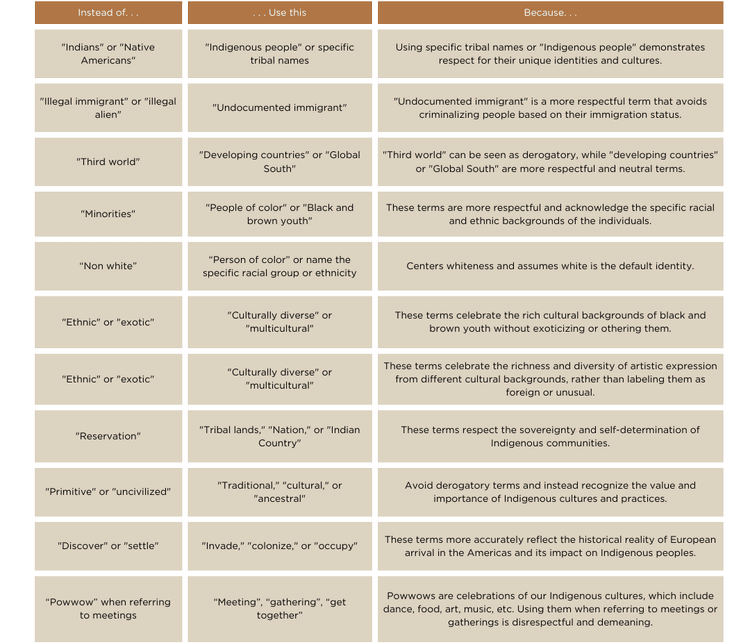
The terminology surrounding racial and ethnic identities has evolved significantly, reflecting broader societal shifts in perspectives on diversity, inclusivity, and respect. Employed as an umbrella term, “People of Color” (POC) encompasses a multitude of ethnicities, cultures, and experiences. However, the phrase itself warrants examination through the lens of cultural relativism—a framework that encourages understanding cultural phenomena within their respective contexts rather than through the prism of dominant cultural paradigms.
To commence, it is vital to appreciate the historical context from which the term “People of Color” emerged. Coined during the civil rights movements in the United States, the term aimed to unify non-white communities against systemic oppression. Nevertheless, as societal contexts shift, the appropriateness and effectiveness of such terminology requires scrutiny. The consequences of labeling are multifaceted; while they can promote solidarity, they can also inadvertently homogenize diverse experiences and identities.
In exploring alternative lexicons to “People of Color,” it is imperative to consider the implications of each term within varying cultural contexts. For instance, the Grand Unifying Term (GUT), “BIPOC” (Black, Indigenous, People of Color), recognizes the distinct histories, struggles, and identities of the respective groups it encompasses. It underscores the individuality of Black and Indigenous communities, which have historically faced unique forms of marginalization. Yet, critics argue that the term can perpetuate division among marginalized groups by placing them within rigid categories, thus potentially minimizing the complexity of intersectional identities.
An exploration of terms such as “Culturally Diverse Communities” offers another avenue of linguistic reframing. This phrase emphasizes cultural variation without tethering individuals strictly to racial demographics. The term invites admiration for the richness and multiplicity embedded within cultural practices, fostering a sense of respect for distinct traditions and histories. By encouraging dialogue that centers on cultural richness, we open avenues for deeper understanding and connection.
Additionally, the phrase “Marginalized Communities” may prove useful in contexts highlighting systemic inequalities. This term broadens the scope to encompass socioeconomic factors and other dynamics that contribute to marginalization beyond mere racial identity. With this linguistic approach, discussions around inequity can transcend binary classifications and embrace a more nuanced understanding of hierarchical structures that plague various societies.
Nonetheless, each term carries its own nuanced implications. The success of reframing existing terminology revolves around the necessity for individuals to engage in respectful conversation, actively seeking connection and solidarity. Candid dialogue rooted in cultural relativism allows for a better appreciation of differing lived experiences. It necessitates acknowledging that language is not merely a tool for communication; it is an active participant in shaping social realities and influencing perceptions.
From an academic perspective, examining the significance of terminology also highlights the importance of agency among individuals within the communities being discussed. It is essential to inquire: Who determines the “correct” language? Empowering members of racialized communities to define their identities is pivotal in fostering ownership over the discourse surrounding cultural representation. Moreover, encouraging this agency aligns with principles of cultural relativism, which champions perspectives arising from within cultural contexts rather than imposing external frameworks.
Yet, challenges persist. The evolution of language often confronts entrenched beliefs and resistant paradigms. In many cases, terms that were once deemed appropriate may fall out of favor or acquire pejorative connotations. The discourse surrounding these changes not only reflects a shift in understanding but underscores the complex relationship between language, identity, and power dynamics. Such shifts demand a reflexive approach, urging individuals to remain versatile and attuned to evolving interpretations of respect and representation.
Crucially, the concept of respect transcends linguistic choices. Respect comprises an active acknowledgment of the humanity and dignity inherent in every person, urging individuals to engage with one another in ways that recognize shared experiences while celebrating differences. This approach necessitates greater cultural awareness, inviting individuals to educate themselves about histories, roots, and the lived realities of those whose experiences differ from their own. Consequently, shifting perspectives in terminology can serve as a catalyst for personal and communal reflection.
In conclusion, the exploration of alternatives to the term “People of Color” reflects broader conversations around inclusivity, identity, and social justice within varied cultural contexts. While engaging with terms such as BIPOC, Culturally Diverse Communities, and Marginalized Communities, it is vital to approach these conversations with nuance, empathy, and a commitment to understanding. As language shapes our reality, it becomes imperative to remain vigilant, deftly navigating the linguistic terrain with the goal of fostering respect and solidarity in an increasingly interconnected world.
Ultimately, the evolution of language surrounding identity encapsulates a promise of change—a significant shift in perspective that invites curiosity and encourages dialogue. By challenging established terminologies and advocating for shared understanding, societies can cultivate environments that honor the diversity of human experiences and promote a culture of dignity and respect for all.