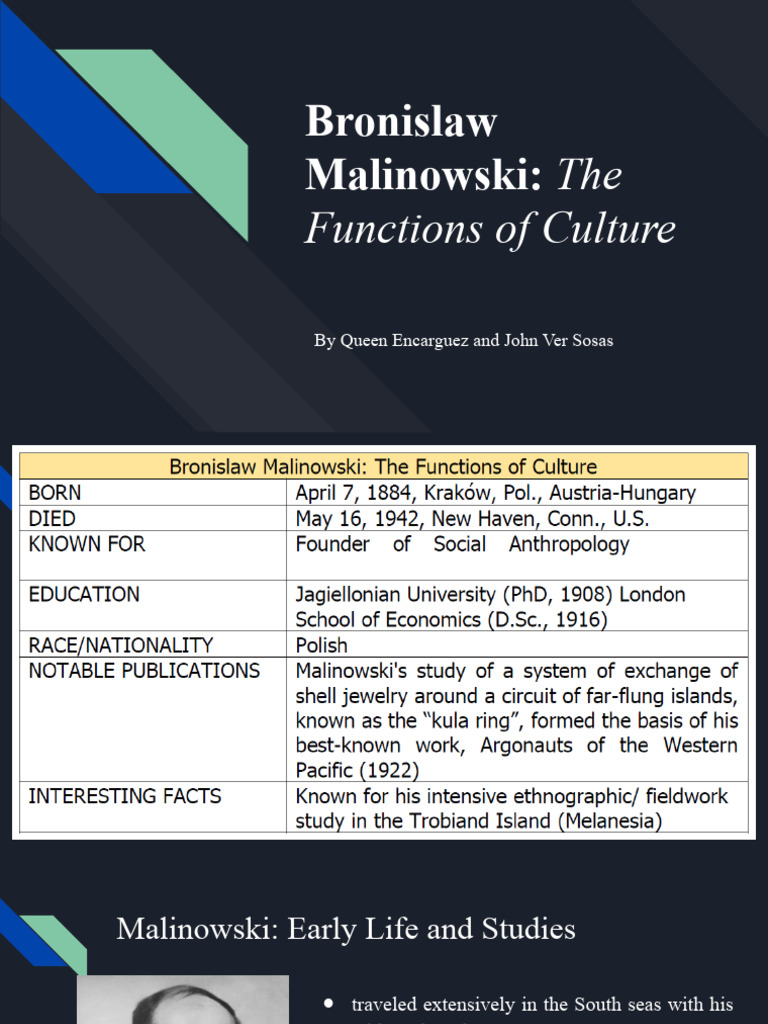
In the realm of anthropology, the term “small talk” may seem trivial at first glance, yet Bronislaw Malinowski, a luminary in the field, ascribed it a more intricate significance. Malinowski’s ethnographic explorations, particularly in the context of the Trobriand Islands, illuminated the multifaceted roles of communication, thereby questioning the superficial nature of casual exchanges. This analysis intends to delve into Malinowski’s perception of small talk and its implications through the lens of cultural relativism, elucidating the deeper dynamics at play in everyday interactions.
Malinowski famously termed small talk as “phatic communion.” The essence of phatic communion lies in its function to maintain social bonds rather than convey specific information. This term encapsulates the idea that communication can serve purposes beyond mere content transmission; its very act can fortify social cohesion, establish interpersonal relationships, and create a framework for community identity.
The practice of small talk might be dismissed by some as inconsequential chatter, yet Malinowski argued that it is imbued with deeper cultural significance. In the Trobriand Islands, he observed that the seemingly mundane exchanges among individuals often carried profound meanings. For instance, the locals engaged in banter, greetings, and casual inquiries not merely to fill silence, but to affirm their connection and belonging within a social fabric. Through this lens, small talk transcends mere politeness, emerging as a ritualistic practice laden with cultural norms and expectations.
Turning our attention to cultural relativism, we find that the appreciation of small talk demands an understanding of the belief systems, values, and interpersonal dynamics unique to various societies. From Malinowski’s perspective, one must refrain from imposing one’s own cultural standards when assessing the significance of communication practices in another society. The Trobrianders exhibit a form of small talk that might appear frivolous or redundant to an outsider; yet, once viewed through their cultural framework, it reveals itself as a vital means of social engagement and intercultural understanding.
In contrast to individualistic societies, where personal achievement and direct communication may be valorized, collectivist cultures often prize communal harmony and relationality. The act of engaging in small talk can serve as a way to affirm one’s social ties, while also navigating the complexities of group dynamics. By contextualizing small talk within cultural relativism, Malinowski’s analysis prompts us to consider the societal functions it serves—bonding, reinforcing, and negotiating social hierarchies.
Moreover, the emotional labor intrinsic to small talk merits further examination. Individuals often navigate a labyrinth of social expectations when engaging in seemingly innocuous conversations. The nuances of tone, facial expression, and body language play pivotal roles in how such exchanges are perceived and interpreted. Malinowski’s ethnographic work reveals that these subtleties are not merely decorative, but constitute the bedrock of effective communication across cultures. The ability to read these signs can enhance one’s social capital and foster a sense of belonging, underscoring the significance of phatic communion.
Further complicating the discourse on small talk is the temporal aspect of communication. The transient nature of these interactions contributes to their charm and significance. In recognizing the impermanence of small moments, one achieves a greater appreciation for the fleeting yet impactful exchanges that shape our daily lives. For the Trobrianders, these moments may represent an opportunity to momentarily escape the rigors of life, underscoring how small talk can serve as a crucial buffer against the more pressing concerns of existence.
In the age of digital communication, the concept of small talk has evolved, raising questions about its relevance and manifestation in contemporary society. The advent of social media platforms has provided new avenues for phatic communion, albeit in digital formats. Users engage in small talk through comments, likes, and shares, contributing to a communal atmosphere despite physical distance. Yet, the essential inquiry remains: does the digital veneer lose the profundity found in face-to-face exchanges? Malinowski would likely argue that the inherent cultural context determines the validity and depth of such interactions, regardless of the medium utilized.
Cultural relativism compels us to acknowledge that small talk, often dismissed as banal, is vital for maintaining social connections and cultural identity. It serves as a practice that weaves the fabric of daily life, providing a lens through which we can better understand the human experience. Malinowski’s exploration of this seemingly mundane aspect of communication unveils the rich tapestry of social relations, lending credence to the idea that even the most trivial exchanges can bear significant cultural weight.
In conclusion, the significance of small talk should not be underestimated. Through Malinowski’s insightful analysis and the lens of cultural relativism, we uncover layers of meaning and function that inform our understanding of communication as an anthropological subject. Small talk is not merely a series of empty exchanges; it is a vital aspect of social life, a mechanism for relationship-building, and a manifestation of cultural identities. Thus, as we explore our own communication practices, let us approach them with the same curiosity and depth of insight that Malinowski championed, appreciating that every conversation has the potential to reveal unseen layers of human connection.