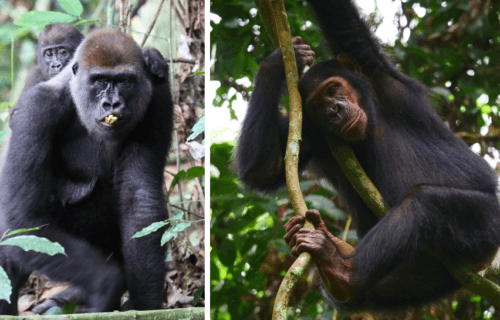
In the realm of primate intelligence, the comparative analysis of gorillas and chimpanzees presents a unique opportunity to understand cognitive capabilities within a cultural relativism framework. The question “Are gorillas smarter than chimpanzees?” serves as a springboard into a more profound exploration of not just intelligence but also the intricacies of social behaviors, environmental adaptations, and the influences of cultural contexts.
Intelligence in non-human primates is typically measured through various cognitive tasks, problem-solving abilities, and social interactions. Gorillas (Gorilla gorilla) and chimpanzees (Pan troglodytes), while both classified under the Hominidae family, exhibit distinctive cognitive traits and behaviors that contribute to a nuanced understanding of intelligence.
Chimpanzees have long been heralded as the more “intelligent” of the two species, primarily due to their extensive use of tools and complex social structures. They have demonstrated remarkable problem-solving capabilities, often utilizing sticks to extract termites from mounds or using stones to crack open nuts. Such behaviors are not merely instinctual responses; they indicate a level of foresight and planning that is often associated with human-like intelligence. Furthermore, the social hierarchies and intricate communication among chimpanzees suggest a high degree of social intelligence, whereby individuals navigate relationships and alliances within their groups.
In contrast, gorillas also exhibit impressive cognitive skills, albeit in different contexts. They are known to engage in tool use, albeit less frequently than their chimpanzee counterparts. For instance, gorillas have been observed using leaves as sponges to soak up water or to cover themselves from rain. Additionally, they possess remarkable memory and spatial awareness, which are vital for their survival in dense forest habitats. While their tool use may not be as sophisticated as that of chimpanzees, gorillas exhibit a different form of intelligence that is equally adaptive to their ecological niche.
From a cultural relativism perspective, it is essential to consider how environmental factors shape the cognitive abilities of these two species. The habitats of chimpanzees, often characterized by more open landscapes, necessitate a diverse range of foraging strategies and the use of tools. In contrast, gorillas predominantly inhabit dense forests, which may result in less reliance on tool use and a stronger emphasis on social learning within family units. This context-dependent intelligence highlights that behaviors deemed intelligent are often cultivated through the demands of specific environments rather than inherent capabilities.
Another aspect to consider is the way social structures influence cognitive development. Chimpanzees are inherently social animals, living in large communities where cooperation and competition coexist. In such settings, individuals must continuously adapt to changing social dynamics, often leading to advanced problem-solving skills and strategic thinking. Conversely, gorillas typically exhibit more stable family structures. Their societies are less fluid, relying on long-term bonds between maternal figures and offspring. This dynamic may shape their cognitive evolution in ways that prioritize emotional intelligence and the ability to nurture rather than tool innovation.
Moreover, the role of culture in shaping behaviors and learning cannot be overlooked. Chimpanzees exhibit what researchers have termed “cultural traditions,” where knowledge and skills are transmitted across generations. Variations in foraging techniques, grooming behaviors, and even communication patterns can be observed between different chimp populations, suggesting that culture plays a pivotal role in shaping cognitive development. Gorillas, while demonstrating some elements of culture in their behavior, do not exhibit the same breadth of learned traditions, leading to questions about the pathways through which intelligence is expressed.
Examining these two species also brings to light the philosophical implications surrounding intelligence. The definition of “smart” is often anthropocentric, reflecting human ideals of innovation and creativity. In the case of gorillas and chimpanzees, intelligence manifests differently based on their ecological adaptations and social needs. Thus, engaging with this topic through a cultural relativism lens challenges the notion of a singular, universal standard of intelligence. Instead, it emphasizes that the capabilities of these primates must be understood within their respective contexts, revealing the complexity of cognitive evolution across species.
The fascination with primate intelligence also prompts broader questions about human cognition. As the evolutionary lineage of gorillas and chimpanzees diverged from that of humans, examining their cognitive abilities invites reflections on our own intellectual development. Understanding what constitutes intelligence in primate behavior not only enriches our comprehension of evolution but also enables us to reconnect with the fundamental traits that define humanity.
In conclusion, the comparison of gorillas and chimpanzees through the lens of intelligence reveals a complex tapestry woven from ecological demands, social interactions, and cultural influences. While chimpanzees may excel in certain cognitive tasks, gorillas exhibit a different, equally valuable form of intelligence that aligns with their ecological niche. Recognizing the variations in intelligence among these primates allows for a more inclusive understanding of cognitive capabilities, challenging traditional hierarchies and inviting deeper reflections on the richness of primate behavior. Thus, rather than determining a clear hierarchy of intelligence, we are compelled to appreciate the diversity and adaptability inherent in both species, celebrating the unique manifestations of intelligence that each embodies.