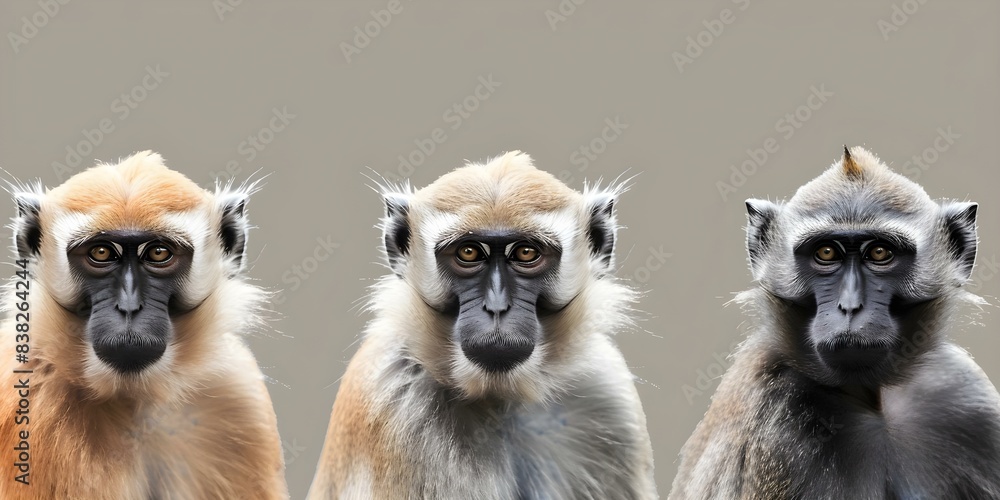
The inquiry into our ancestral lineage often evokes a profound inquiry: Are we related to monkeys? This tantalizing question delves into the complex tapestry of evolutionary biology and anthropology, inviting exploration from diverse perspectives, including that of cultural relativism. While the competitive dualities of existence may suggest a binary of human versus monkey, a more nuanced understanding reveals the intertwining paths of evolution, reflecting an intricate familial connection.
To unpack this relationship, one must first embrace the tenets of evolutionary theory. Humans (Homo sapiens) and monkeys (which belong to the suborder Haplorhini, including both monkeys and apes) share a common ancestor, albeit one that dwelled in the distant past, approximately 25 to 30 million years ago. This ancestral figure is akin to an artistic sketch, an early representation from which myriad evolutionary narratives have emerged. It reveals that rather than a ladder of evolution, we are part of a sprawling, branching tree, each twig representing different evolutionary adaptations as species meandered through time.
Human evolution, marked by a series of adaptive milestones—bipedalism, encephelization, and the development of complex language—signifies a unique trajectory. Yet, it is crucial to recognize that monkeys, as well as apes, are not merely remnants of a simpler evolutionary past; they are sophisticated beings in their own right. They exemplify a different narrative thread in the tapestry of life, contributing meaningfully to the biosphere. The metaphor of the evolutionary tree elucidates the interconnectedness shared amongst species, further underscoring the need for a cultural relativism approach when discussing our biological relatives.
Cultural relativism posits that beliefs and practices must be understood within their own cultural context. By applying this lens to the study of primate-human lineage, we can more accurately consider how evolutionary biology has been interpreted across myriad cultures. In various indigenous belief systems, the relationship between humans and primates has been framed through the lens of kinship. Some cultures regard primates as ancestors or as spiritual totems, appreciating their roles within the ecological network as intertwined with humanity’s own saga.
Within this discourse, it is essential to approach the representation of monkeys in different cultural contexts thoughtfully. In Western cultures, the representation of monkeys has oscillated between comedic caricatures in media and solemn depictions in scientific discourse. This dichotomy can undermine the rich cognitive and emotional landscapes that these creatures inhabit. For instance, studies have documented problem-solving capabilities and sophisticated social structures in monkeys, which challenge reductive stereotypes that perceive them merely as simplistic or amusing beings.
The metaphor of the “Mirror” serves as an intriguing lens through which we can examine our relationship with primates. Monkeys reflect our own idiosyncrasies and social behaviors, evoking a sense of familiarity that both intrigues and disturbs. Observations of monkey behaviors—tool usage, social hierarchies, and emotional expressions—mirror human conduct, urging us to confront the uncomfortable truths of our primal heritage. It prompts an introspective journey into understanding how these traits are not manifestations of superiority but rather indicative of a shared evolutionary past.
This reflection upon our kinship with monkeys also raises ethical considerations within anthropological and conservation narratives. As humans, we carry the significant responsibility of custodianship over the environments that both primate and human species inhabit. Deforestation, habitat loss, and climate change disproportionately affect primate populations, threatening both biodiversity and our shared ancestral legacy. Ethically, the link between human and monkey imperatives compels us to advocate for environmental justice across all species, recognizing that the health of the planet is inextricably tied to our survival.
Moreover, animal rights movements have spurred a re-evaluation of how we engage with non-human primates. The implications of research involving monkeys and the ethics surrounding their treatment in laboratories highlight the shifting paradigms that shape human-animal relations. Cultural relativism emphasizes the varied perspectives surrounding these issues, suggesting that solutions must be grounded in the rich tapestry of community values and ecological understanding rather than imposed from a singular worldview.
The contemporary understanding of genetics has further illumined the intricate web of life. Humanity shares approximately 98% of its DNA with chimpanzees, a close relative within the primate family. This genetic kinship reinforces the notion that biological differences are superficial and that the shared heritage is more significant than previously acknowledged. It underscores a profound invitation to foster empathy, urging acceptance of the narrative of connections rather than divisions among species.
As we ponder the question, “Are we related to monkeys?” we must navigate a multifaceted landscape that encompasses biological, ethical, and cultural dimensions. Acknowledging our relationship with primates reframes our understanding of humanity’s place within the broader ecological narrative. Recognizing the complexities of evolution alongside cultural relativism allows for a deeper appreciation of the intricate dance of evolution, ancestry, and the human experience.
Therefore, embracing an ethos of respect and interconnectedness towards our fellow beings, reflected in our shared evolutionary journey, can lead to more sustainable and harmonious cohabitation on this planet. In embracing our ancestral ties to monkeys, we celebrate a journey that informs our identity, propelling us toward a future rooted in understanding, empathy, and collective stewardship.