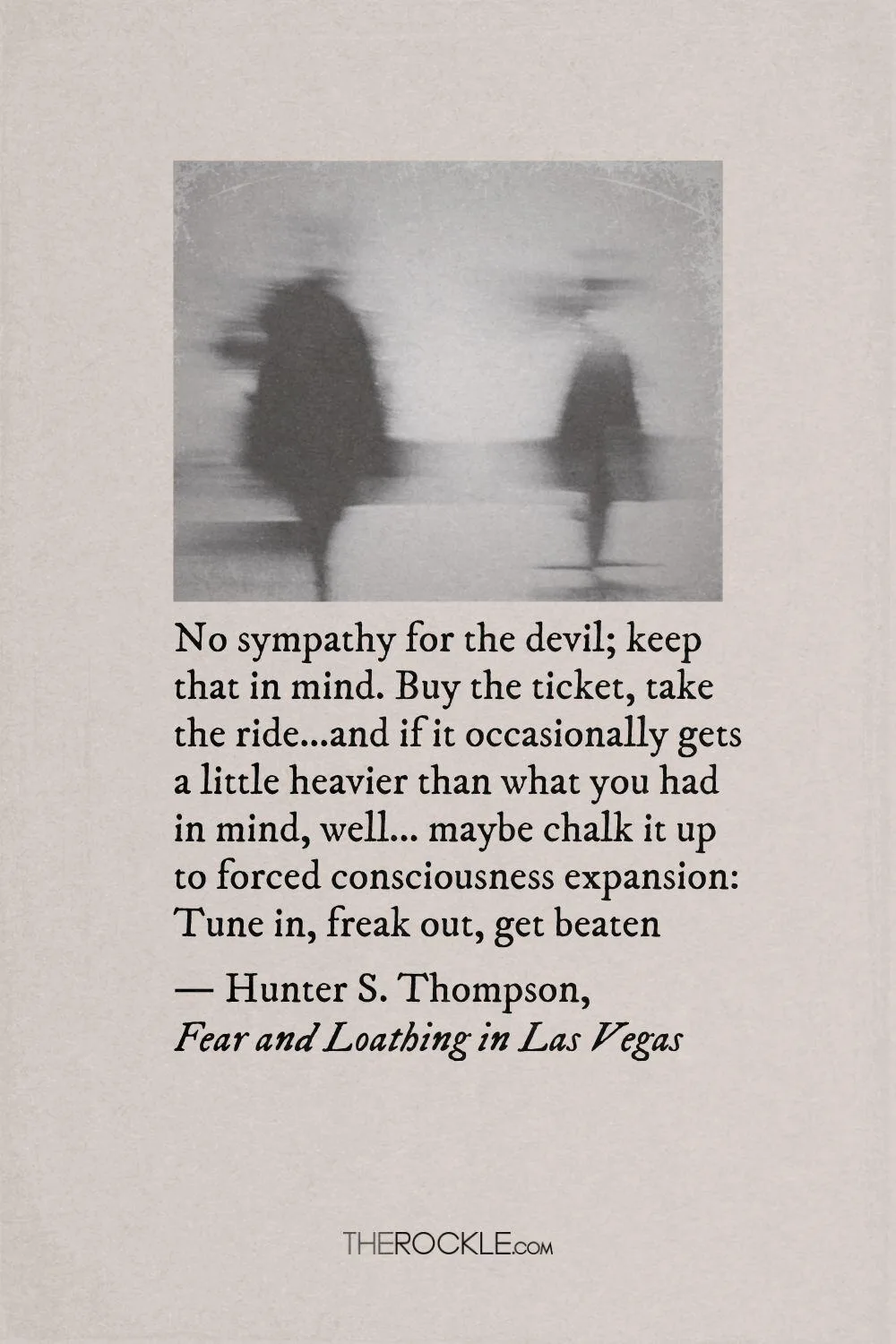
The realm of literature has long been populated by bold voices and radical thinkers who challenge conventional paradigms. Among these luminaries, Hunter S. Thompson stands as an archetype of the audacious author, whose fervent exploration of the human condition and societal contradictions left an indelible mark on both journalism and literature. But Thompson’s work invites inquiry into a broader category of authors who similarly embody wild minds and fearless voices. This exploration of those akin to Thompson delves into the rich tapestry of cultural relativism, examining how each writer’s unique perspective contributes to our understanding of human experience.
At the core of Thompson’s appeal is his unconventional narrative style, often characterized by a frenetic energy and an ardent commitment to truth, no matter how chaotic. This method aligns him with other literary figures who defy normative conventions, such as Kurt Vonnegut. Vonnegut’s works, including “Slaughterhouse-Five,” leverage dark humor and an absurdist lens to critique war and society’s intricacies. Like Thompson, he uses a distinct blend of satire and personal reflection to engage readers in dialogues about existentialism and the absurdity of human endeavors. The cultural relativism embodied in Vonnegut’s narratives encourages a multifaceted understanding of morality within differing contexts, a theme that resonates powerfully within the modern zeitgeist.
Equally significant is the work of Jack Kerouac, whose seminal novel “On the Road” epitomizes the spirit of the Beat Generation. Kerouac’s spontaneous prose reflects a yearning for freedom and authenticity, mirroring Thompson’s own quest for truth amid a tumultuous societal backdrop. Both authors share a restless spirit, threading their thoughts through a tapestry of experiences that push against societal constraints. Kerouac’s exploration of cultural intersections through travel, jazz, and spirituality invites readers to confront their own preconceived notions of life, making him an essential figure in the discussion of wild minds in literature.
Another notable figure is Charles Bukowski, whose raw and unflinching poetry and prose delve into the gritty underbelly of American life. Known for his unconventional lifestyle and disdain for pretentiousness, Bukowski’s voice resonates with Thompson’s fearless authenticity. Works such as “Post Office” and “Love is a Dog From Hell” eschew romanticized ideals in favor of a stark examination of desire, despair, and the human condition. Bukowski’s emphasis on the mundane and often sordid aspects of existence parallels Thompson’s own explorations, thereby embodying a different facet of cultural relativism that draws attention to the divergent paths of human experience.
Moving beyond American literature, the writings of Gabriel Garcia Marquez also deserve contemplation. As a forefather of magical realism, Marquez intertwines the extraordinary with the ordinary to illuminate the complexities of Latin American culture. His magnum opus “One Hundred Years of Solitude” serves as a powerful commentary on the cyclical nature of history and the national psyche. Like Thompson, Marquez’s narratives compel readers to examine their cultural identities and the interplay of history, myth, and reality. The author’s reflections on solitude provide a quintessential perspective on the human experience, reinforcing the notion that understanding different cultural narratives is vital in grasping collective human truths.
A more contemporary figure worthy of mention is Ta-Nehisi Coates, whose incisive essays and books illuminate the intricacies of race and identity in America. In “Between the World and Me,” Coates addresses the systemic struggles faced by African Americans through an intimate lens, echoing Thompson’s emphasis on the personal nature of societal critiques. His fearless examination of identity and historical narratives demonstrates cultural relativism by challenging readers to confront their own biases and assumptions about race. Coates, like Thompson, employs a fierce authenticity that resonates deeply and challenges the status quo.
Moreover, the works of bell hooks expand the discourse on cultural relativism through the intersection of race, gender, and class. Her critical feminist analyses encourage a re-evaluation of societal structures that perpetuate oppression. hooks’ ability to weave personal narratives with broader social critiques positions her as a fearless voice in contemporary literature. The radical honesty found in her essays invites readers to interrogate their own roles within societal constructs, reminiscent of Thompson’s own constant dissection of power dynamics.
While each of these authors demonstrates a distinct approach to literature and cultural exploration, they collectively embody the fearless spirit that characterizes Hunter S. Thompson. Their confronting themes and innovative styles elucidate the complexities of human experience, animated by a relentless pursuit of truth. Ultimately, the fascination surrounding these wild minds can be traced back to our intrinsic curiosity about the human condition and the diverse contexts that shape it. Literature becomes a vehicle for understanding, unraveling the tangled threads of identity, history, and societal constructs.
In conclusion, exploring authors who parallel Thompson’s fearless engagement with culture and society illuminates our own perceptions of normalcy, truth, and authenticity. These writers not only share a similar ethos but also enhance the discourse surrounding cultural relativism, urging readers to embrace multiplicity in understanding human experiences. By bridging narratives from varied contexts, they reinforce the imperative to acknowledge and appreciate the kaleidoscope of perspectives that define our shared existence. In doing so, they invite us to ponder not only who we are but also who we might become in the tapestry of life that binds us all.