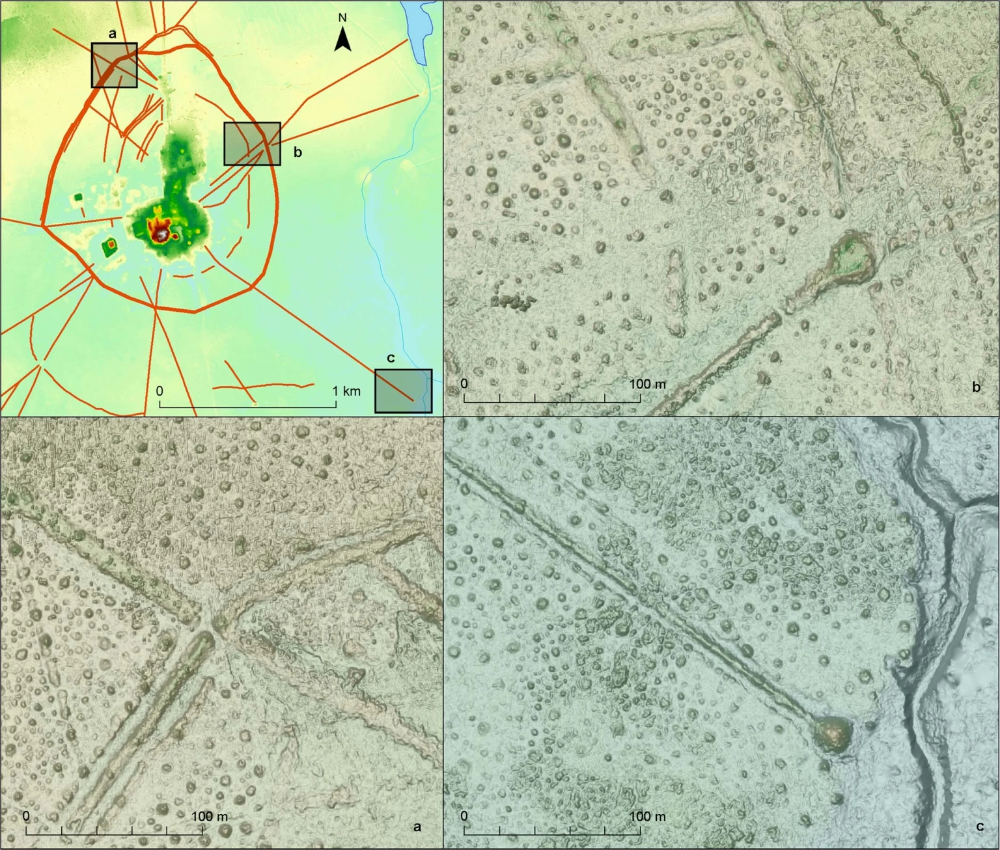
The dense foliage of the Amazon rainforest has long obscured the remnants of past civilizations, shrouding them in a mystical enigma that beckons researchers and laypeople alike to ponder the cultural heritage lying beneath the verdant canopy. The advent of Light Detection and Ranging (LiDAR) technology has catalyzed a transformative shift in our understanding of this biodiverse region. As researchers deploy aerial LiDAR to penetrate the dense forest cover, we are confronted with compelling questions: What do these revelations tell us about the historical interplay between human societies and their environments? How does this newfound knowledge challenge our previous understandings of cultural relativism regarding indigenous populations?
To explore these questions, one must first understand the essence of cultural relativism. This anthropological framework posits that cultural norms and values derive meaning strictly within their societal context. Thus, interpretations of civilization cannot be extrapolated from a Western perspective alone. The seismic discoveries unveiled by LiDAR underscore the intricacies of this perspective, revealing that past societies were far from rudimentary or disconnected from their environments. Instead, they exhibited sophisticated urban planning and agricultural practices.
Before the advent of LiDAR imaging, our perceptions of pre-Columbian Amazonian societies were often shaped by anecdotal evidence and romanticized notions of ‘noble savagery’. This perspective dismissed the idea that indigenous peoples could have developed intricate social structures akin to those found in more recognized ancient civilizations, such as the Egyptian or Aztec empires. However, as LiDAR reveals complex earthworks, monumental architecture, and extensive road systems, it begs the question: Are we finally ready to reconsider our definition of what constitutes a civilization?
One of the most striking features illuminated by LiDAR is the extensive network of geoglyphs and built environments. These ancient structures, once hidden, include geometric shapes and massive earthworks that demonstrate a deep understanding of landscape management and the integration of natural resources. For instance, some researchers have identified what can be interpreted as an agrarian society that enhanced their local ecology, rather than merely extracting resources from it. This observation nuanced the prevailing view, illustrating that these societies were not simply passive clients of nature but active, dynamic participants in their ecosystems.
LiDAR technology also reveals interconnected settlements that challenge the correlation between isolation and simplicity. What previously appeared as small, dispersed tribes are now recognized as parts of a larger, complex network of communities, suggesting that cultural exchange was more widespread than previously thought. This insight posits a more collaborative model of civilization development, where shared knowledge and resources fostered innovation and resilience. The realization that numerous Amazonian groups were interconnected through an intricate web of trade and communication enlivens the conversation around cultural relativism. What does this say about our tendency to compartmentalize cultures into isolated entities, ignoring the potential for interaction and mutual influence?
Beyond the physical structures, LiDAR imagery provides the opportunity to rethink mythologies surrounding Amazonian peoples. For instance, the notion of the ‘virgin’ rainforest, untouched and unaltered by human influence, starkly contrasts with the findings suggesting that these landscapes were, at least in parts, actively shaped by human hands. This prompts a radical reevaluation of narratives that perpetuate the idea of environmental stewardship solely being a modern construct. Are we prepared to acknowledge the historicity of sustainability practices that have been woven into the very fabric of Amazonian cultures?
Such explorations inevitably lead to a potential challenge for anthropologists and researchers. The increasing visibility of these findings invites scrutiny and a demand for accountability in terms of how this knowledge is applied. As the cultural context becomes clearer, the ethical implications of archaeological research take on heightened significance. The legacies of these societies must be understood not merely as relics of the past but as vital components of ongoing cultural identity for present-day indigenous groups. In this regard, engaging with local populations in collaborative research becomes essential, ensuring that their voices are central in the narrative surrounding their heritage.
Another captivating dimension of the LiDAR revelations lies in their implications for contemporary environmental discourse. As we face escalating climate crises and ecological degradation, the lessons gleaned from these ancient societies resonate profoundly. Their strategies for sustainable agriculture and resource management hold valuable insights that can inform modern practices. Can we cultivate a dialogue that interweaves historical knowledge with current challenges, grounding environmental advocacy in both past successes and failures?
Ultimately, the visions of the past invoked by LiDAR technology offer more than mere archaeological data; they challenge us to embrace a broader array of human experiences. They urge a departure from reductive cultural narratives, fostering a more inclusive framework that recognizes the agency of diverse societies and their adaptive capacities. The revelations beneath the Amazon canopy compel us to reconsider not only what it means to be civilized but also how we engage with each other and our environments today.
In conclusion, the interplay of ancient Amazonian societies and their environments, once obscured by the impenetrable rainforests, emerges through LiDAR imaging as a rich tapestry of human ingenuity and resilience. This technological advancement invites us to ask: How do we reconcile our present with the legacies of the past, and in what ways can we honor those who came before us while forging a sustainable path for the future? As we embrace the challenges posed by these revelations, we must navigate the complex landscape of cultural interpretations and ethical responsibilities with both humility and rigor.