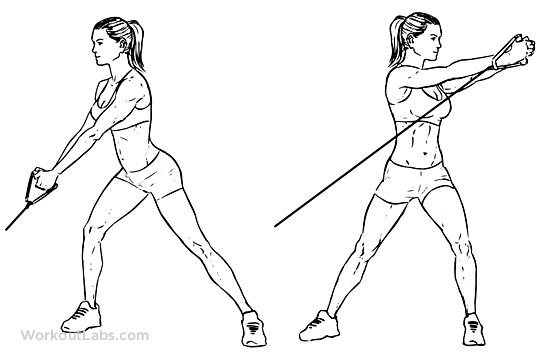
The Wood Chop exercise is a dynamic movement that seamlessly integrates multiple muscle groups while emphasizing core strength, rotational power, and balance. This exercise, while rooted in physical fitness, can be examined through a cultural relativism lens, offering insights into how varied societies interpret and integrate fitness ideas into their ethos. As societies evolve, so too does the understanding of fitness and well-being, making it pertinent to analyze the Wood Chop from both a physiological and sociocultural perspective.
To embark on a thorough understanding of the Wood Chop exercise, one must first appreciate its biomechanical significance. The movement is characterized by a chopping motion, which engages the core, hips, shoulders, and legs. The unique combination of these muscle groups results in enhanced rotational strength, which is integral for many physical activities, from daily movements to competitive sports. The exercise not only fortifies physical capability but also fosters an internal sense of stability and control.
In various cultures, the concept of core strength is salient as it pertains to broader notions of health, vitality, and functionality. For example, in many indigenous societies, strength training is often viewed not merely as a means for aesthetic improvement but as a vital component of physical preparedness for daily challenges. The Wood Chop can be interpreted as an embodiment of this philosophy, as the exercise simulates the rotational movements necessary for various survival tasks intrinsic to those cultures, such as chopping wood or harvesting crops.
Culturally, the emphasis placed on core strength varies significantly. In Western societies, fitness paradigms often center around aesthetics and competitive metrics. The Wood Chop is frequently heralded in gyms and fitness studios as a premier move within functional training programs. Here, it is analyzed through the lenses of performance enhancement and body sculpting, fostering a culture where physical prowess is intertwined with societal expectations of appearance and ability.
Conversely, in Eastern practices such as martial arts or yoga, the focus shifts to balance, stability, and mental fortitude. The Wood Chop’s emphasis on core engagement resonates deeply within these traditions, which advocate for a harmonious blend of strength and mindfulness. In these contexts, the exercise can be seen not merely as a physical endeavor but as a practice for cultivating inner peace and focus, illustrating the cultural significance placed on the interconnectedness of body and mind.
The physical benefits of the Wood Chop can be further delineated into specific outcomes that support the broader idea of physical fitness as a cultural construct. Primarily, the exercise enhances core stability—a critical factor in not only athletic performance but in daily function and injury prevention. A strong core serves as a foundation, supporting other movements and allowing for greater power generation in activities ranging from lifting objects to sports participation.
Moreover, the Wood Chop fosters better balance and proprioception. Balance is not merely a physical requirement but a metaphorical one; it symbolizes the equilibrium many cultures aspire to achieve in life. The act of engaging in a controlled movement, reminiscent of traditional tasks, allows practitioners to cultivate both physical and psychological balance. This intersection illustrates how exercises like the Wood Chop encapsulate broader cultural values of harmony and resilience.
As we dissect the multidimensionality of the Wood Chop, it becomes evident that its practice may yield additional benefits rooted in social and cultural engagement. In many cultures, group exercise is a communal affair—an opportunity for social cohesion and collective advancement. The Wood Chop can be practiced in groups, fostering camaraderie and reinforcing community bonds. This collaborative effort enhances accountability and motivation among participants, thereby amplifying the exercise’s significance as a social construct.
Furthermore, the symbolic nature of the Wood Chop elucidates how fitness is perceived across diverse groups. It can serve as a bridge connecting generations, whereby older generations impart wisdom about manual labor and physical prowess to younger ones through the lens of a contemporary exercise. As fitness trends evolve, exercises like the Wood Chop maintain their relevancy, emphasizing the perpetuity of cultural practices surrounding movement and work.
However, challenges are also present. The commodification of the Wood Chop in the fitness industry can sometimes disconnect the exercise from its original cultural roots. The commercialization may impose standardization, favoring performance metrics over individual interpretation and adaptation. Thus, the importance of understanding the cultural context surrounding such exercises cannot be overstated, as it may illuminate pathways to more personalized and culturally sensitive approaches to fitness.
In conclusion, the Wood Chop exercise is a poignant example of how a single physical movement can encapsulate themes of core power and balance while intertwining with various cultural narratives. By examining the Wood Chop through the lens of cultural relativism, one gains insight into the multifaceted nature of fitness, encompassing physical, psychological, and social dimensions. This holistic understanding underscores the importance of recognizing diverse perspectives in the realms of exercise and wellness. It is through this recognition that one can appreciate the richness of human experience and its various expressions in fitness practices globally.