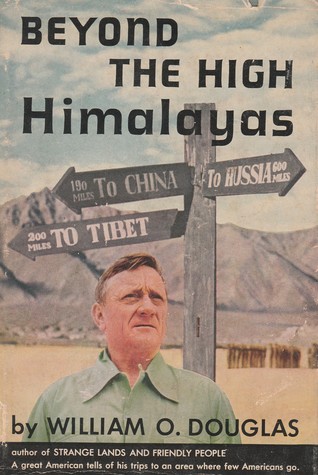
In the realm of travel literature, few works resonate as profoundly as “Beyond the High Himalayas.” Authored by William O. Douglas, this narrative unfolds in the vivid backdrop of the majestic Himalayas, illuminating not only the physical terrain but also the intricate tapestry of human experience interwoven through cultural relativism. The book encapsulates the dual essence of adventure and reflection, challenging readers to contemplate the broader implications of their own cultural perspectives as they embark on their intellectual pilgrimage through Douglas’s evocative prose.
The Himalayas, often romanticized in Western literature and thought, serve as a compelling metaphor for both the physical and psychological landscapes we traverse. Douglas’s journey takes place amidst towering peaks and serene valleys, where each moment invites introspection and a re-evaluation of prevailing dispositions towards culture. His exploration, while anchored in the literal mountain range, also delves into the metaphorical heights and depths of human experience. Herein lies a fundamental observation: the allure of the Himalayas often transcends mere geographic fascination; it invokes a profound yearning for understanding and communion with the unfamiliar.
Cultural relativism, the principle that posits that a person’s beliefs and activities should be understood based on their own culture, serves as a lens through which to interpret Douglas’s experiences. As readers traverse the pages, they are encouraged to question their own cultural frameworks. The Himalayas, with their rich tapestry of indigenous traditions, stand in stark contrast to Western paradigms. This juxtaposition underlines a significant truth: the mountains symbolize a yearning for connection that transcends boundaries, both geographical and ideological.
Moreover, Douglas’s encounters with the local populace illuminate the complexities of cultural interactions. As he navigates through various villages and meets diverse individuals, the reader is apt to witness a multitude of responses to his benevolent curiosity. These interactions evoke a broader contemplation of cultural empathy—an understanding that each culture possesses its own intrinsic value and worldview. Through Douglas’s lens, we discern that fascination with another culture often stems from an undercurrent of desire to connect, a testament to the universal human condition.
The narrative also embodies a critique of ethnocentrism, the evaluation of other cultures according to the standards of one’s own. Douglas, while acknowledging his own cultural biases, portrays the rich traditions and practices of the Himalayan communities without condescension. In doing so, he advocates for an appreciative approach to cross-cultural interactions. This perspective serves as a reminder that the Himalayas are not merely a stage for adventure seekers; they are home to intricate social structures and philosophies that warrant respect and understanding. Douglas implores us to recognize that the hills echo not just with the winds of exploration, but also with the voices of those who inhabit them.
As the journey unfolds, the physical landscape of the Himalayas becomes synonymous with introspection. Each summit reached symbolizes not only a physical achievement but also a metaphorical ascension towards greater understanding. The breathtaking vistas provide a stark reminder of nature’s grandeur and humanity’s transient presence within it. This interplay between nature and culture reflects a notion that resonates deeply within the realm of anthropological inquiry; the acknowledgment that the environment and human experiences shape one another, crafting a nuanced mosaic of life.
In addition, the narrative intricately intertwines themes of spirituality and existential inquiry. Douglas encounters sacred sites and venerable figures whose lives are deeply integrated with the geographical and cultural essence of the Himalayas. This exploration invites a dialogue about the intersection of faith, spirituality, and cultural identity. Each experience challenges the reader to reflect on the role of spirituality in shaping community dynamics and individual purpose. The mountains, revered as the abode of gods, serve as a conduit for both personal and collective existential contemplation.
The delicate balance between adventure and reflection in Douglas’s narrative is notable. While the adventure may incite excitement and intrigue, the reflective elements compel one to absorb and appreciate the wealth of insights that a journey can elicit. In this regard, Douglas emerges as a thoughtful traveler, embodying the virtues of a cultural anthropologist. He affirms that adventure may spark interest, but reflection sustains understanding. This duality enriches the reader’s experience, prompting them to ponder the significance of their own adventures and the myriad of cultures they encounter.
Furthermore, Douglas’s narrative invites consideration of ecological perspectives. The Himalayas, often viewed through the lens of adventure tourism, are also an ecosystem of delicate balance. The preservation of these environments is crucial not only for maintaining biodiversity but also for respecting the cultures that have thrived in these regions. Thus, a consideration of sustainability arises as a poignant theme. As travelers, there resides an intrinsic responsibility to engage with these unique cultures respectfully and sustainably. The lessons imparted in “Beyond the High Himalayas” serve as a preface to discussions surrounding ecological stewardship in relation to cultural preservation.
In conclusion, “Beyond the High Himalayas” transcends the conventional boundaries of adventure literature, unfurling a rich tapestry of cultural relativism. Douglas’s narrative invites readers to tread not just the geographic expanse of the Himalayas but to journey into the complexities of human experience. Through cultural exploration, introspection, and a critical examination of our own beliefs, the work implores us to recognize that our fascination with others is rooted in an inherent desire for connection and understanding. The Himalayas stand not merely as a backdrop for adventure, but as a profound reminder of the shared human experience that binds us all—and as a call to approach the world through a lens of empathy and respect.