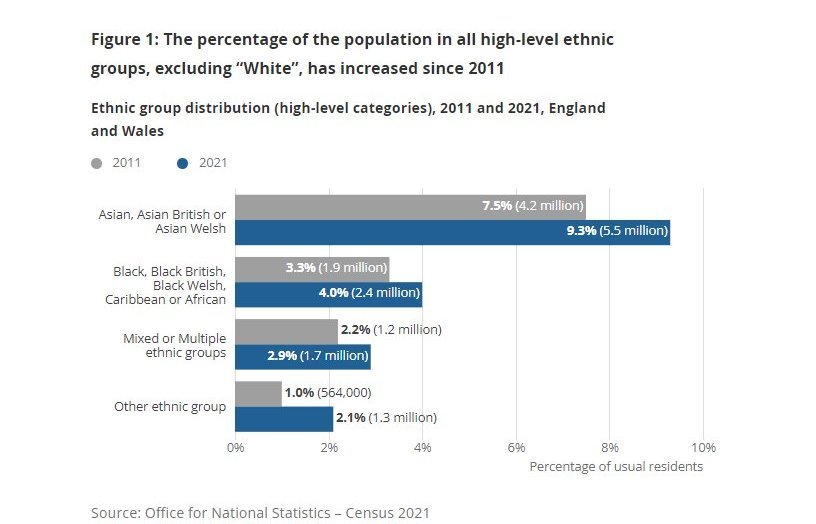
The birth rate in the United Kingdom, segmented by ethnicity, is a topic of considerable sociological intrigue. The interplay between ethnicity and reproductive trends reveals broader dynamics within the societal fabric, offering insights into the cultural relativism inherent in demographic changes. This exploration will elucidate the multifaceted dimensions of birth rates through an analytical lens, reflecting on the commonplace observations of varying birth rates while delving into the underlying cultural significances.
To initiate this discourse, it is essential to acknowledge the statistical variances in birth rates among different ethnic groups. In recent years, studies have indicated a marked disparity in birth rates between White British populations and minority ethnic groups. Generally, minority ethnic communities tend to exhibit higher fertility rates. This phenomenon can be attributed to a myriad of factors ranging from socioeconomic conditions, cultural norms surrounding family size, to differing values regarding child-rearing. While some may hastily label these trends as mere demographic shifts, a deeper inquiry into the cultural narratives surrounding these birth rates is imperative.
Cultural relativism posits that understanding an individual or a group’s behaviors requires comprehension of their cultural context. Within the spectrum of ethnic groups in the UK, the diverse cultural backgrounds significantly inform reproductive choices. For instance, South Asian communities often embrace larger familial units, correlated with traditional values that prioritize extensive kinship networks. These values are not merely adaptive strategies, but reflections of cultural identity and socio-historical contexts that exalt familial interconnectedness.
Conversely, the White British demographic often demonstrates a preference for smaller families, a tendency shaped by evolving societal norms that emphasize career development and individualism over traditional familial roles. This divergence raises questions about the evolution of cultural identity amid globalization and shifting economic landscapes. As varied ethnic groups navigate the complexities of modernity, their reproductive practices become a canvas demonstrating the negotiation between traditional values and contemporary influences.
Another critical aspect that influences birth rates is the socioeconomic status of different ethnic communities. Studies have shown that economic stability often correlates with family planning decisions. Higher education levels and access to employment opportunities typically result in lower birth rates. This correlation highlights the intersection between economic agency and reproductive autonomy. Ethnic minorities residing in economically disadvantaged communities may experience systemic barriers that impact their family planning choices, consequently reflecting lower access to healthcare, education, and social resources.
Moreover, the implications of immigration patterns cannot be overlooked in this analysis. Many minority ethnic groups have been historically shaped by migration. For instance, new communities arriving in the UK often retain traditional cultural practices, including those related to family size and reproductive behavior. Such adherence not only fortifies their cultural heritage but also affects their perception within the broader British society. The relationship between migration and birth rates presents an evolving narrative, where the influences of globalization intermingle with deeply rooted cultural identities.
Furthermore, the role of policies in shaping birth rates presents a vital area of exploration. Governmental approaches to immigration and family policies can inadvertently influence reproductive choices within various ethnic communities. Subsidies for childcare, parental leave, and healthcare accessibility serve to either encourage or deter household expansion. Consequently, policymakers must deliberate the potential cultural ramifications of their approaches, recognizing that their initiatives may affect population dynamics in diverse and profound ways.
As observations regarding birth rates unfold in the UK, one cannot ignore the societal attitudes that underpin these statistics. Media representations and public discourse often perpetuate stereotypes that can color perceptions of ethnic minorities and their reproductive choices. These portrayals frequently distort the complexities surrounding familial structures and may foster prejudiced attitudes, further complicating the intercultural dialogue necessary for cohesiveness in a multicultural society.
Additionally, the process of acculturation also merits attention. As minority groups assimilate into the broader cultural milieu, their reproductive practices often undergo transformations. The synthesis of cultural values can lead to a re-evaluation of family planning; thus, an intricate pattern emerges where traditional expectations collide with contemporary realities. Families who once adhered strictly to cultural norms may find themselves navigating new societal expectations, leading to a renaissance of values associated with parenthood and family size.
In summation, examining birth rates by ethnicity in the UK through the framework of cultural relativism reveals substantive layers of meaning that extend beyond mere numbers. The intricate tapestry woven by cultural values, socioeconomic influences, immigration patterns, governmental policies, and societal attitudes profoundly shapes reproductive trends across ethnic communities. Ultimately, this multifaceted discussion emphasizes the need for a discerning understanding of demographic changes, inviting scholars, policymakers, and society at large to engage with the underlying narratives that inform these complex realities.
As the UK continues to journey through demographic evolution, it remains imperative to approach birth rate discussions with a perspective that honors cultural diversity. This awareness fosters more meaningful dialogues that embrace the richness of human experience, reinforcing the notion that behind every statistic lies a profound narrative waiting to be understood.