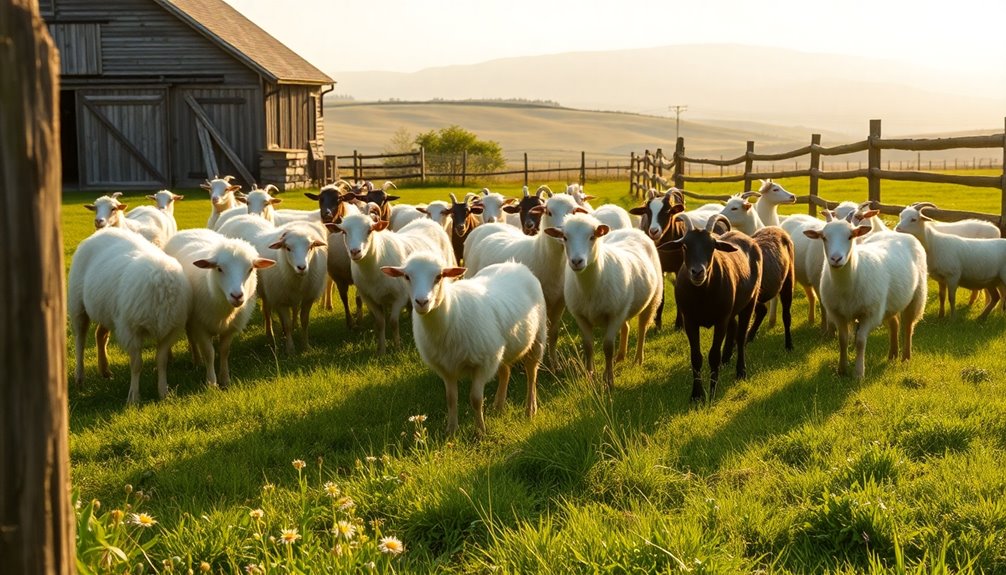
The cohabitation of sheep and goats is a topic of intrigue within agricultural circles, eliciting both curiosity and contention. This remarkable phenomenon transcends mere animal husbandry; it embodies a complex interplay of cultural practices, ecological considerations, and interspecies dynamics. Understanding the nuances of mixed herding through the lens of cultural relativism can elucidate the common observations and common mistakes made by farmers and enthusiasts alike.
At a cursory glance, it may seem that sheep and goats, two integral constituents of pastoral agriculture, could peacefully coexist. They belong to different genera within the Bovidae family—sheep categorized under Ovis aries and goats under Capra aegagrus hircus. Despite their distinctions, both species share fundamental needs and behaviors that allow for a symbiotic existence under the right conditions. However, farming strategies that tend to overlook cultural context, geographic variance, and species-specific traits often falter.
To embark upon the journey of synchronizing sheep and goats in a mixed herd, one must first consider their inherent behaviors. Sheep are typically more docile, exhibiting a strong flocking instinct. This trait makes them more vulnerable to stress in an unfamiliar environment, as they thrive in large communal groups. In contrast, goats are notoriously independent and inquisitive grazers, exhibiting a tendency for exploration and even escapism. Respecting these intrinsic behaviors is foundational to fostering an environment conducive to cooperation.
Moreover, from an ecological perspective, sheep and goats exhibit differences in their grazing habits. Sheep prefer to graze on fine grasses, whereas goats favor the leaves, shrubs, and trees. This disparity presents an opportunity for resource optimization. Farmers who successfully manage to integrate these species can maximize land use, reducing competition for food while enhancing the biodiversity of their pastures. However, the cultivation of a mixed herd is fraught with potential pitfalls, largely stemming from the misunderstanding of these dietary preferences.
One common mistake is assuming that keeping sheep and goats together requires minimal management. Some farmers neglect the need for separate feeding stations and the importance of monitoring their animals’ health closely. Due to their distinctive dietary needs, competition can arise if they are feeding from the same source. If provisioned inadequately, there may be a risk of ruminal acidosis in sheep, a condition stemming from excessive grain intake often driven by competition with the more assertive goats. Such oversights can lead to significant health detriments within herds, stigmatizing the practice of mixed grazing.
Another prevalent issue is rooted in social hierarchies, which manifest remarkably differently in these species. Goats, often viewed as more dominant, can intimidate sheep, leading to social discord. This applies especially during feeding times or when certain resources are limited. Depending on the nutritional and social dynamics, sheep may be bullied, resulting in chronic stress and lowered productivity. Herein lies the need for farmers to develop an understanding of animal behavior; effective management can mitigate social hierarchies that adversely affect herd health.
Culturally, the perspectives surrounding the cohabitation of sheep and goats are also deserving of consideration. In some agrarian communities, mixed herding is a longstanding tradition, steeped in cultural significance and familial practices. The benefits are not merely economic; they contribute to the cultural tapestry of these communities, reflecting a sustainable approach to farming. By examining local practices through cultural relativism, one can appreciate the various methodologies employed—each tailored to the specific geographic, sociocultural, and economic contexts of the farming population.
Moreover, it is essential to acknowledge the role of knowledge and tradition in such practices. Cultural practices surrounding animal husbandry are often transmitted orally through generations. The integration of sheep and goats often reflects empirical wisdom that takes generations to hone. In this sense, exploration of local farming techniques can unveil strategies that are both historically significant and ecologically sustainable. The very fascination with mixed herding lies in its delicate balancing act—between tradition and innovation, between ecology and economy.
The implications of mixing sheep and goats go beyond immediate agricultural productivity; they extend into broader ecological conversations. The interdependence of these two species may serve as a microcosm for understanding biodiversity and sustainable practices in farming. As contemporary agriculture grapples with the repercussions of monoculture and the exigencies of climate change, the integration of diverse species in farming systems offers an avenue for resilience against such challenges.
To summarize, the endeavor of mixing sheep and goats is laden with both opportunities and challenges, each steeped in rich cultural narratives and agricultural realities. Recognizing the social behaviors, dietary choices, and environmental contexts is crucial for any farmer contemplating this practice. Above all, understanding these aspects through a cultural relativism framework enables deeper insights into the farming techniques that have, and will continue to, shape our landscapes. Embracing the subtle complexities of these animals’ interactions not only enhances productivity but also enriches the farmer’s understanding of the intricate web of life woven within their herds.