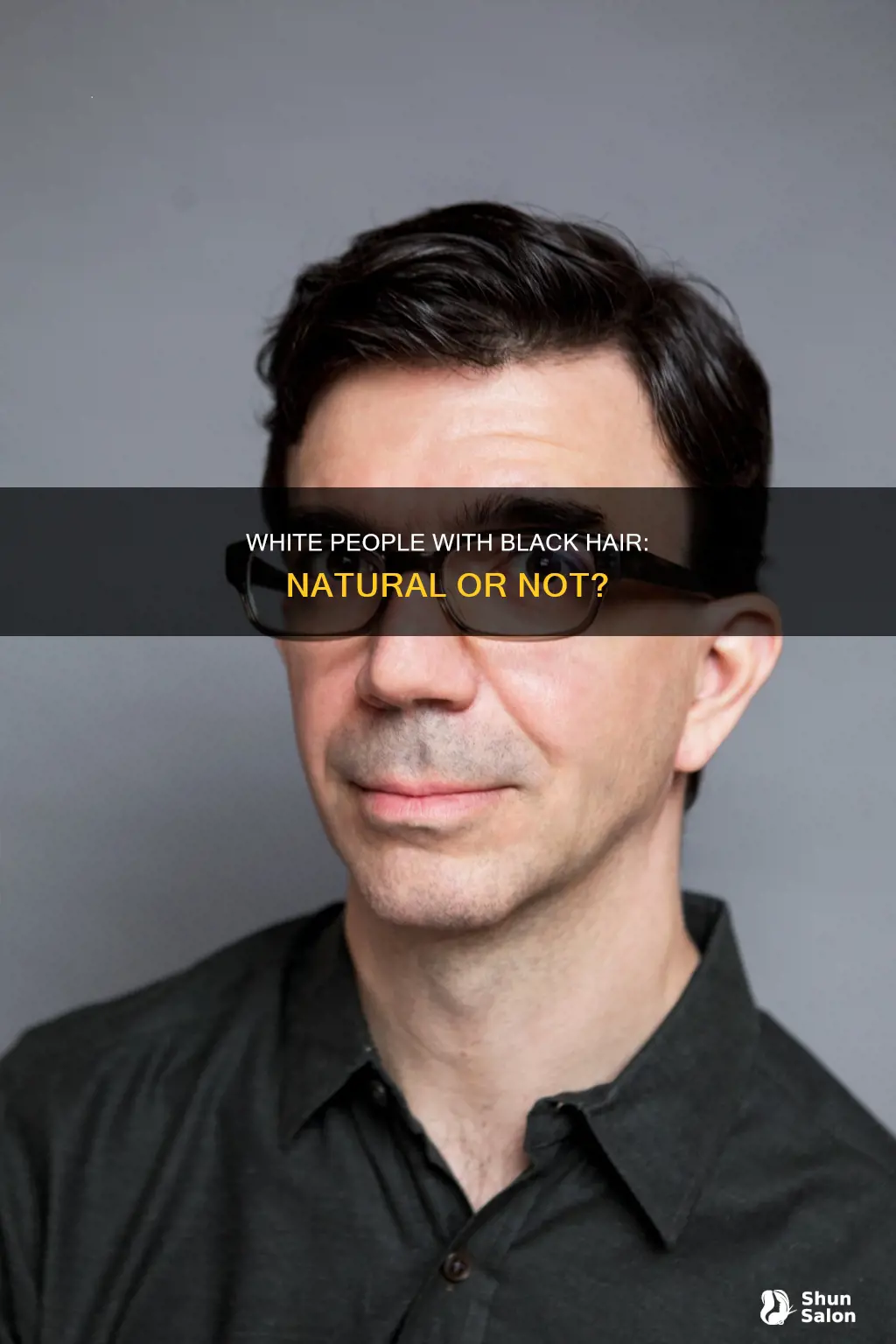
The exploration of human genetics and its diverse manifestations has long intrigued anthropologists, leading to a sophisticated understanding of physical traits across populations. One particularly compelling inquiry revolves around hair color, specifically the question: Can white people have naturally black hair? This question transcends mere genetic curiosity; it invites an examination through the lens of cultural relativism, shedding light on the intricacies of race, identity, and the social constructs surrounding them.
To engage fully with this topic, one must first delineate the rudimentary aspects of hair color inheritance. Hair color is primarily determined by genetics, specifically by the interplay between various genes responsible for the production and distribution of melanins—primarily eumelanin, which confers shades of black and brown, and pheomelanin, responsible for blonde and red hues. The genetic variations determining these levels are distributed unevenly across populations, shaped by evolutionary forces, adaptation, and environmental factors.
In an ethnically heterogeneous world, the typical categorization of “white” people often embodies a wide array of phenotypic traits. White populations have historically been associated with lighter hair colors, yet this is not an immutable characteristic. Genetic admixture—resulting from intermarriage and migration—introduces variations, including the potential for darker hair shades.
The cultural narrative surrounding hair color interweaves with notions of beauty, identity, and social norms. For example, in many Western societies, the archetype of “white” beauty has often been dominated by characteristics such as straight blond hair and fair skin. These ideals, rooted in particular historical contexts, have perpetuated a perception of hair color as reflective of one’s racial or ethnic identity. However, the rigidity of these archetypes diminishes when examined through a cross-cultural lens.
In cultures with diverse hair colors, such as in the Mediterranean, individuals of ostensibly “white” descent may possess naturally dark hair shades. Genetic studies reveal that the variation in hair color among populations in regions like Southern Europe or parts of Western Asia does fall under the broader classification of individuals traditionally considered “Caucasian.” This phenomenon underscores the fallibility of racial classifications, revealing the nuances that exist within genetic lineages.
Moreover, the dichotomy of “white” versus “black” hair carries with it social implications. Within certain cultural contexts, black hair is often revered as a symbol of beauty and strength. The pride associated with naturally black hair among various cultures offers a striking contrast to the Western preference for lighter hair that has dominated media portrayals and societal standards. This juxtaposition compels one to reconsider the inherent value placed on certain physical traits and the consequences they hold for identity formation.
Furthermore, examining hair color from a cultural relativistic perspective prompts a deeper inquiry into the sociopolitical frameworks that dictate beauty norms. In societies where Eurocentric beauty standards are preeminent, the prevalence of hair straightening and dyeing practices among individuals identified as “white” reflects an attempt to conform to these established ideals. Conversely, individuals from cultures that celebrate natural black hair may resist these pressures, cultivating pride in the very traits that diverge from mainstream standards.
The dialogue surrounding hair extends beyond mere aesthetics; it serves as a vehicle for self-expression and cultural identity. The recent surge in movements advocating for natural hair acceptance across various ethnic groups highlights the propensity for hair to symbolize personal agency. In this context, a “white” individual with black hair transcends physical appearance and encapsulates broader themes of belonging, representation, and heritage.
It is essential to factor in the evolving genetic discourse around hair color. Geneticists have made strides in identifying specific loci associated with hair pigmentation. For instance, variations in the gene known as the “MC1R” can result in both black hair and the potential for lighter hues depending on the allelic combinations present. Interpretatively, this scientific knowledge reinforces the notion that race is a complex and multifaceted construct rather than a rigid classification—alluding to a broader understanding of human diversity.
The acceptance of black hair as a natural state for individuals regardless of their ethnic categorization provokes a paradigm shift in perceptions surrounding race and genetics. As cultural relativism encourages a recognition of the varying value systems across cultures, it invites a re-examination of how hair traits shape personal identity. The implications of this shift are far-reaching, fostering a more inclusive dialogue about ethnicity, identity, and societal expectations.
Engaging with the query of whether white people can possess naturally black hair affords a unique opportunity to transcend superficial categorizations of race. Such discussions yield insights that are not only biological but also profoundly cultural. The amalgamation of genetics, social constructs, and identity is a testament to the complexity of human existence, urging both individuals and societies to embrace a more nuanced understanding of what constitutes race and heritage.
In conclusion, the potential for white people to have naturally black hair reveals not only genetic possibilities but also challenges conventional racial narratives. As societies evolve, so too must our understandings of race, beauty, and identity. Acknowledging the rich tapestry of human diversity—where individuals defy simplistic categorizations—serves to enhance both cultural appreciation and genetic awareness. Through this lens, we gain a deeper understanding of our shared humanity, transcending boundaries established by societal constructs. In doing so, we may hope to foster a more inclusive future, one that celebrates the beauty inherent in diversity.