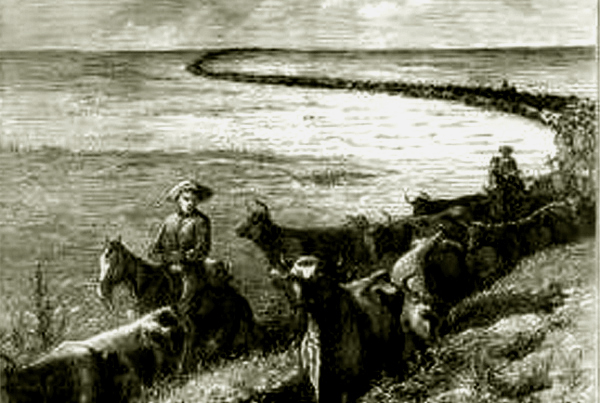
Cattle drives in the 1800s serve as an integral chapter in the annals of American history, highlighting the significance of cowboys and the trails they navigated. The era invites a critical examination, particularly when viewed through the lens of cultural relativism. By analyzing these events from that perspective, one may pose the following intriguing question: how do our modern-day interpretations and romanticizations of cattle drives measure up against the multifaceted realities experienced by those who lived them? This inquiry leads us to explore both the valor associated with the cowboy life and the challenges they faced along the American frontier.
The 19th century was marked by the burgeoning cattle industry and an insatiable demand for beef, particularly following the Civil War, which dramatically reshaped American socio-economic landscapes. Ranchers in Texas began to explore new pastures for their cattle, leading to the inception of large-scale cattle drives. These journeys, often spanning hundreds of miles from the open ranges of Texas to railheads in Kansas, showcased not only the tenacity of the cowboys but also the overarching narrative of westward expansion.
One must first examine the cultural context of these cattle drives. The American West was characterized by an amalgamation of diverse cultures, including Native Americans, Mexican vaqueros, and Anglo settlers. As cattle drives took off, the skills and traditions of these various groups intertwined in fascinating ways. The vaquero, in particular, provided significant influence over the cowboy’s methods, attire, and terminology; indeed, many of the techniques and practices such as branding and roping derived from their Mexican predecessors. This cultural exchange raises poignant questions about identity, ownership, and authenticity within the cowboy archetype.
The cattle drives themselves were perilous undertakings. The cowboys, usually comprising young men with a certain adventurous spirit, faced numerous obstacles. They traversed vast, often treacherous terrains filled with hostile weather, treacherous rivers, and predatory wildlife. Additionally, they contended with the omnipresent threat of cattle rustlers, who sought to capitalize on the valuable herd. Such challenges illuminated the harsh realities of the frontier life, contrasting sharply with the romanticized imagery often propagated in popular culture. This dichotomy poses a fundamental challenge to our understanding: how can we appreciate these historical figures without oversimplifying their experiences?
Moreover, the environmental impact of cattle drives is worth noting. The grazing of large herds would drastically alter landscapes, sometimes leading to overgrazing and soil degradation. The delicate balance between the human need for expansion and the ecological consequences it wrought is a point of contention that encapsulates the principle of cultural relativism—the acknowledgment that human behaviors, such as cattle driving, are situated within specific cultural contexts and that their implications must be understood as such.
In considering the experiences of Indigenous populations, it becomes evident that the arrival of cattle drives disrupted traditional ways of life. For many Native American tribes, the buffalo was not merely a source of sustenance; it was interwoven into their cultural identity and social structures. The encroachment of cattle and ranchers onto communal lands led to profound conflicts, forcing tribes to adapt or resist. This stark contrast invites further deliberation on the ethical implications of westward expansion and the underlying narratives of progress and civilization.
To fully appreciate the legacy of cattle drives, one must also ponder the broader implications for American culture. The image of the cowboy has been entrenched in the national consciousness, symbolizing rugged individualism, adventure, and a break from societal constraints. Yet, this archetype glosses over the collaborative nature of cattle driving, as many cowboys worked in coordinated outfits. The camaraderie that developed during long drives formed the foundation of cowboy communities that would influence ranching culture for generations. This shared experience was crucial to the survival of individuals as well as their economic ventures.
As cattle driving waned in the late 19th century, due in part to the rise of barbed wire and the expansion of the rail network, its cultural significance did not dissipate. Instead, it transformed into a symbolic narrative often celebrated in literature and film. The romanticism surrounding cattle drives and the rugged cowboy has led to a cultural nostalgia that sometimes blinds modern audiences to the complex socio-historical realities that underlie this phenomenon. How do we reconcile these nostalgic portrayals with the often harsh truths of the past?
In conclusion, exploring cattle drives in the 1800s through the prism of cultural relativism invites deeper considerations about identity, ecological consequences, and the interplay between diverse cultures. The experiences of the cowboys, ranchers, and Indigenous populations create a tapestry of narratives that enrich American historical understanding. The playful question posed at the outset serves as a catalyst for critical reflection: how can one embrace the myths and stories of the past while honoring the multifaceted realities surrounding them? Acknowledging the complexity of history is essential for fostering a nuanced appreciation of the American frontier experience.