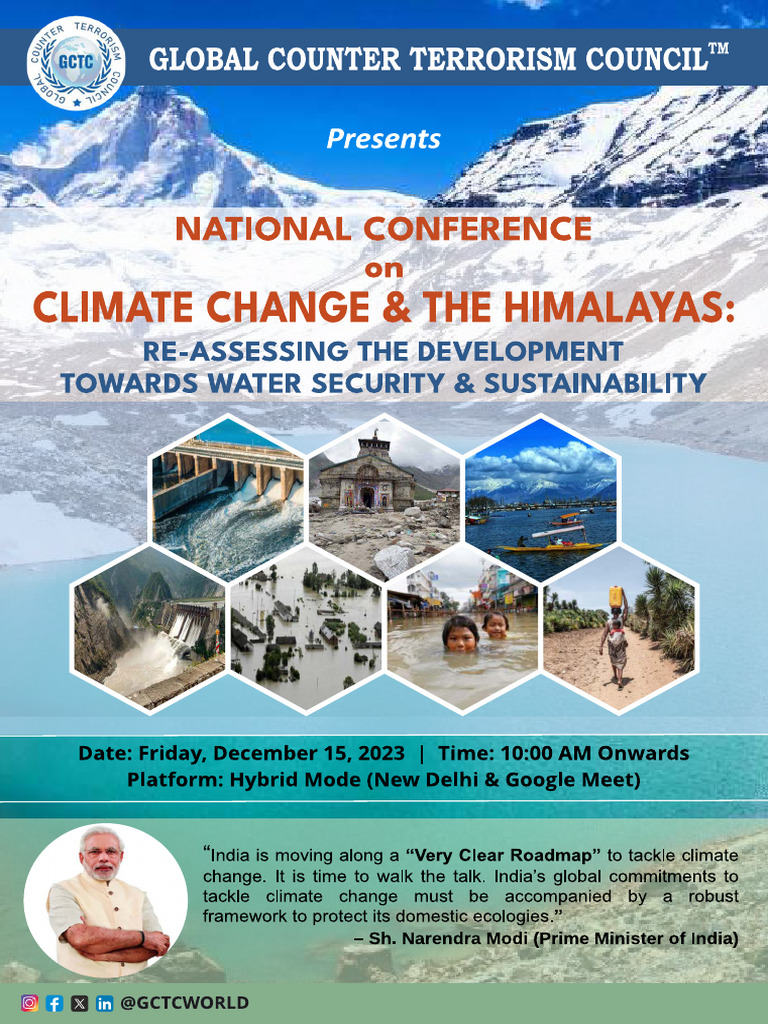
The Himalayan mountain range, revered as the “Third Pole” due to its vast expanse of glaciers and snowfields, serves not only as a formidable geographical entity but also as a crucial ecological reservoir. With climate change ushering in unprecedented alterations to global weather patterns, the Himalayan region stands at the forefront of this transformation. The melting of the Himalayan glaciers, precipitated by rising global temperatures, carries profound implications for both the environment and human societies that depend on these majestic peaks.
The sacredness of the Himalayas, enshrined in historical and religious texts, establishes a deep-seated connection between the landscape and the myriad cultures that inhabit its foothills. From Hindus who venerate the mountains as the abode of deities, to Buddhists who regard them as a path to spiritual enlightenment, the Himalayas are more than mere topographical features; they are cultural touchstones. However, the disquieting evidence of glacial retreat and erratic weather phenomena introduces a dialectical tension between religious reverence and scientific inquiry.
The phenomenon of melting glaciers serves as a quintessential example of anthropogenic climate change, highlighting the intersecting realms of environmental science and cultural relativism. Observers often marvel at the stark visual evidence of environmental degradation, yet the implications permeate far deeper than surface observations. These melting peaks are a harbinger of geopolitical tension, economic disparity, and existential uncertainty for the communities intertwined with their fate.
Climate change leads to significant alterations in water availability, particularly vital for the sustenance of agricultural practices across the subcontinent. The glaciers of the Himalayas serve as critical water towers, supporting rivers like the Ganges, Indus, and Brahmaputra, which are lifelines for millions. The receding glaciers pose a dual threat — initially, they may exacerbate flooding due to glacial lake outburst floods (GLOFs), followed by prolonged drought conditions as the glacial mass diminishes. This cyclical nature of water resource availability evokes questions about resilience and adaptation strategies among local communities.
Indigenous perspectives offer invaluable insights into these transitions. Many Himalayan communities engage in sustainable practices, having survived for centuries in harmony with their environment through traditional ecological knowledge. This local wisdom, however, confronts modern challenges head-on as external pressures mount. The encroachment of Western development paradigms and globalization prompts reassessment of cultural practices. As livelihoods shift from agrarian subsistence to tourism and commercial ventures, the cultural fabric that binds communities may undergo irrevocable change.
Cultural relativism urges an examination of how society perceives environmental degradation. The Western lens often frames climate change through a narrative of technological advancement and progress; however, it is imperative to appreciate the local narratives that populate the Himalayan discourse. For indigenous groups, the mountains symbolize identity, spirituality, and community cohesion. The acceleration of glacial melting, therefore, challenges not just the physical landscape but threatens to erode cultural identities and disrupt traditional ways of life.
The socio-economic ramifications of climate change in the Himalayas amplify the urgency for addressing these complexities. One common observation is the migration of communities unable to sustain their livelihoods due to shifting environmental conditions. The outflow of people towards urban centers in search of employment exemplifies a cultural metamorphosis — traditional knowledge systems give way to the allure of modernity and economic opportunity. This exodus further complicates the preservation of cultural practices, as younger generations often gravitate towards the urban ethos, rendering traditional lifestyles obsolete.
Yet, it is essential to decipher the intricate tapestry of resilience woven within these communities. Many local inhabitants are not passive recipients of climate change; they assume active roles in adapting to and mitigating its impacts. Grassroots initiatives aimed at preserving water sources, restoring degraded ecosystems, and enhancing agricultural practices reflect a harmonization of traditional knowledge with contemporary environmental management principles. In this regard, cultural relativism pushes for recognition that adaptation strategies should be informed by local contexts and belief systems.
The intersection of climate change with cultural practices necessitates a broadening of the discourse surrounding environmental policy. Stakeholders must include indigenous voices, acknowledging their intrinsic understanding of climate systems while fostering an environment conducive to biocultural preservation. Environmental frameworks that disregard cultural implications risk perpetuating a cycle of marginalization and ecological degradation. Therefore, the Himalayas become an illustrative case for understanding the interplay between culture and climate, urging scholars and policymakers alike to critically engage with these interdependencies.
In conclusion, the melting peaks of the Himalayas embody a microcosm of the global climate crisis, revealing profound implications for culture, identity, and sustainability. As the world witnesses this transformative phenomenon, it becomes increasingly vital to acknowledge and respect the intricacies of human-nature relationships. Through a perspective rooted in cultural relativism, the discourse surrounding climate change can broaden to incorporate diverse worldviews, ultimately enriching our understanding of how climate change reshapes not just landscapes, but also the very essence of the communities that inhabit them.