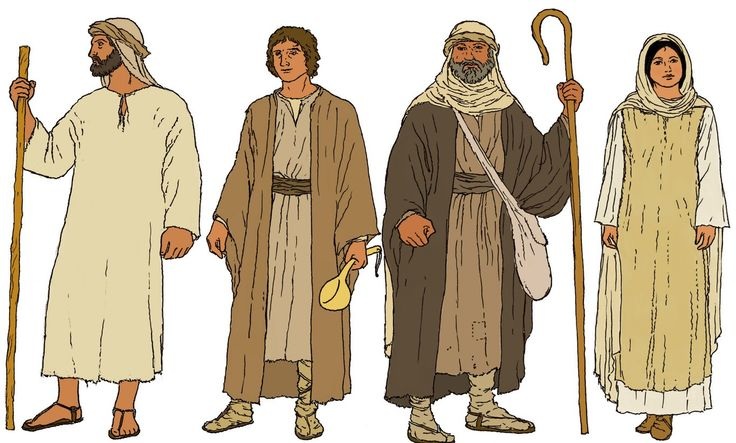
Clothes in the time of Jesus serve not merely as functional garments but as complex symbols woven deeply into the fabric of Jewish society and culture during the early first century. The examination of clothing from this period reveals multifaceted layers of meaning that extend far beyond mere aesthetics or utility. It prompts an exploration into identity, status, and adherence to cultural norms, thus facilitating a broader understanding of faith and daily life within this historical context.
To comprehend the significance of attire in the time of Jesus, it is essential to consider the materials from which these garments were constructed. Primarily, clothing was made from wool, linen, and cotton, depending on context and availability. Wool was favored for its warmth and durability, making it ideal for the cooler months. Linen, often used in warmer regions, provided breathability, whereas cotton gained popularity later due to its softness and comfort. The choice of fabric not only reflected the wearer’s economic status but also indicated their social standing within the community. Wealthier individuals could afford garments made from finer fabrics, while the poorer segments of society were limited to coarser and less durable materials.
Furthermore, the styles of clothing were emblematic of cultural identity. For example, the tunic was a staple garment, typically fashioned in a knee-length style for men and a longer version for women. This clothing was often belted at the waist, providing a functional design for laborers, merchants, and everyday individuals engaging in various societal roles. The color of garments also bore significance; bright dyes were costly and thus reserved for the affluent. The omnipresent use of natural dyes, derived from local minerals and flora, showcased the ingenuity of textile artisans and reflected a deep-rooted connection to the land and its resources.
Clothing also acted as a canvas for expressing religious affiliation and societal challenges. Distinctive garments such as the tallit, a fringed prayer shawl, symbolized spiritual devotion and the observance of religious commandments. The tzitzit, threads on the corners of the garment, served as reminders of Jewish obligations and collective identity. Deviating from traditional attire could lead to social ostracism, highlighting the tension between individual expression and community conformity.
Moreover, clothing in this era illuminated the dichotomy between genders. Men’s clothing tended to be practical and suited for work, reinforcing gender roles entrenched in agricultural and mercantile societies. Conversely, women’s garments were often more elaborate but restricted, reflecting the dual expectations of modesty and beauty. This gender distinction in attire encapsulated broader societal constructs regarding femininity and masculinity. Modest dress for women served to uphold familial honor while simultaneously emphasizing their roles as caretakers and homemakers.
The phenomenon of wearing multiple layers, especially in the cooler months, also deserves attention. Significantly, the undergarments, commonly made from lighter fabrics, provided comfort, while outer garments like cloaks or mantles offered protection from the elements. The layering technique enabled individuals to adapt their attire based on fluctuating weather conditions and personal comfort. It embodied the practical need for functionality amidst the backdrop of daily life challenges.
Clothing choices, then, function not only as practical solutions to environmental needs but also as reflections of a deeper cultural narrative. The adherence to traditional garments represented a connection to ancestral customs and a collective memory that persisted despite external socio-political pressures. The Roman occupation saw the confluence of cultural influences; yet, the Jewish populace largely maintained its unique clothing styles, serving as a visual resistance against assimilation.
In this vein, clothing also encapsulated the spirit of community and shared kinship. Tailoring was often a communal activity, with women gathering to sew and mend garments. This practice facilitated stronger social ties and collective experiences among women while fostering an understanding of communal heritage and shared faith. Thus, clothing served as a mechanism for sustaining relationships and asserting identity within the larger context of Roman rule, which often sought to homogenize diverse cultures.
The interplay between faith and clothing during this period is particularly intriguing. Attire could signal a person’s piety, with choices deeply influenced by religious customs and beliefs. For instance, adherence to the Torah dictated specific rules regarding cleanliness and dress. This adherence often fostered a sense of belonging to a group committed to maintaining their culture in the face of an overarching imperial presence. The very act of wearing certain garments was imbued with a strong cultural and spiritual significance, representing an outward manifestation of inward belief.
In conclusion, the exploration of clothing in the time of Jesus offers profound insights into the entwined nature of fabric, faith, and daily life. Clothes were not a mere necessity; they served as vital instruments of cultural expression, identity, and resistance. Through understanding the choices and meanings behind garments, we unveil a tapestry of social norms, religious values, and historical continuity, challenging contemporary notions of simplicity in dress. Material culture, especially textiles, thus remains an essential lens through which we can examine the past, providing depth to our understanding of human behavior in a complex world.