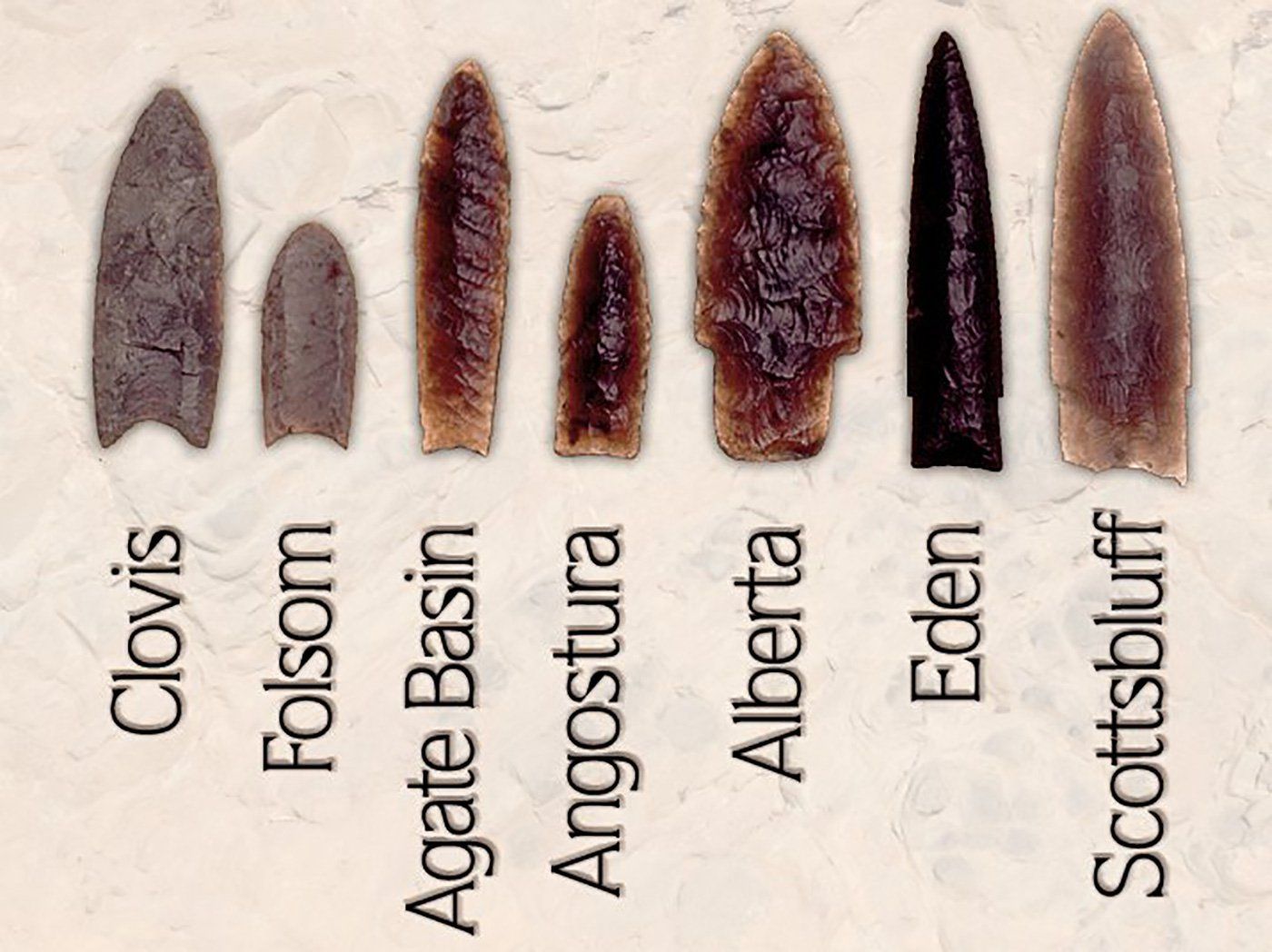
The discovery of the Clovis and Folsom points stands as one of the most pivotal achievements in American archaeology, offering profound insights into the lives of prehistoric peoples. These two distinctive types of stone tools, attributed to early inhabitants of North America, represent not only technological advancements but also the cultural intricacies that define human adaptation to diverse environments. This article juxtaposes the Clovis Point and the Folsom Point within the framework of cultural relativism, highlighting how these artifacts elucidate broader anthropological themes.
To appreciate the significance of these tools, one must first understand their historical contexts. The Clovis culture, emerging approximately 13,000 years ago, is renowned for its distinctive fluted projectile points, believed to be adapted for large game hunting, including the mammoth and mastodon. Conversely, the Folsom culture, which developed a few centuries later, is characterized by a similar yet distinct fluted point that resonates with the demands of a changing ecosystem, focusing primarily on hunting the now-extinct Bison antiquus.
The Clovis Point is typically more robust, embodying a design that emphasizes durability and penetrative capability. Its fluting—a technique involving the removal of flakes from both sides—allowed for efficient hafting onto spear shafts, facilitating greater control during a throw. In contrast, the Folsom Point displays a refinement in design; it is narrower and possesses a more pronounced flute that catered specifically to the swift and agile bison. This adaptability speaks volumes about the dynamic nature of these hunter-gatherer societies, underlining their proficiency in resource utilization amid variable climatic conditions.
One observes an intriguing facet of cultural relativism when examining these artifacts. Each point represents not merely a technological innovation but a reflection of the societal values and ecological knowledge of its respective culture. The Clovis culture, perhaps emerging from a milieu of hunting megafauna, infers a communal understanding of cooperation necessary for tracking and taking down formidable prey. It arguably fostered a social cohesion that dictated strategies for resource allocation and group survival.
The transition to the Folsom culture suggests a significant cultural shift. As large game populations dwindled, the Folsom peoples adapted their hunting strategies, which indicates a remarkable flexibility in human behavior and ideation. This evolution in tool design exemplifies cultural relativism’s core tenet: that interpretations of adaptation must be viewed through the lens of specific historical and ecological contexts, transcending contemporary biases.
Enhancing the analysis further, the disparities between Clovis and Folsom points echo deeper social principles, notably the varying relationship humans have with their environment. The Clovis society, grappling with the realities of Pleistocene North America, perhaps viewed their colossal adversaries with a blend of reverence and necessity, underscoring survival as a communal enterprise. The Folsom peoples, in synthesis, illustrate an anthropological pivot towards sustainable practices; their point’s design aesthetics and functional pragmatism encapsulate a nuanced understanding of prey behaviors and ecosystem dynamics, spotlighting the interplay between cultural evolution and environmental stewardship.
Moreover, the transformative nature of these points accentuates the enormity of archaeological study. Each excavation site presents a tapestry of human experience, marked by technological ingenuity and profound socio-cultural narratives. The very existence of Clovis and Folsom points compels scholars and enthusiasts alike to explore the implications of such diversity in prehistoric tool-making. Engaging with these artifacts invites a broader discourse on the unity of human experience and the myriad paths societies may take in contemporaneous contexts.
An ongoing debate regarding the cultural implications surrounding Clovis and Folsom artifacts posits questions of identity. Who were the people that crafted these points? Were they homogenous communities or complex societies defined by variations in lifestyle, belief systems, and intergroup relations? By utilizing cultural relativism as a lens, one may discern that the creation of these artifacts was as much about communal identity as it was about survival. The differences between them can thus be seen as manifestations of cultural narratives, reflected in both the physical and ideological realms.
Moreover, these tools serve as a reminder of the impermanence of cultural forms. Just as these peoples adapted their tools, so too did their identities shift as a function of their surroundings and ecological realities. The appreciation of this adaptability merits recognition, catalyzing inquiry into the broader anthropological narratives that shape human history. The Clovis and Folsom points invite reflection on how societies not only survive but flourish in changing conditions, continuously reshaping their cultural identities.
In conclusion, the Clovis Point and the Folsom Point stand not merely as artifacts of human ingenuity but as markers of the profound interplay between culture, environment, and survival. They encapsulate an enduring narrative of adaptation, community, and identity among prehistoric peoples in North America. By examining these tools through the lens of cultural relativism, we gain invaluable insights into the complexities of human existence, reminding us that the past profoundly influences our present understanding of cultural diversity and human resilience.