Texas, a territory with a rich and tumultuous history, achieved statehood in 1845, marking a significant moment in American expansionism. The annexation of Texas was not merely a political maneuver but an intricate tapestry interwoven with cultural, social, and economic threads. This analysis endeavors to elucidate the events surrounding Texas statehood through the lens of cultural relativism, allowing for a nuanced understanding of the diverse perspectives that shaped this monumental period.
To appreciate the complexity of Texas’s annexation, one must consider the geopolitical context of the early 19th century. The nascent United States was in the throes of manifest destiny, an ideology that championed the belief that it was the nation’s divine prerogative to expand coast to coast. This sentiment not only fueled territorial acquisitions but also perpetuated a narrative justifying expansion at the expense of Indigenous populations and neighboring territories. The cultural relativism perspective encourages us to analyze the motivations and consequences of such belief systems, recognizing that actions which may be deemed justified through one cultural lens might be perceived as imperialistic through another.
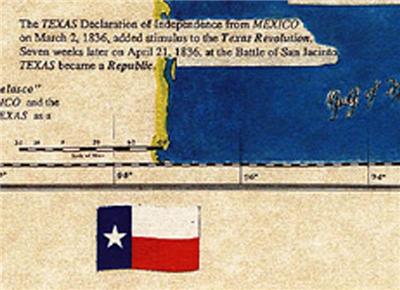
In 1836, Texas declared its independence from Mexico, citing grievances that included the imposition of non-local laws and the prohibition of slavery. Emerging Texan leaders, such as Sam Houston, articulated a vision of a republic characterized by individual freedoms and opportunities, yet this vision was largely exclusive to Anglo-American settlers who had migrated to Texas. The cultural orientation of these settlers starkly contrasted with that of the Indigenous populations and Mexicans who lived in the region. For many of them, the notion of “freedom” espoused by Texas leaders did not account for their existence or rights. An analysis of the historical narrative through a cultural relativist lens reveals the dilemmas and contradictions inherent in the Texan quest for autonomy and self-governance.
Moreover, the economic motivations underpinning the annexation cannot be overlooked. The fertile soils of Texas beckoned settlers with promises of prosperity, leading to a rapid influx of migration. The burgeoning cotton industry became a cornerstone of the Texan economy, driven primarily by enslaved labor. This economic perspective adds another layer to the cultural dialogue surrounding statehood. For many early American settlers, embracing the institution of slavery was not merely a matter of economic necessity but a culturally ingrained practice that perpetuated racial hierarchies. As such, Texas’s annexation can be viewed through the prism of cultural relativism, wherein the values and economic imperatives of the settlers shaped their decisions, often at the direct expense of others’ cultural integrity and rights.
As discussions of annexation gained momentum, the political landscape in the United States grew increasingly polarized. The Texas question became a flashpoint in the national dialog concerning slavery and its expansion into new territories. Pro-slavery factions championed annexation, positing it as a means of countering the political power of free states. Conversely, abolitionists and anti-annexationists perceived the expansion of slavery as a moral affront, leading to heightened tensions that foreshadowed the internecine conflicts of the Civil War. Through the lens of cultural relativism, one recognizes that the fervent beliefs on either side stemmed from deeply rooted cultural and ethical frameworks which shaped individuals’ identities and notions of justice.
The 1844 presidential election, which pitted James K. Polk against Henry Clay, further encapsulated the divisive nature of Texas annexation. Polk’s adamant support for annexation resonated with a populace eager for expansion, a reflection of the cultural milieu that valorized growth and territorial conquest. In contrast, Clay’s hesitance underscored an attempt to appease both anti-slavery advocates and those in favor of expansion, revealing the complexities of navigating divergent cultural priorities within a burgeoning democratic framework. The cultural relativism approach underscores that these political dynamics were not simply about land acquisition but were embedded within a larger narrative of identity, power, and ethical considerations.
When Texas was finally admitted into the Union on December 29, 1845, it was greeted with celebration by proponents and condemnation by opponents. The subsequent implications of this decision reverberated through American society, culminating in the Mexican-American War. This conflict, viewed through a cultural relativist lens, can be interpreted as an extension of the United States’ imperial ambitions, wherein the imposition of cultural and sovereign norms led to the displacement and suffering of countless communities. The war not only resulted in significant territory gains for the U.S. but also deepened the schisms within the nation’s social fabric.
In conclusion, the story of Texas statehood, as articulated through cultural relativism, reveals a multi-faceted character of a moment in history that was about more than mere territory. It highlights the complexities of identity, economic aspirations, and moral beliefs that played a critical role in shaping the trajectory of the American West. Understanding the events of 1845 from diverse cultural perspectives enriches our comprehension of their implications, enabling us to engage in richer dialogues about land, statehood, and the historical narratives that continue to shape the present. The legacy of Texas remains a testament to the intricate interplay between cultures and the inexorable forces of expansion that defined an era in American history.