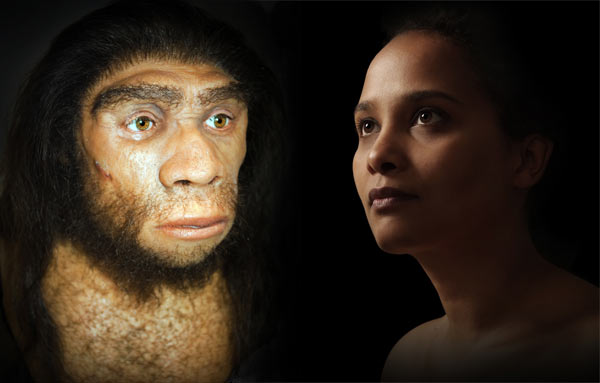
Could Neanderthals and humans have engaged in reproductive practices that blurred the lines between species? As we delve into the intriguing realm of Pleistocene interactions and the accompanying DNA evidence, we question the underpinnings of cultural relativism in interpreting the biological ties that bind us to our archaic cousins. This matter, while seemingly biological in nature, crosses the threshold into the multifaceted domain of social constructs and ideologies that shape our understanding of identity and belonging.
The narrative around the coexistence of Neanderthals and anatomically modern humans (Homo sapiens) provides a fertile ground for exploration. Following the advent of genomic studies, we have begun to realize that the Neanderthal legacy continues to permeate the contemporary human genome. Geneticists have confirmed through high-precision sequencing techniques that the interbreeding events occurred, particularly among populations outside of Africa. Approximately 1-2% of the DNA of people of European and Asian descent can be traced back to Neanderthal ancestors. Such findings challenge preconceptions regarding the capabilities and cultural practices of both Neanderthals and early humans.
From a cultural relativism perspective, there emerges the provocative question: What does this genetic overlap imply for our understanding of ‘culture’? Traditional definitions often hinge on the presumption of distinct groups—yet if our ancestors were intermingling, then the constructs of identity and exclusivity become dubious. In contemplating the relationships between these two hominin species, it becomes evident that cultural frameworks must evolve to accommodate the reality of shared genes. Thus, it is essential to scrutinize how cultural ideologies may impede our comprehension of biological and evolutionary relationships.
Cultural relativism urges us to view societies and their practices within their own context rather than imposing external judgments. When juxtaposed with Neanderthal-human interactions, this principle necessitates an investigation into the cultural meanings attached to mating practices. Did the early interactions between Homo sapiens and Neanderthals foster a hybrid culture that intertwined survival strategies? Anthropologists propose that this amalgamation may hold insights into technological advancements and adaptations made in response to climate changes and resources.
The cultural interpretation of these DNA findings raises a pivotal question: How do we reconcile a shared genetic heritage with the distinct evolutionary paths of Neanderthals and modern humans? The dissolution of perceived boundaries prompts an exploration of identity that transcends genetic markers. Neanderthals, previously relegated to the annals of extinction, possess a complex narrative that impacts contemporary notions of ‘us’ versus ‘them.’ Further investigation reveals that cultural dynamics must be perceived through a lens that acknowledges intersections rather than separatisms.
Considering the archaeological record, we can distill evidence of cultural convergence. The material culture of Neanderthals included sophisticated tools and potential art forms, challenging notions of their cognitive capabilities. Such complexity invites speculation on mutual influences between species. If they cohabitated and interacted socially, could practices like hunting techniques, symbolic communication, or even early forms of art have emerged from their exchanges? Is it feasible to posit that Neanderthal traits, as well as their cultural practices, were assimilated into early human societies?
As we grapple with this conundrum, we also must confront potential biases that can interfere with our interpretations. Historically, narratives surrounding Neanderthals have oscillated between demonization as brutish creatures and romanticization as noble ancestors. Recent genetic evidence offering a nuanced understanding seeks to dismantle these dichotomies; however, the allure of simplistic categorizations remains prevalent in popular discourse.
Moreover, the implications of interbreeding extend beyond genetic contributions. They prompt a re-evaluation of social structures and hierarchies that were likely present in these prehistoric settings. The dynamics of kinship, social cohesion, and resource sharing may resemble the principles of modern discourse surrounding multiculturalism and inclusivity. Should the interactions between these hominins serve as a cautionary tale against sectarian divides prevalent in contemporary society?
Challenges arise when considering how modern concepts of race and ethnicity have pervaded discussions about our ancestors. In applying these frameworks retrospectively, we risk projecting erroneous assumptions onto populations that existed thousands of years ago. The acknowledgment of Neanderthal ancestry should not exacerbate divisions but rather encourage a more integrative approach to understanding human identity as inherently multifaceted.
As we contemplate the implications of our shared genetic legacy with Neanderthals, we are reminded of the importance of an interdisciplinary approach. Integrating anthropology, genetics, archaeology, and sociology fosters a more comprehensive representation of our origins. Rather than isolating communities, the results of these scientific inquiries should be a catalyst for deeper dialogues about our shared human experience and the acknowledgment of our complex ancestry.
The position of humans as the exclusive apex of evolutionary prowess can be reexamined through the lens of our connection to Neanderthals. In understanding that we are but a thread in the intricate tapestry of hominin history, one must recognize that the cultural practices we hold dear may well be enriched by our constructs of the past, shaped by interplays with our once-contemporaries. The story of human evolution is not one of solitude but rather a profound saga of relationships, adaptations, and shared experiences—an acknowledgement that ultimately reflects the continuum of our humanity.