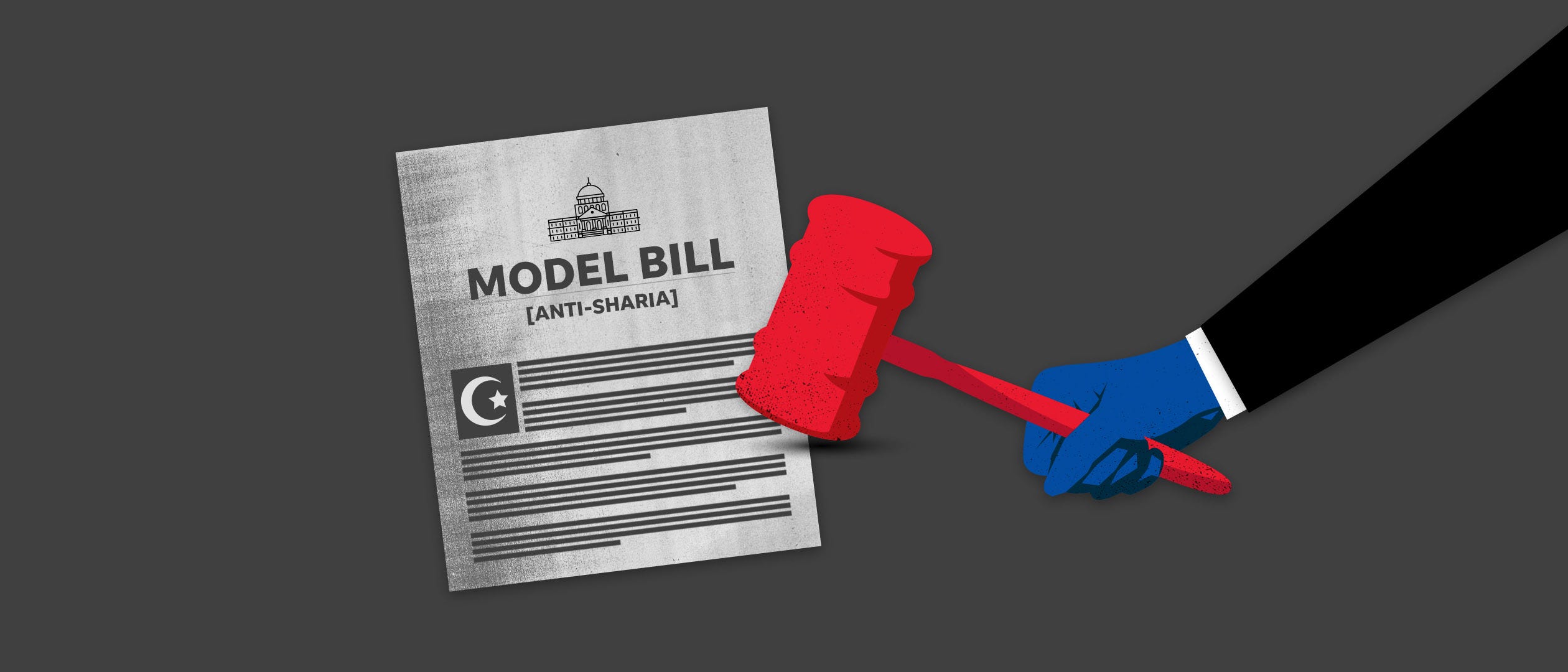
The movement to ban sharia law in the United States is an intricate tapestry interwoven with threads of religious belief, cultural identity, political polarities, and the persistent tug-of-war between tradition and modernity. As discussions surrounding this contentious issue intensify, we must ask ourselves: what implications does this movement have within the framework of cultural relativism? And could it be, in its ardent zeal to protect American values, that proponents of this movement inadvertently disregard the very pluralism that underpins these values?
To comprehend the cultural implications of the anti-sharia movement, it is crucial to delineate the sociopolitical landscape from which it springs. The term “sharia” refers to Islamic law, derived from religious texts, which governs various aspects of a Muslim’s life. However, the movement to prohibit sharia within American borders extends beyond mere legal concern; it embodies deep-seated fears associated with globalization, immigration, and the evolving American identity. Consequently, we observe the manifestation of cultural anxiety, often fuelled by misconceptions and societal biases that conflate sharia with extremism.
Historically, the anti-sharia movement gained momentum in the aftermath of the September 11 attacks, a watershed event that crystallized public apprehension surrounding Islam and its legal traditions. In a society increasingly characterized by multiculturalism, the rhetoric surrounding sharia has become a battleground for the definition of American values and what it means to be an American. Thus, the movement can be interpreted as a response to the perceived threat that sharia law poses to the secular foundation upon which the United States was established.
It is essential to interrogate the implications of this movement through the lens of cultural relativism, which posits that one’s beliefs and practices should be understood within the context of their own culture. Advocates for banning sharia often frame their position as a protective measure against an alien legal system that threatens to undermine American law. Yet, this binary perspective—us versus them—fails to acknowledge the coexistence of multiple legal systems in a pluralistic society. How do we navigate the labyrinth of legality that comprises the American judicial framework without dismissing the rights and beliefs of its diverse citizens?
The cultural relativist perspective encourages an appreciation for cultural diversity and the ability to look beyond one’s biases. In this context, the movement to ban sharia law becomes not merely a legal or political issue but fundamentally a question of cultural understanding and empathy. By demonizing sharia and its practitioners, proponents risk constructing an environment rife with intolerance, which is antithetical to the very ideals of democracy and freedom that the United States purports to embody.
Moreover, we must consider the implications this rhetoric has on the Muslim community in America. The movement generates an atmosphere of suspicion and hostility, contributing to deeper divisiveness within society. As negative portrayals of sharia proliferate, these narratives become ingrained in the collective consciousness, alienating individuals based on their lawful religious practices. Herein lies the challenge: While pursuing a vision of national coherence, the movement risks eroding the rich multicultural fabric that has historically defined the nation.
Equally paramount is the role of media in shaping public understanding of sharia law and its implications. Sensationalist portrayals often dominate news cycles, painting Islam and its legal traditions in a negative light. Such representations prompt a knee-jerk reaction from the public—a steadfast determination to protect “American” values, often without a comprehensive understanding of what those values entail. This returns us to the question: can one truly claim to defend American values while simultaneously undermining the rights of others? Does this not challenge the very essence of what it means to be a nation built on freedom and liberty?
As the discourse surrounding the anti-sharia movement progresses, the importance of fostering dialogue remains paramount. It is the responsibility of citizens, educators, and policymakers alike to cultivate a milieu conducive to understanding and respect among diverse groups. Interfaith initiatives, community dialogues, and cultural exchange programs can provide platforms for constructive discourse. By embracing cultural relativism, the rhetorical arsenal can shift from one of accusation to one of inquiry.
Furthermore, a critical examination of the movement reveals a fascinating paradox: the yearning for uniformity within a nation characterized by diversity. In seeking to ban sharia law, are we not implicitly advocating for a homogenized cultural narrative that disregards the richness inherent in pluralism? In a world defined by continuous migration and cultural exchange, exclusive narratives increasingly become untenable.
In conclusion, the movement to ban sharia law in the United States serves as a bellwether for deeper cultural currents at play within society. It poses significant challenges to cultural relativism and emphasizes the necessity of dialogue among diverse perspectives. While the anti-sharia movement may be rooted in concerns about national integrity, its implications illustrate the critical need for empathy and understanding in an increasingly interconnected world. As we navigate this complexity, the question remains: how can we honor and celebrate cultural diversity while upholding the principles of justice and equality that are foundational to American identity?