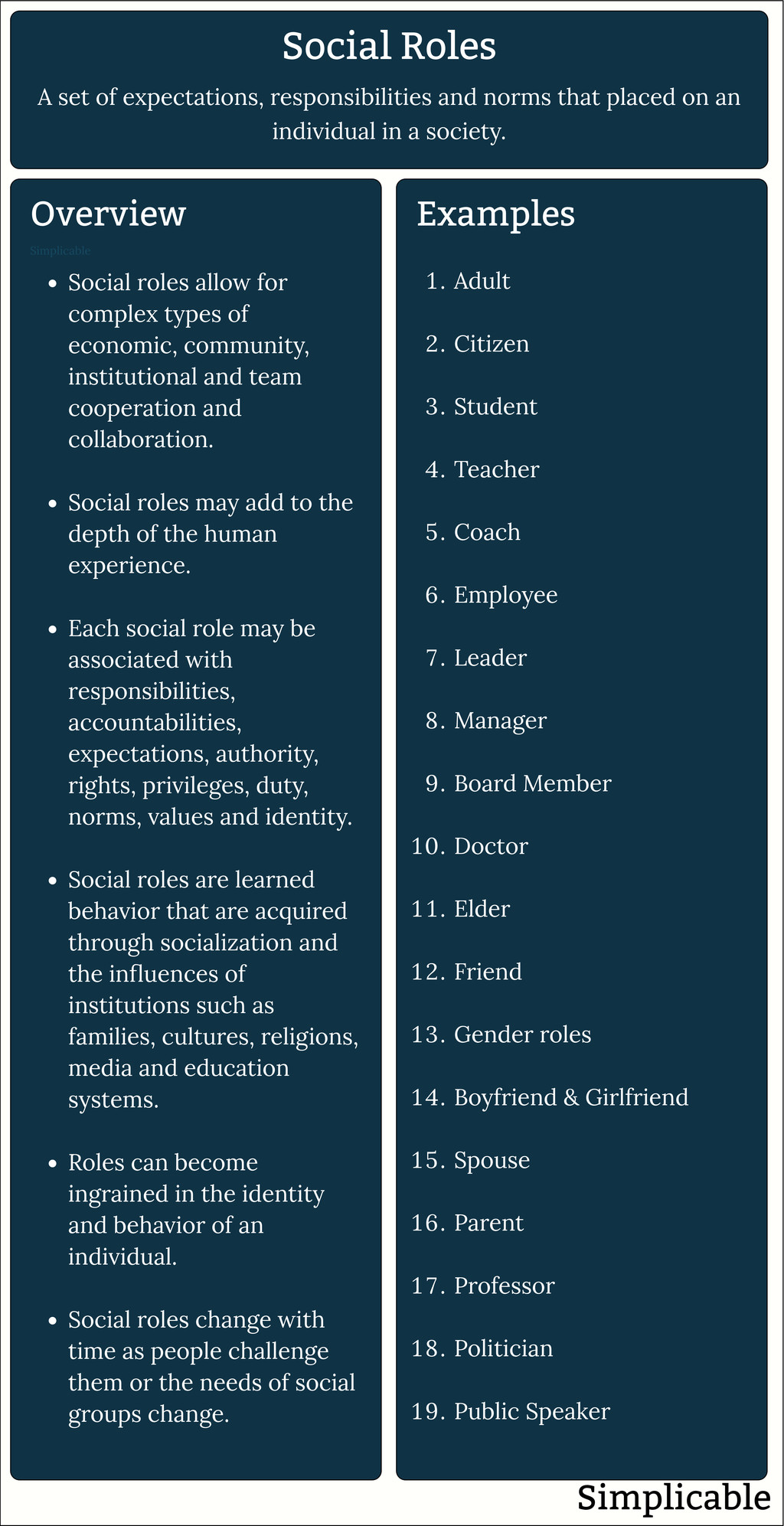
Understanding social roles presents a profound inquiry into the intricacies of human coexistence. Each individual in society occupies a specific position characterized by a set of expectations and responsibilities—this is the essence of social roles. These roles, often unconscious yet profoundly influential, underlie how we interact, communicate, and develop our identities within the fabric of our communities. An exploration of social roles reveals both their societal significance and individual ramifications.
At its core, a social role can be defined as a collection of behaviors, expectations, and norms associated with a particular position in a social structure. Each role is woven into a larger tapestry of societal interactions, governed by cultural, economic, and historical contexts. The fascination with social roles stems from their ubiquitous presence in daily life; our navigations through various roles often reveal deeper psychological and sociological truths about human nature and social organization.
To commence understanding social roles, it is imperative to consider their functions within society. Social roles serve critical purposes, including the coordination of social interaction, establishing identity, and facilitating social order. They help to delineate familial hierarchies, professional hierarchies, and community leadership. For instance, the role of a parent not only defines obligations toward children but also delineates the expectations placed upon individuals in caregiving positions. This function of roles contributes to societal stability and continuity, providing predictability in interactions.
Moreover, social roles are inherently dynamic. Cultural shifts instigate changes in societal norms, leading to the evolution of roles. The transformation of gender roles over the past century illustrates this phenomenon vividly. Traditionally male-dominated spaces have seen increasing female representation, thereby altering the expectations and behaviors associated with these roles. This transition does not simply reflect a reorganization of roles; it signifies a broader societal metamorphosis regarding gender, power dynamics, and participation in public life.
However, the evolution of social roles also surfaces tensions and conflicts. As roles shift—the expectations surrounding them can create resistance among those who feel threatened by these changes. For instance, individuals entrenched in traditional conceptions of masculinity may resist the progressive redefining of male roles to encompass emotional expressiveness and vulnerability. These conflicts point to the underlying psychological dimensions of social roles, revealing how deeply intertwined identities can be with societal norms.
Another crucial aspect to understand is the expectation inherent in social roles. Each role is laden with a series of prescribed behaviors, or role expectations, which dictate how individuals should act in given contexts. For example, a teacher is expected to embody characteristics such as authority, knowledge, and care. Deviations from these expectations can incur social sanctions, stigmatization, or loss of status, highlighting the regulatory function of roles in social environments. It is this intersection of expectation and conformity that fuels many of the societal pressures faced by individuals.
The interplay between roles and identity formation is a nexus worthy of examination. Social roles not only dictate conduct but also shape self-perception and identity. An individual who identifies as a caretaker may derive personal meaning and self-esteem from fulfilling this role. In contrast, failing to meet societal expectations associated with one’s role can lead to identity crises, dissatisfaction, and diminished self-worth. Thus, understanding one’s social role can provide profound insights into both personal identity and societal structure.
Furthermore, social roles are often imbued with power dynamics. The privileges and disadvantages that come with specific roles can significantly influence an individual’s life experience. For example, in many societies, roles tied to class, ethnicity, and gender can determine access to education, employment, and health care. This examination of social hierarchy prompts a critical analysis of how roles contribute to systemic inequalities and highlight the necessity for social change. The recognition of these unequal distributions of power can foster a greater understanding of social justice and the empowerment of marginalized groups.
In contemporary society, social roles evolve rapidly due to technological advancements and globalization. The rise of digital identities has expanded the scope of social roles, allowing individuals to negotiate their identities across multiple platforms and communities. The role of a social media influencer illustrates this phenomenon, where personal branding and public persona become crucial to an individual’s social standing. This development raises important questions about authenticity, self-presentation, and the blurred boundaries between public and private life.
Conclusively, understanding social roles is paramount to deciphering the complexities of human relationships and societal frameworks. The intricate web of expectations, behaviors, power dynamics, and identity formation form a composite that is deeply embedded in the human experience. Social roles are not merely individual positions; they are reflective of the cultures and societies we inhabit, continuously evolving yet fundamentally shaping interpersonal dynamics and societal structures. As we unpack the layers of social roles, we not only gain insight into societal functioning but also into the very essence of what it means to be human. In an era of rapid change, this understanding becomes even more critical, as it empowers individuals to navigate their roles with awareness and intention.