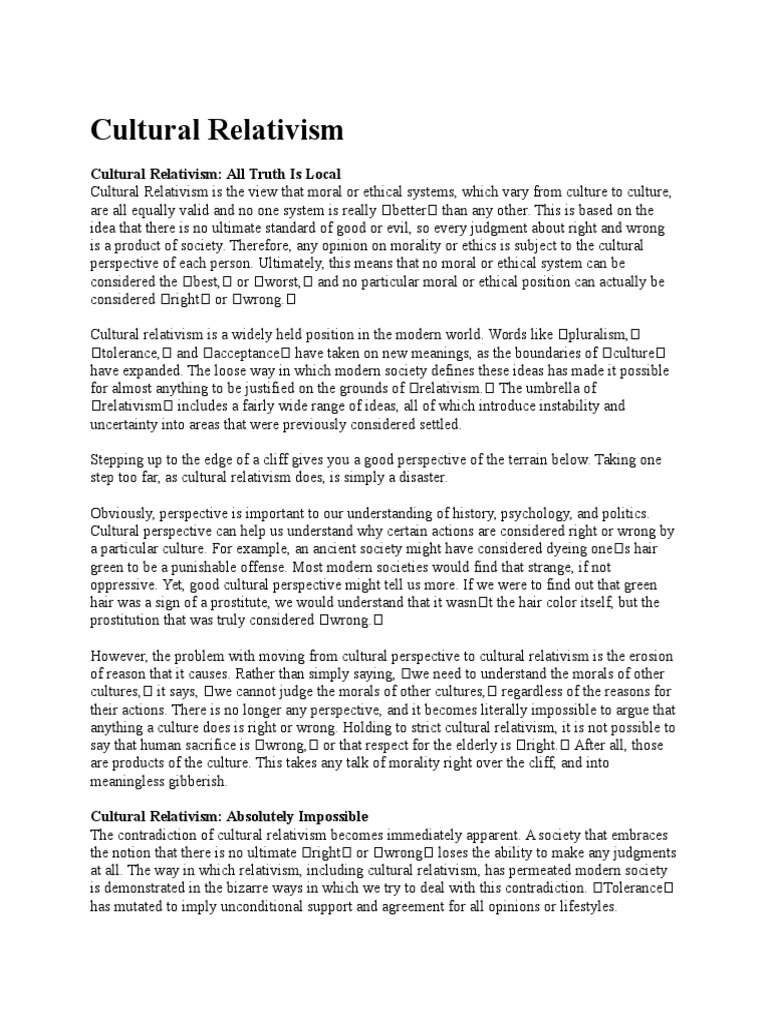
Cultural relativism, a concept deeply entrenched in the disciplines of anthropology and philosophy, posits that beliefs, values, and practices should be understood based on their cultural context rather than judged against the standards of another culture. It serves as a reminder that our perception of morality and ethics is often tinted by cultural lenses. This shift in perspective allows for a richer understanding of the complexities of human societies and fosters an environment of curiosity about the myriad ways in which people live and think. Through an exploration of various instances where cultural relativism manifests, we glean insights that challenge preconceived notions and encourage an open-minded approach to cultural differences.
One of the most illustrative examples of cultural relativism can be found in the understanding of marriage customs around the globe. In many Western cultures, monogamous relationships are the norm. Conversely, there exist societies where polygamy is not only accepted but celebrated, epitomizing a familial structure that deviates markedly from Western ideals. For instance, in certain African cultures, a man may have multiple wives, and this is perceived as a sign of wealth and status, enhancing the social fabric rather than detracting from it. By examining these varying marriage practices through a culturally relativistic lens, one unearths not only the societal functions these customs serve but also the underlying values that shape the lives of individuals within those cultures.
Another poignant illustration is found in dietary practices, particularly regarding the consumption of animals. In some cultures, eating beef is a staple and deeply rooted in culinary traditions; conversely, in Hindu culture, cows are revered as sacred and are often left unconsumed. The perplexity surrounding these dietary distinctions invites one to ponder broader ethical questions regarding animal rights, the sanctity of life, and the social constructs that dictate which animals are deemed acceptable for consumption. Through the prism of cultural relativism, one can appreciate that these practices are not merely arbitrary but are entrenched in the historical, spiritual, and economic contexts of each society.
Religious beliefs also offer fertile ground for examining cultural relativism. Take, for instance, the divergent beliefs surrounding creation myths. While some cultures subscribe to creation narratives encapsulated within a biblical framework, others may hail from entirely different traditions steeped in indigenous lore or Eastern philosophies. These narratives provide meaning and context to existence for their adherents and illustrate how deeply rooted traditions shape worldviews. Here, cultural relativism beckons one to approach with curiosity, seeking to understand the profound implications of these beliefs rather than dismissing them as fanciful tales.
Furthermore, consider the practice of communal living, which thrives in various Indigenous cultures. These societies often operate under principles that prioritize community welfare over individualism, contrasting sharply with Western capitalist ideologies that exalt personal achievement and private property. The concept of shared resources within these communities raises critical questions about sustainability and collective responsibility. By evaluating such communal practices through a culturally relativistic lens, we find ourselves reflecting on the effectiveness and sustainability of different economic and social structures, challenging the notion that one paradigm must be superior to another.
Artistic expressions provide yet another fascinating area where cultural relativism shines. The aesthetic values attributed to art vary enormously across cultures. What one culture may celebrate as high art, another might dismiss as mundane or even grotesque. The intricate patterns of Indigenous Australian art, for example, deeply reflect spiritual connection and storytelling, while modern art movements in the West may focus on abstract representation and individual expression. Engaging with these various artistic traditions invites a rich dialogue about the significance of art, creativity, and what it fundamentally means to express oneself within one’s cultural milieu.
In illuminating these sources of cultural relativism, it is essential to acknowledge potential pitfalls. A strictly relativistic stance can inadvertently lead to moral nihilism, where any practice—regardless of how harmful—could be seen as acceptable within its cultural context. However, this is not an inherent flaw of cultural relativism itself but rather a call for balance. The challenge lies in navigating the delicate tension between respecting cultural practices and upholding universal human rights. Thus, cultural relativism does not propose absolutes; it encourages nuanced discussions about ethics and morality.
By drawing upon these diverse samples of cultural relativism, one not only gains a deeper appreciation for the intricacies of human societies but also cultivates a profound sense of curiosity. This exploration urges one to transcend judgment and ignite an interest in the unfamiliar. Understanding that culture is a multifaceted construct allows one to engage more profoundly with the world and its plurality. As we strive to comprehend diverse perspectives, we must commit to fostering empathy and an ongoing willingness to learn, recognizing that each culture offers valuable insight into the human condition.
In conclusion, cultural relativism acts as a crucial lens through which we might examine and appreciate the rich tapestry of human existence. From marriage practices to dietary customs, religious beliefs, communal living, and artistic expressions, these cultural manifestations invite curiosity and challenge dogmatic viewpoints. By embracing cultural relativism, we not only broaden our understanding but also foster a society that values diversity, empathy, and global interconnectedness. In an era marked by globalization and cultural exchange, such an approach is not only relevant; it is imperative for coexistence and collective progress.