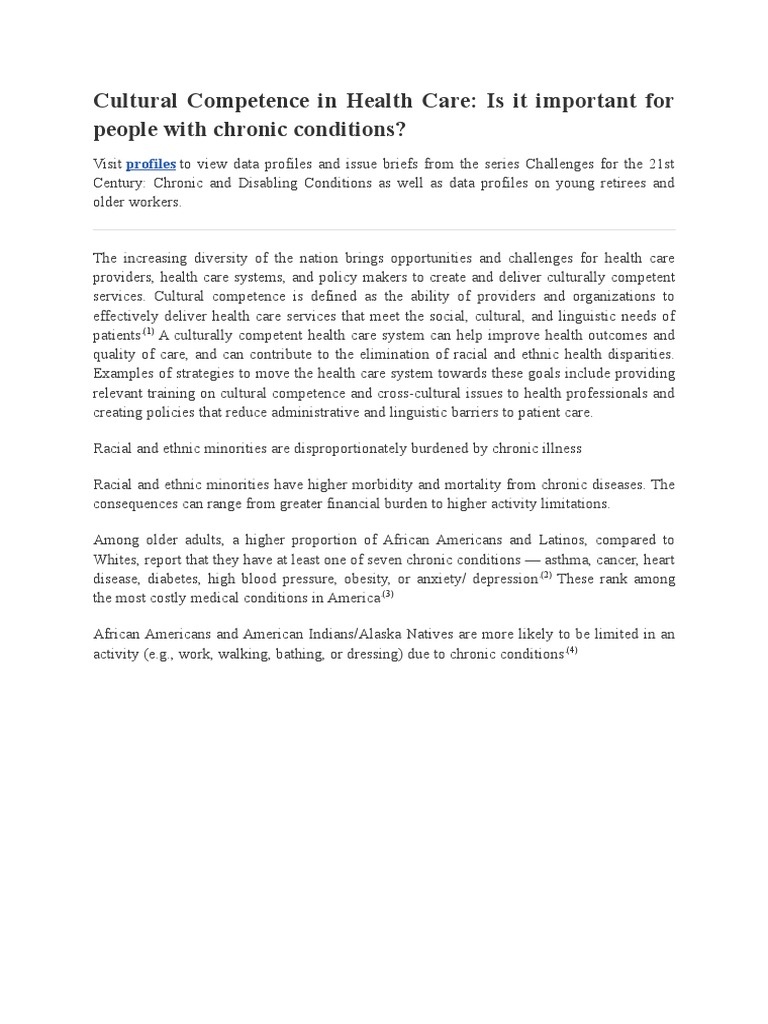
Cultural competence in healthcare is an indispensable pillar for enhancing the quality and efficacy of medical services across diverse populations. As healthcare systems increasingly emphasize the need for culturally competent practices, the premise of cultural relativism provides a compelling lens through which to examine this complex interplay between culture and health. How well do healthcare providers navigate the intricate subtleties of cultural paradigms, and do they genuinely grasp the ramifications of their cultural assumptions? This inquiry enters the domain of cultural relativism, challenging providers to interrogate their biases while striving for inclusivity.
At its core, cultural competence refers to the ability of healthcare providers to understand, communicate with, and effectively interact with patients from different cultural backgrounds. Cultural relativism posits that cultural norms and values derive their significance within particular cultural contexts. Thus, healthcare providers are confronted with the potentially disconcerting challenge of reconciling their medical expertise with the culturally entrenched beliefs and practices of their patients. A failure to do so might culminate in misunderstandings, mistrust, and suboptimal health outcomes.
In examining healthcare through the lens of cultural relativism, several key findings emerge that elucidate both the potential and the challenges of cultural competence. One prominent area of inquiry is the recognition of cultural beliefs regarding health and illness. Different societies harbor distinct interpretations of what constitutes illness and wellness, often influenced by historical, spiritual, and socio-economic factors. Providers who adhere rigidly to biomedical models may inadvertently dismiss significant cultural contexts. This not only alienates patients but also hampers the effectiveness of medical interventions.
Consider, for example, the phenomenon of belief in traditional healing practices. Numerous studies have highlighted the prominence of alternative medicine within various cultures, particularly among marginalized populations. Such practices, steeped in cultural heritage, often stand in stark contrast to mainstream medical protocols. A culturally competent approach necessitates an openness to these alternative perspectives, recognizing their underlying values and integrating them into a holistic treatment plan. This synthesis renders a more inclusive healthcare environment where patients feel seen, validated, and ultimately more engaged in their treatment.
Moreover, the patient’s cultural framework significantly affects their propensity to seek medical care. Factors such as social stigma, historical trauma, and past interactions with healthcare systems can influence individuals’ willingness to engage with medical professionals. For instance, many patients from Indigenous communities harbor profound distrust towards Eurocentric healthcare systems, stemming from centuries of colonial practices. In such cases, culturally competent providers must employ strategies rooted in cultural relativism—empathetic engagement, active listening, and the incorporation of culturally appropriate interventions—to rebuild that trust.
Another essential aspect of cultural competence lies in the area of communication. Linguistic differences, nonverbal cues, and disparate meanings assigned to particular phrases can complicate interactions between providers and patients. Providers entrenched in their cultural paradigms may overlook these nuances, leading to communication breakdowns. Culturally competent healthcare necessitates linguistic sensitivity, which may include leveraging interpreters or employing culturally relevant metaphors to surmount language barriers. Such adjustments are critical not merely for clarity but for fostering an environment of mutual respect and understanding.
Additionally, research indicates that cultural competence training for healthcare professionals substantially enhances patient satisfaction and treatment adherence. The integration of training programs that underscore the principles of cultural relativism enables practitioners to cultivate awareness regarding their own cultural biases and assumptions. This self-reflective practice is vital for addressing the inherent power dynamics within the provider-patient relationship. Acknowledging one’s own cultural lens not only fosters humility but also promotes a collaborative atmosphere where patients feel empowered to voice their health narratives.
Nevertheless, the implementation of cultural competence in healthcare settings is not without obstacles. Institutional constraints often impede the effective delivery of culturally competent care. For example, the standardization of protocols—while beneficial for efficiency—may preclude the flexibility required to accommodate individual patient needs, particularly in culturally diverse populations. Additionally, systemic inequities within healthcare access can exacerbate disparities. A culturally competent approach requires not only individual provider efforts but also systemic reforms that facilitate equitable resources and support for all patients.
As the discourse surrounding cultural competence continues to evolve, it is imperative that healthcare providers remain attuned to emerging scholarly findings. For instance, contemporary research is increasingly exploring the intersectionality of cultural factors, urging providers to consider how race, class, gender, and other identities converge to influence health disparities. This nuanced understanding underscores the necessity of contextualizing cultural competence within broader socio-political frameworks.
In conclusion, the imperative for cultural competence in healthcare cannot be overstated. As this field advances, the principles of cultural relativism serve as a guiding compass for healthcare professionals. By embracing cultural diversity and fostering genuine connections with patients, providers can bridge the chasm between cultural understanding and effective healthcare delivery. However, the journey towards fully realizing cultural competence remains fraught with challenges that demand continuous reflection, adaptation, and commitment to systemic change. Perhaps the ultimate inquiry that remains is: Can healthcare systems not only acknowledge but also celebrate cultural diversity without compromising clinical integrity?