Short Answer
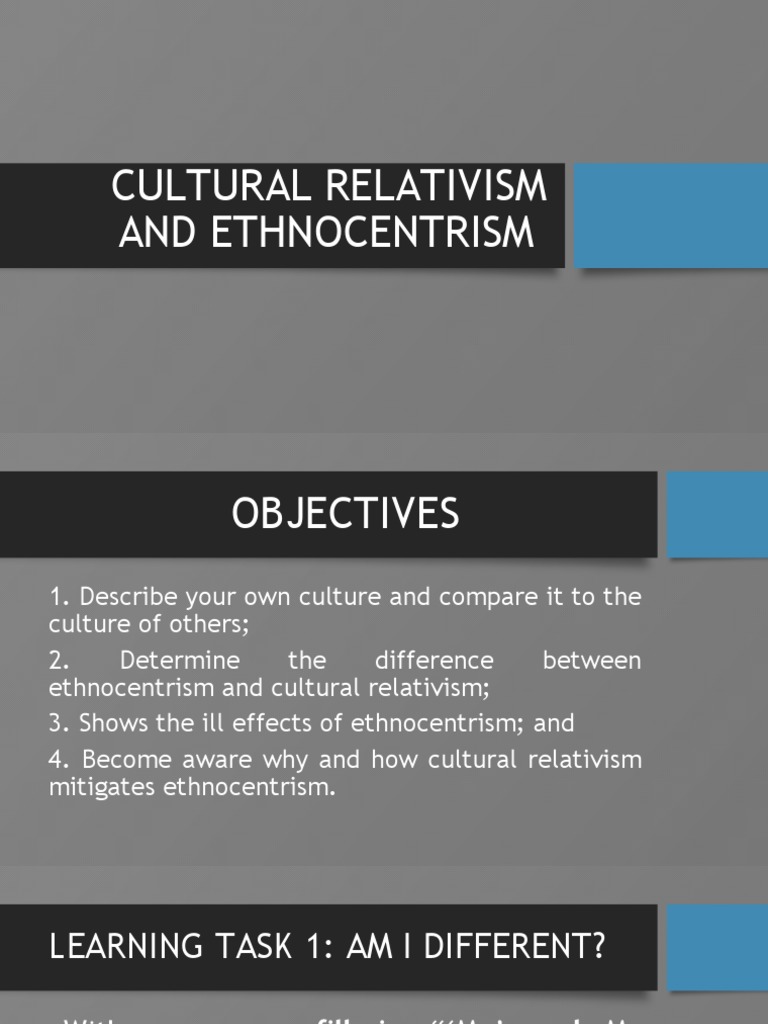
In the vast tapestry of human cultures, two threads often become tangled—ethnocentrism and cultural relativism. Both concepts are pivotal in the discourse surrounding cultural identity and social dynamics, yet they diverge philosophically and practically. Understanding the intricate differences between them can illuminate the subtleties of human interaction and foster greater global awareness.
Defining Ethnocentrism
Ethnocentrism can be likened to wearing a monocle that only allows one to see through a narrow lens—one’s own culture. It is the belief that one’s own culture is the benchmark by which all others should be measured. This perspective often breeds a sense of superiority, leading individuals to disregard the virtues of different cultural practices. From its inception, the term conjures images of a tribe standing on a mountaintop, draped in their colors, declaring, “We are the best!” This can manifest in various forms, from casual prejudice to institutionalized discrimination. Ethnocentrism is a double-edged sword: while it can foster group cohesion and identity, it inevitably fosters intolerance and misunderstanding across cultures.
The roots of ethnocentrism lie deep within human psychology. Naturally, people tend to gravitate towards familiarity, often finding solace and identity within their cultural narratives. However, when these cultural narratives are viewed as superior, the potential for conflict escalates. For instance, consider how historical colonialism was often justified by ethnocentric narratives that depicted colonizers as enlightened saviors, overlooking the richness of indigenous cultures destroyed in the process.
Understanding Cultural Relativism
Conversely, cultural relativism emerges not from superiority but from an appreciation of diversity. It advocates for the understanding that beliefs and practices must be contextualized within their cultural frameworks. To illustrate, think of cultural relativism as a kaleidoscope—when viewed, it reveals a myriad of designs, each beautiful in its own right. This philosophy urges individuals to suspend judgment and instead immerse themselves in the customs and ideologies of others.
At its core, cultural relativism posits that no culture is inherently superior to another. This approach promotes empathy, fostering dialogues that can bridge gaps between fundamentally different worldviews. It challenges the ethnocentric notion that one’s own way of living is the only ‘correct’ one. For instance, many societies around the world practice various forms of governance, social structures, and moral codes that serve unique functions within their contexts. Cultural relativism encourages us to explore these systems, inviting us to understand rather than condemn.
The Tension Between Ethnocentrism and Cultural Relativism
The juxtaposition of ethnocentrism and cultural relativism creates a rich dialogue about morality, ethics, and the very fabric of human interaction. When viewed through this lens, the world becomes a vast arena where cultures not only collide but also engage in a delicate dance of influence, negotiation, and transformation.
However, this vibrant interplay is not without its conflicts. Ethnocentrism can lead to cultural imperialism—imposing one culture’s values over another—and can contribute to the erosion of cultural nuance. In contrast, cultural relativism can sometimes wander into moral ambiguity. For instance, defending certain practices under the banner of cultural relativism may clash with universal human rights principles. The challenge lies in navigating these intricate waters without drifting into absolutes on either side.
Learning from the Divergence
A deeper understanding of both ethnocentrism and cultural relativism reveals that neither approach is entirely without merit or fault. Recognizing the inherent value in one’s culture can create a sense of identity and belonging, yet it must be balanced with an appreciation for the rich tapestry of global diversity. In practice, embracing cultural relativism fosters respectful engagement, allowing for the exploration of others’ cultural narratives without imposing one’s own biases or judgments.
What emerges is a compelling paradox: while we navigate our own cultural identities strongly and confidently, we must simultaneously cultivate curiosity and humility towards others. This duality invites us to engage more meaningfully with the world, transforming ethnocentrism’s destructive potential into a platform for mutual respect and growth.
Strategies for Balancing Perspectives
To navigate the dichotomy of ethnocentrism and cultural relativism, several strategies can be employed. Education plays a crucial role, as broadening horizons through cultural studies can illuminate the richness of global traditions. Experiential learning, such as travel or intercultural exchanges, offers firsthand insights that can temper ethnocentric views. Engaging in dialogues with diverse groups fosters understanding, inviting individuals to find common ground amidst differences.
Moreover, promoting empathy—an antidote to prejudice—cultivates a deeper connection to the lived experiences of others. By sharing stories, values, and traditions, we can tear down the walls erected by misunderstanding, paving the way for a more inclusive and collaborative global society.
Conclusion
In the end, ethnocentrism and cultural relativism represent two opposing forces in the complex dance of human existence. While they may often clash, their interplay offers a profound opportunity for growth and understanding. As we engage more thoughtfully with the diverse cultural landscapes that surround us, we cultivate not only a greater sense of awareness but also a shared vision for a more harmonious world.
FAQ
What is ethnocentrism?
Ethnocentrism is the belief that one’s own culture is superior to others and serves as the standard by which other cultures should be judged.
What does cultural relativism mean?
Cultural relativism is the principle that an individual’s beliefs and practices should be understood within the context of their own culture, without applying external judgments.
How do ethnocentrism and cultural relativism differ?
Ethnocentrism involves judging other cultures by the standards of one’s own, often leading to bias, while cultural relativism promotes understanding and respect for cultural differences without judgment.
Can cultural relativism conflict with universal human rights?
Yes, cultural relativism can sometimes lead to moral ambiguity, especially when certain cultural practices conflict with widely accepted human rights principles.
How can we balance ethnocentrism and cultural relativism?
Balancing these perspectives involves education, empathy, intercultural dialogue, and experiential learning to foster respect for one’s own culture while appreciating global diversity.
Leave a Reply